Becoming an ECE

Early Childhood

A lot of people think that we’re just here to play [and change diapers] they forget that we’re actually here to teach.”

– Preschool Teacher


One of the best decisions I ever made in my life was withdrawing from an undergraduate in Human Resources Management and going on to study Early Childhood Education (ECE). It was 8 years ago, September 2012, when my journey to become an ECE began and I walked into my first class at George Brown College. While it was an average class size of about 30 students, one of the first things I realized was that most of the class consisted of female students. This was something that had stuck with me throughout my academic career.

To give you an idea of what the Early Childhood Education program was like for me at the time…

Year 1, Semester 1: The first 7 weeks of the program began in class, where I was enrolled in about 7 courses. The following 7 weeks were spent out at a field placement where I would gain valuable, hands-on experience working and learning alongside my host-teacher. A host-teacher works at the placement site, guides you throughout your placement experience and is responsible for your evaluations. My first placement experience was working at a childcare centre with school-age children enrolled in an after-school program. Since placements generally consist of full 8-hour days, I worked in the preschool classrooms until my group of children arrived at the after-school program at the end of their school day.

An ice rink I created for the children at my preschool placement as an extension to the learning that was taking place.

Year 1, Semester 2: Once that placement was completed, it was back to class for another 7 weeks. My first year of the program would end with another placement which was working entirely with preschoolers. In between my 7 weeks of classes and 7 weeks at placement was one week off, commonly known as Reading Week. I’m grateful and lucky to have had that time to travel.

Year 2, Semester 3: My second year began the same way my first did. Seven weeks in class followed by 7 weeks in the field. By this point, I was at my third placement at a Lab school with infants. A Lab school has high expectations as it is operated in association with a college or university. I had never worked with infants prior to this placement but in the end, it was by far my most challenging and rewarding one.
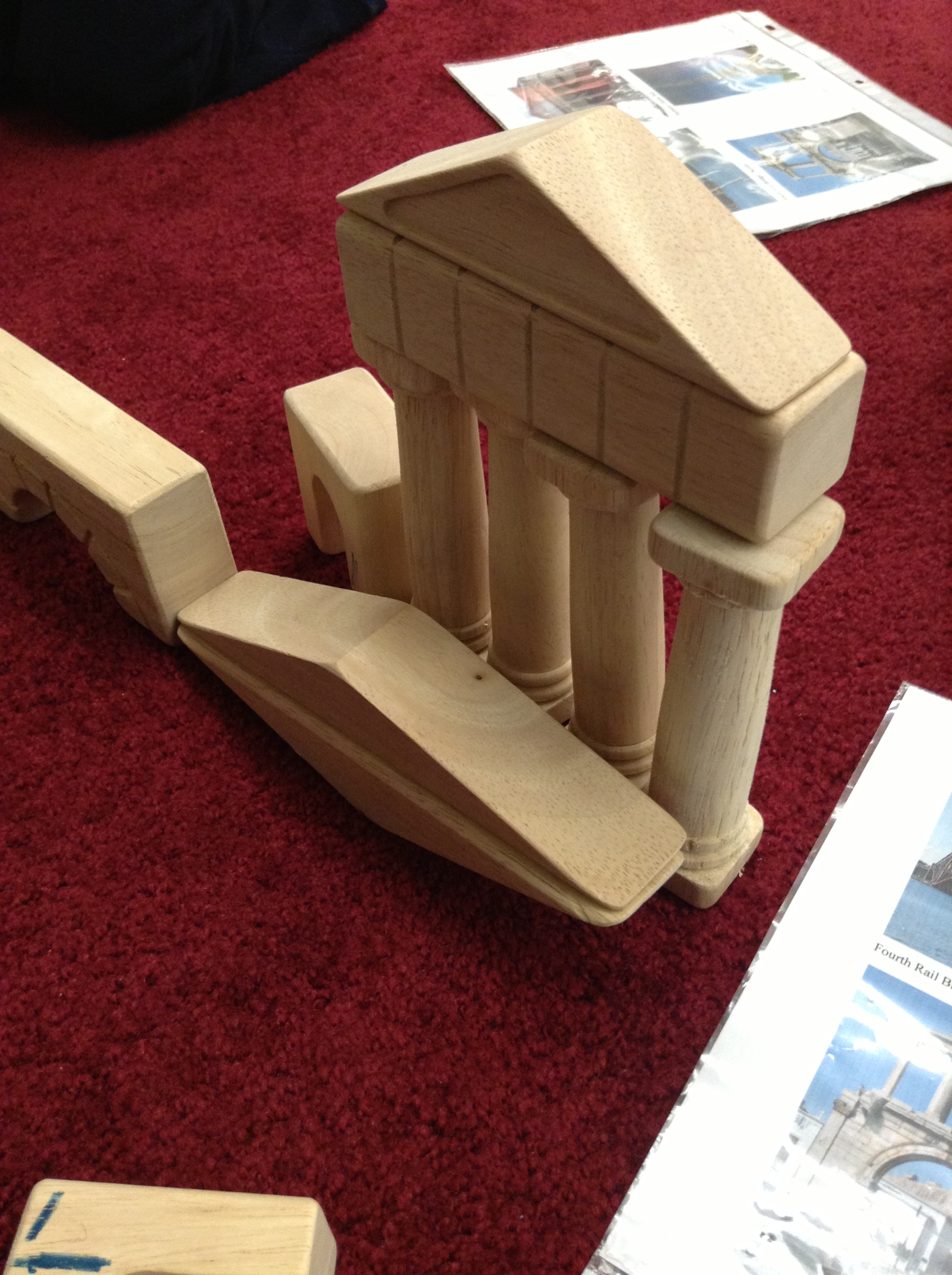
Students at my kindergarten placement re-created real life structures using wooden blocks.

Year 2, Semester 4: After my reading week, I returned to class for another 7 weeks and my final placement was working in a full-day kindergarten classroom within the Toronto Catholic District School Board. Once the program was completed, I registered with the College of Early Childhood Educators to be able to practice formally as a Registered Early Childhood Educator (RECE). Not too long after I graduated in April of 2014, I began working at a childcare centre with toddlers and preschoolers.

My academic career wouldn’t end there as I went on to complete 2.5 years of the Honours Bachelor of Child Development (BCD) degree program at Seneca College.

Having completed my ECE, I entered the fourth semester of the BCD degree program which is why I only had to complete 2.5 years of the 4-year program. The learning I gained in this program opened my eyes to a whole new depth of childhood and child development; from studying about children’s emotional well-being, to brain research and cognitive development, to screening and assessment tools and so much more. My whole understanding, approach and attitude towards the field was shaped drastically by everything I had learned in this program. I ended the BCD program having completed a research study titled, “Job Satisfaction Amongst Male ECE’s and Primary School Teachers”. Having realized how few males there were in both of the two programs I had been in and within the field itself, I had set out to uncover and learn the reasons why by interviewing men who were working as an early childhood educator or a primary school teacher about their level of job satisfaction in their role. Hats off to all the male educators who are working and making a difference in this profession!

My journey to becoming an Early Childhood Educator, followed by a Bachelors in Child Development was such a rewarding and enlightening experience for me, and I’m so grateful for all that I’ve learned from the children, families and educators at placements and from working in the field. For me, this is a journey that will never be over because I believe there is always room for growth and new experiences. This year, I obtained a certificate of completion for the Self-Reg in Early Childhood Development Program and I’m currently working towards completing a Self-Reg Facilitators course. I currently teach and inform educators about the importance of early childhood experiences, brain development, understanding self-regulation, stress and so much more. There really is no end to the learning of an educator as this is a field that is always changing. I’m so glad to have been able to make the choices in my life that allowed me to find the profession that I’m passionate about and proud to be apart of. Much love and appreciation goes out to my family who has always and continues to support me along my path.

Best of luck to all those studying to become Early Childhood Educators. May your passion for children and the profession grow stronger each day.


WEBSITE DISCLAIMER

This website is provided only for informational purposes and not intended to be used to replace professional advice, treatment or professional care. Always speak to your physician, healthcare provider or pediatrician if you have concerns about your own health or the health of a child.

Tips for Teachers Going Back to Work

Early Childhood, Health & Lifestyle, Self-Regulation

See my latest post: 5 Tips for Teachers to Start the School Year Grounded


I still can’t believe I’ve been out of the classroom for half a year. I say half a year because it’s actually really been that long. Since going on March Break, I have not been back to my school building since. In the last 6 months, I navigated and transitioned to online learning with preschoolers and then went straight into summer break. This has been an interesting year to say the least and I’m surprised at how quickly it has flown by, despite everything that has happened. I can’t help but say that I’m excited, (but mostly nervous) to go back to work, considering it’s been such an uncertain and scary time. That being said, I decided to put together a few tips for teachers who, like myself, will be heading back to the classroom (or maybe teaching online), very soon. Writing this and sharing these resources has given me some confidence, optimism and peace of mind about however this 2020-21 school year is meant to unfold, and my hope is that after reading this you will feel the same too.

self care isn t selfish signage
Photo by Madison Inouye

Find Your Calm – Explore Self-Reg and you will come to learn about Lending Your Calm. (I’m in the process of taking a second course with them.) However, I believe that in order for teachers (or anyone) to be able to lend their calm to their students and parents during this time, they first need to be able to find it. Stop and think to yourself, what exactly does calm feel like for me? What are some things that help me to feel calm? For me, it’s doing yoga, listening to music, working out, reading a book, and other times it’s meditating or taking a few deep breaths. Through these practices and activities, I’ve learned what calm feels like. When I’m not feeling it, I know exactly what helps me to get to that state. These past few months have been stressful on us all. This is why it’s so important to practice self-care and find what brings you calm so that you can bring that with you (as best as you can!) each day to work. We’ll surely need it!

alphabet class conceptual cube
Photo by Pixabay

Lend Your Calm – Once you discover what brings you calm and what that feels like, create that in your classroom environment. Calm begets calm. Our body is an energy source, allowing us to feel the vibrations from others. This is also known as limbic resonance or emotional contagion. Children are also able to feel and feed off of the energy from the adults in their lives and from their peers. For example, have you ever noticed how sometimes it only takes one student to change the energy of the entire class? When you feel calm, you can create that same feeling in your students, simply by just feeling it yourself. The beginning of the school year is naturally always stressful for teachers, parents and students. Apart from being calm yourself, think about the many ways you can create a calm and inviting classroom, overall school environment, or virtual learning experience. Whether it’s having less things mounted on the walls, playing calming music, integrating mindfulness-based activities (by engaging your student’s senses), or simply asking your student’s how they’re doing and feeling; when kids are not stressed and feel a sense of safety and calm, they are ready and able to learn at their best. 

woman applying hand sanitizer
Photo by Anna Shvets

Practice Consistency – The beginning of this school year will certainly be like no other. With new policies, guidelines and routines put into place, I imagine it will feel very different and new for us. If you’re physically back at school, it may take time to remember all the new rules and best practices such as washing or sanitizing your hands before and after removing your mask, but with consistency, you will naturally build up the habit of doing so. I’ve already started doing this when I go out so that it won’t all feel entirely new when I go back to work. It’s also important to build these practices with your students. It’ll all be new for them too and it’s much easier to build a routine and habit at the very start of a school year rather than later or halfway through it. Keep in mind that these procedures are in place to ensure the health, safety and well-being of both the school and external community. If you’re unsure about something regarding any of the new changes, don’t hesitate to ask and find out the right answers.

woman in white long sleeve shirt holding white smartphone
Photo by cottonbro

Stay Connected – Whether it’s with your family, friends or colleagues, stay connected with the people in your life. Maybe it’s catching up with a friend over the phone or sending an email to a fellow colleague to see how they’re doing. At the end of the day, we are social beings with a desire to connect, and simply having a chat with someone important in your life may be all it takes to turn your own or someone else’s day around. Lean on your support system when needed and make opportunities for connection with others a part of your daily routine. You’ll truly notice the difference it makes in your attitude, the way you feel, the way you go about each day, and it’s also a great way to boost your immune system!

anonymous ethnic tutor helping little multiracial students with task in classroom
Photo by Katerina Holmes

Take It Slow – Regardless if you’ve been teaching for 20 years or are a new teacher starting your first year, this school year will be new for all of us. New students, families, routines, schedules, procedures, guidelines, expectations, and much more. If you’re finding that you’re already beginning to feel overwhelmed, go back to Finding Your Calm. Notice what you’re feeling and find what feels good and what brings you a sense of calm. One thing I always practice is mindfulness and living in the present moment. I can’t worry and be anxious about the first day of school because I don’t know what to expect. I’m only in control of the here and now so that’s what I choose to focus on. As each day comes and goes, take it slow, ask the questions you need answers to, build relationships and connections, and most importantly, be kind and do your best. And remember, you are the expert in pedagogy and curriculum. Be confident in your abilities, strengths and everything you already know. We got this!

Got more tips for teachers going back to school? Share them in the comments below!


WEBSITE DISCLAIMER

This website is provided only for informational purposes and not intended to be used to replace professional advice, treatment or professional care. Always speak to your physician, healthcare provider or pediatrician if you have concerns about your own health or the health of a child.

5 Tips For Kick-Starting At-Home Learning

Early Childhood

I imagine that many parents may be looking to begin, transition or continue at-home learning with their little ones. So, here is a list of a few tips and suggestions for parents who are considering kick-starting at-home learning!

  1. Create a schedule & routines: Adults work well on a schedule and so do kids. Look at your entire day and decide how you want to organize you and your child’s routine. Build time into your schedule for indoor and outdoor learning experiences, along with meal, snack, break and nap times (for little ones). You can decide how long each routine lasts (e.g., outdoor for one hour) and in what order they fall into. Create a schedule that works for both you and your child.
  2. Set-up designated learning areas: Even if you have a small space to work it, try to set-up consistent and specific areas for learning experiences. If you’re using the same space/area for multiple uses (e.g., art activities at the dinning table), have it completely tidied before it is set-up for something else. Not only does this help to keep areas organized, but it also fosters the routine and teaches your little one to take care of the space and their play materials.
  3. Determine your approach: There are various approaches/styles to nurturing children’s learning experiences. You may have heard of the following approaches before: play-based learning, Montessori, Reggio Emilia, Waldorf, just to list a few. While you might be interested in researching and following one particular approach, I imagine that the overall goal is to provide an optimal and enriching at-home learning experience that is best suited to meet your child’s specific needs and interests.
  4. Connect with other parents: Do you have friends or family members that are leaning towards at-home learning with their own child/ren? Connect with them! Create a social group on Facebook or simply a group chat where you can bounce off ideas, tips and suggestions. Plan outdoor play dates (weather permitting and while physical distancing), or even trips to the library, if and when possible. Build a community with other parents who are on the same journey as you.
  5. Be flexible & have fun: It may be hard at first – transitioning to or beginning at-home learning with your child. But as with any new change or direction, it takes time and patience. Create your schedule, stick with it as best as you can (kids love consistency and routine), but also leave room for flexibility (that’s the beauty with at-home learning!). If one way doesn’t work, make the necessary adjustments and try again. Just be sure to have fun!

If at-home learning is right for you and your little one, especially during this time, it is ultimately your love and care that will make it a wonderful, memorable and rewarding experience for the both of you.

smiling woman tutoring ethnic girl at home
Photo by Ketut Subiyanto

Resources on At-Home Learning


Learn at Home

Learning Resources

“There is only now.”

Early Childhood, Self-Regulation

As part of my Self-Reg Facilitator’s Program course with The MEHRIT Centre, we are always tasked with responding to a series of discussion questions. For last week’s module, we were asked to reflect and respond to one of two quotes. I decided to share the quote and my short reflection on it.

Reading this quote by Susan Hopkins brings to mind what Dr. Stuart Shanker said about the womb not being a stress-free environment, but rather, a stress-reduced environment. Self-regulation is how we manage stress. Even before we are born into this world full of different stressors, we have already encountered and been exposed to a certain degree of stress (low to high) from and through our mother, while in the womb. This can be due to her adjusting to the changes that come with pregnancy (hormonal, emotional, mood, daily routines), possible existing health challenges, environmental stressors, just to list a few. The fetal brain and spinal cord (central nervous system) is the first to develop during fetal development at about week 3 until full term (see: Sensitive Periods of a Baby’s Development). Our nervous system is what’s responsible for our stress response. So even before we are born, that system has already been actively developing and engaged in the womb, and if there are no complications, should be fully developed by the time we are born. Babies are ready for self-regulation from the time their central nervous system is beginning to develop. A fetus in the womb depends on its mother’s ability to self-regulate (manage the stress and changes that come with life and pregnancy) before they are born. As Stuart says in Reframed: Self-Reg for a Just Society, they are “transitioning from one type of womb to another, an ‘external womb'”. Since babies can’t yet self-regulate on their own, once they enter the “external womb” (the world), they depend on the adults in their lives to help them to do so.

An article I came across titled, When Does the Fetus’s Brain Begin to Work? by Zero to Three states: 

“In the last trimester, fetuses are capable of simple forms of learning, like habituating (decreasing their startle response) to a repeated auditory stimulus, such as a loud clap just outside the mother’s abdomen. Late-term fetuses also seem to learn about the sensory qualities of the womb, since several studies have shown that newborn babies respond to familiar odors (such as their own amniotic fluid) and sounds (such as a maternal heartbeat or their own mother’s voice). In spite of these rather sophisticated abilities, babies enter the world with a still-primitive cerebral cortex, and it is the gradual maturation of this complex part of the brain that explains much of their emotional and cognitive maturation in the first few years of life.”

Children are always ready for self-regulation. There is only and always now.


WEBSITE DISCLAIMER

This website is provided only for informational purposes and not intended to be used to replace professional advice, treatment or professional care. Always speak to your physician, healthcare provider or pediatrician if you have concerns about your own health or the health of a child.

Simple Ways to Help Kids Cope with & Manage Stress

Early Childhood, Self-Regulation

Kids have stress too!? Yes! Just like us, kids do have stress.

Here are simple ways to understand and help your kids cope with and manage stress.

Stress in the Womb
Even in utero, a fetus can experience the stress of its mother. Whether that be emotional, physical or physiological, the fetus can feel and be impacted by what the mother is experiencing. Especially when her stress levels are high and/or she has poor health.

The Stress Response System
Regardless of age, the stress response system, formally known as our Autonomic Nervous System (ANS) operates in the exact same way. What I mean by that is, children can experience the same physiological fight, flight or freeze reaction in a threat-like situation. Stress is caused by an adrenaline surge and elevated cortisol levels to create a quick action response. Alternatively, acetylcholine and serotonin are released to slow things down for recovery.

Feelings of Distress
Babies cry to express when they are stressed/in distress such as when they’re tired, hungry, need to be changed or comforted. Babies are not born with coping strategies to deal with stress; therefore, they can solely rely on the love and care from the adults in their life. Matter of fact, coping strategies to deal with stress can continue to develop well into adulthood.  

Photo by Alexander Dummer

Types of Stressors
Children can experience a range of stressors such as biological – feeling hungry, tired, having allergies, emotional – feeling lonely, guilty, embarrassed, cognitive – feeling confused, overstimulated, learning new things, just to list a few. You’d be surprised some of the things that can be considered stressful for a child. The stress that humans experience can also range from positive stress – a normal and healthy part development, tolerable stress – more severe stressors with a limited duration, or toxic stress – adversity with a frequent and/or prolonged duration. Supportive relationships are what help to buffer and reverse the effects of stress. (See: Stress & Stressors)

Stress Behaviours
The manifestation of stress can be interpreted as challenging behaviours such as the following: temper tantrums, a change in eating (undereating or overeating) and/or sleep habits, physical aggression (biting, hitting, kicking), complaining of physical symptoms such as a tummy ache, headache, frequent illnesses due to a low immune system, just to list a few. 


Understanding the science behind stress can be quite complex.

In fact, not all stress is bad for us. It’s a normal key part of development and daily life. Stress is what gets us up in the morning, pushes us to do our best and helps us to Keep Going.

The most important thing to consider when understanding stress would first be to realize that you too experience stress. This will help you to think about how your child may be experiencing and displaying in an age-appropriate way that they’re stressed, and how best you can support them through all the ups and downs that life will inevitably bring their way. Such as the first day of school, trying out for a sports club or going for a job interview.

HERE ARE A FEW WAYS YOU CAN HELP YOUR CHILD COPE WITH AND MANAGE STRESS: 
Photo by cottonbro
  • Ensure they are eating healthy and balanced meals and are getting enough sleep
  • Develop their emotional literacy by helping them to recognize, acknowledge, identify, express and talk about their feelings
  • Engage them in relaxation strategies such as deep breathing, mindfulness/meditation or yoga, as well as in physical activities. These create endorphins in the brain which help to reduce stress
  • Try to create stress-free environments such as device-free dinners/family time and limiting screen time
  • Read age-appropriate books with characters who overcome challenging situations
  • Kids like predictability. Maintain consistency in their daily routines and explain to them in advance when changes may be happening
  • Explain to them that stress is normal part of life and growing up and set positive examples of how you deal with it 

WEBSITE DISCLAIMER

This website is provided only for informational purposes and not intended to be used to replace professional advice, treatment or professional care. Always speak to your physician, healthcare provider or pediatrician if you have concerns about your own health or the health of a child.

Kid-friendly Superfoods for that Sweet Tooth (SMOOV Superfood Blends)

Early Childhood, Health & Lifestyle

Contemplating SMOOV Superfood Blends Healthy Kids Bundle? Well look no further – here’s everything you need to know about why they’ve selected these blends for this bundle and the health benefits for kids behind their ingredients!

Let’s face it – just like us, kids have a sweet tooth, too! I’ll admit I have one.

Made with 6 powerful superfoods that are loaded with nutrients, the Euphoric Blend is a feel–good way to satisfy those cravings and boost your little one’s mood, the healthy way! 

SMOOV euphoric blend

This blend contains the following Certified Organic ingredients:

Cacao – a natural mood elevator and a healthy way to satisfy sweet cravings. Loaded with antioxidants, calcium, iron and magnesium.
Carob – tastes similar to cacao, but much sweeter. Is rich in calcium, fiber and antioxidants that help protect your body from the toxic effects of free radicals (which can include smoke, pesticides and pollution that can damage parts of cells in the body).
Mesquite – a natural energizer and helps in the restoration of the intestinal flora. Is high in protein, magnesium, iron, zinc, potassium and soluble fiber.
Maca – a powerful adaptogen (which helps the body adapt to stress) that can improve energy levels, stamina, emotional health and focus.
Lucuma – a natural, low–glycemic sweetener that also helps regulate blood sugar levels, containing vitamin B3, beta–carotene, calcium, iron and zinc.
Coconut – contains healthy saturated fats, lots of fiber, and promotes healthy blood sugar levels. 

Did you know? Kids have stress too, and their little bodies are learning each day how to manage it, thanks to the love and support of the people in their life – like you!

Made with 8 powerful superfoods loaded with antioxidants, the Berry Exotic Blend helps to fight against stress to the body from free radicals, from the inside out.  

SMOOV berry exotic blend

This blend contains the following Certified Organic ingredients:

Acai Berry – loaded with antioxidants which help neutralize the damaging effects of free radicals throughout the body.
Maqui Berry – loaded with antioxidants that can help protect the body from the toxic effects of free radicals.
Camu Camu Berry – rich in vitamin C among other nutrients. Serves as a powerful antioxidant in your body and improves the health of your skin and immune system.
Goji Berry – helps to maintain good immune function, boost energy and improve mood. A great source of vitamins A, C, fiber, iron, zinc and contain all the essential amino acids.
Black Goji Berry – exceptionally high in antioxidants. Helps to boost the immune system and improve circulation.
Blackberry – beneficial for skin healing and improving brain function. Is high in fiber and packed with vitamins and minerals such as C, K and manganese.
Blueberry – a great source of fiber, vitamins C and K, manganese and antioxidants– known to boost heart health, repair and maintain skin, and improve brain function.
Lucuma– a natural, low–glycemic sweetener that also helps regulate blood sugar levels, containing vitamin B3, beta–carotene, calcium, iron and zinc.

What better way to healthily and heartily satisfy that little one’s sweet tooth than chocolate and berries!


This article was written for SMOOV Superfood Blends.

Are you looking for an easy way to get your greens in, boost your immunity, energy or mood? SMOOV Superfood Blends is a Canadian-based company that carries a variety of healthy, organic and all-natural superfood blends powder. Visit SMOOV today!


WEBSITE DISCLAIMER

This website is provided only for informational purposes and not intended to be used to replace professional advice, treatment or professional care. Always speak to your physician, healthcare provider or pediatrician if you have concerns about your own health or the health of a child.

Kid-friendly Superfoods for Health and Immunity (SMOOV Superfood Blends)

Early Childhood, Health & Lifestyle

Contemplating SMOOV Superfood Blends Immunity Bundle? Well look no further – here’s everything you need to know about why they’ve selected these blends for this bundle and the health benefits for kids behind their ingredients!

SMOOV green blend

Have you already attempted the first 6 of the 7 Ways to try to Get Kids to Eat Veggies and you’re still having trouble getting your kids to eat them?

Then grab hold of the Green Blend in this bundle. Made with 9 powerful superfoods, this blend is packed with ALL your essential nutrients and is the easiest and most delicious way to get those greens in and help your kids stay clear of toxins building up in their body and slowing them down!

This blend contains the following certified organic ingredients:

Alfalfa Grass – supports blood, bone, eye and immune system health.
Barley Grass – helps to improve blood volume, prevents anemia and fatigue.
Oat Grass – known to help regulate blood sugar levels and protect against heart disease.
Wheat Grass – contains lots of vitamins, is rich in amino acids (which helps build protein) and aids the body in detoxification.
Spirulina – loaded with B vitamins, iron, copper and is a complete protein source. Possibly one of the most nutritious foods on the planet.
Chlorella – rich in protein, vitamins B & C, iron, and omega–3 which supports brain, eye and heart health.
Moringa – supports eye health, boosts energy, improves immunity, and aids with detoxification.
Kale – an absolute powerhouse of vitamin A which supports eye, skin health and fights infections, vitamin C which supports the immune system, gums and teeth, and vitamin K which supports blood and bones.
Lucuma – a natural, low–glycemic sweetener that also helps regulate blood sugar levels, containing vitamin B3, beta–carotene, calcium, iron and zinc. 

The cold and flu season can be hard on us all, especially the little ones. Boost their immune system, beat those symptoms and add the Golden Blend to some water or juice.

Made with 5 powerful superfoods that are packed with nutrients, this blend is the best way to boost overall health and support the immune system.

SMOOV golden blend

This blend contains the following Certified Organic ingredients:

Camu Camu Berry – rich in vitamin C among other nutrients that benefits the immune system.
Goji Berry – helps to maintain good immune function, boost energy and improve mood.
Maca – a powerful adaptogen which helps the body adapt to stress.
Lucuma – see benefits listed above.
Carrot – a great source of vitamins A, B, K and potassium. Most commonly associated with improved vision, they also boost heart health, improve digestion. 


This article was written for SMOOV Superfood Blends.

Are you looking for an easy way to get your greens in, boost your immunity, energy or mood? SMOOV Superfood Blends is a Canadian-based company that carries a variety of healthy, organic and all-natural superfood blends powder. Visit SMOOV today!


WEBSITE DISCLAIMER

This website is provided only for informational purposes and not intended to be used to replace professional advice, treatment or professional care. Always speak to your physician, healthcare provider or pediatrician if you have concerns about your own health or the health of a child.

7 Ways to Try and Get Kids to Eat their Veggies

Early Childhood, Health & Lifestyle
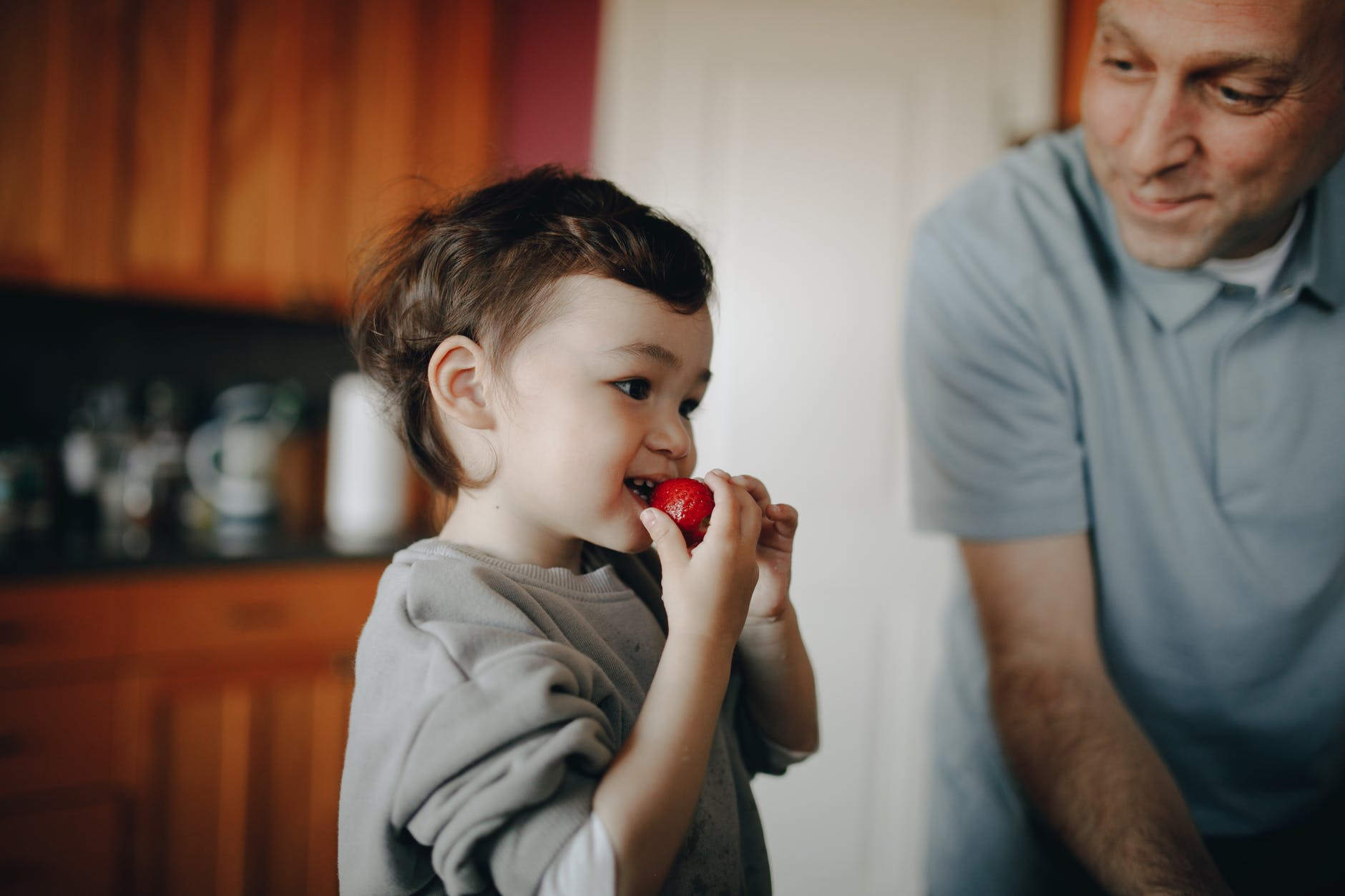
a child eating strawberry beside her father
Photo by PNW Production

Working with young children, I know just how hard it can sometimes be to get them to simply try and hopefully jump at the thought of eating vegetables at snack and mealtimes. I can only imagine how hard it may be to do this at home. So, if you’re struggling in this area, here is a list of 7 ways you could try to get your kids to eat those veggies: 

1. Begin as early as possible: As soon as your little one is ready to begin eating solid foods is a great time to introduce vegetables. Cut them up small, puree them, whatever you need to do. Because we all know just how good vegetables are for us! Plus, there is so much that can be taught to kids about healthy eating at a young age when they are interested in every single thing.

2. Explore with all senses and make it fun: Don’t expect them to love vegetables right away or rush the process. If there’s some hesitation, begin by simply touching, smelling, and tasting (or licking) them. Slowly work their way up to (hopefully) eventually eating them. Talk about the crunch carrots make when you bite into them or the squishiness of tomatoes.

Photo by August de Richelieu

3. Use them in dishes and invite kids into the kitchen: There are so many different meals that can be made with vegetables! Try making a vegetable stir-fry, tomato soup or cauliflower rice. The flavour added from a little salt or pepper can help to mask the taste that some kids just don’t seem to like. Get them to help out with the cooking process, even if it’s with washing the vegetables or sprinkling the seasoning. 

4. Keep trying!: It takes time to acquire a liking to something new. Don’t give up after the first try. Introduce the broccoli or cucumber more than once with a variety of meals, such as with rice one day and then pasta on another occasion. 

5. Set an example and limits: Kids, especially at a young age like to imitate the actions and behaviours of the adults in their lives. If they see you eating them, there’s a chance they’ll be willing to give them a try. If they see something else more appealing advertised on TV, they’ll probably want that instead. So keep that in mind too! 

6. Talk with them: Kids understand everything that goes on around them and learn quickly! Spend time having conversations with them about healthy eating habits and what hungry and satiety feel like. Take pauses at mealtimes for conversations and to slow the process of eating down in order to enjoy the food and the time spent together.

7. Smoothies: We saved the best for last! Smoothies are a great way for kids to get the most fruits and veggies in the shortest amount of time. Not only are smoothies tasty and colourful, they are healthy, fun and super easy to make! Throw in some baby spinach along with blueberries and a banana and voilà! But maybe those fruits and vegetables don’t even last a week in your house before they go bad. Or, maybe you want to top up on your kids already existing vegetable intake. Well, you’ve come to the right place. Add SMOOV Superfood Blends’ Healthy Kids Bundle to your cart and just make sure you have some water or milk at home for when our bundle arrives to you. You can even add their superfood blends to that Spinach Blueberry Banana smoothie. That’s simply all you need to get those veggies in, plus your kids and you will enjoy it! Don’t forget to always make it fun: talk about the loud sound the blender makes! 


This article was written for SMOOV Superfood Blends.

Are you’re looking for an easy way to get your greens in, boost your immunity, energy or mood? SMOOV Superfood Blends is a Canadian-based company that carries a variety of healthy, organic and all-natural superfood blends powder. Visit SMOOV today!


WEBSITE DISCLAIMER

This website is provided only for informational purposes and not intended to be used to replace professional advice, treatment or professional care. Always speak to your physician, healthcare provider or pediatrician if you have concerns about your own health or the health of a child.

Flow is Happiness & Children’s Play

Early Childhood

Photo by cottonbro

Flow is a concept that was identified by a psychologist by the name of Mihaly Csikszentmihalyi. In researching happiness and creativity, he found that people were happiest in this state. Flow is defined as:

The mental state of operation in which a person performing an activity is fully immersed in a feeling of energized focus, full involvement, and enjoyment in the process of the activity. Wikipedia

Flow can also be described as “being in the zone” and can occur in activities such as playing a sport or music, writing, dancing, baking, and even while working, learning or creating.

Photo by Jansel Ferma

The characteristics of Flow include:

Positive Psychology

  1. Complete concentration
  2. Having a clear goal and reward in mind
  3. Experiencing a transformation of time as either going fast or slow
  4. Feeling that the task is intrinsically rewarding
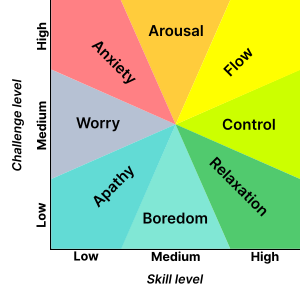
  5. A balance between the level of challenge of a task and your skill level
  6. A feeling of control over the task
  7. Losing sense of self or self-consciousness
  8. A desire to repeat/continue the task

In reference to #5, Flow can’t happen if a task is too easy or too difficult. There needs to be a balance between how challenging a task is and your skill level. For example:

Photo by Wikipedia
  • If the challenge of a task is low (too easy) and your skill level is high in relation to the task, it can lead to boredom
  • If the challenge of a task is high (too difficult) and your skill level is low in relation to the task, it can lead to anxiety

Children can experience Flow at a young age, particularly during their play which is something they naturally love to do. Think back to a time from your childhood when you were so absorbed in playing that you didn’t even realize how much time had passed. What exactly was it you were doing?

If you experienced Flow as a child, it’s likely that:

  1. You concentrated on what you were doing, undisturbed by what was happening around you  
  2. You were intentional in your play, often with a desire to see things through to completion 
  3. You lost awareness of how much time had passed
  4. You felt proud and a sense of accomplishment in what you did or discovered
  5. You were persistent in your play because you were curious, interested, it was challenging enough and it matched your skill level
  6. You were actively in control of what you were doing/accomplishing
  7. You lost awareness of internal cues (e.g., not realizing that you were hungry or tired)
  8. You desired to repeat the experience again

Can you recall specific moments from your childhood when you experienced/felt any of these?

Maybe there are moments now. What moments are those?

Here are a few benefits to children experiencing Flow:

Photo by cottonbro
  • Children learn best when they are curious (which they naturally are), interested in learning something, and have choices and options
  • Children are continuously learning to understand themselves. Skill level, what is deemed as challenging, and states of Flow will differ for each child. When children are in a state of Flow, they are in control of what they are doing (behaviour and actions) which nurtures their ability to self-regulate and persist through experiences that are challenging, age-appropriate and matches their skills and abilities
  • Play is viewed as children’s work. What this means is that through play, children are naturally engaging in learning experiences that improve their skills, strengthen their capabilities and grow their self-development
  • In uninterrupted states of Flow, children can stretch themselves to great possibilities
  • When nurtured, Flow can turn into a child’s lifelong passion, profession and interest

I hope there were moments from your childhood when you experienced Flow.

If quarantine didn’t lead you to discover it again, I hope that you might find or experience something that does.


WEBSITE DISCLAIMER

This website is provided only for informational purposes and not intended to be used to replace professional advice, treatment or professional care. Always speak to your physician, healthcare provider or pediatrician if you have concerns about your own health or the health of a child.

Attachment Styles

Early Childhood

A lasting psychological connectedness between human beings.” – John Bowlby


Humans are social beings. From the moment we are born, we enter a world filled with people. Babies make sense of their world through the relationships and interactions they have with their primary caregivers. This is how an attachment is formed and generally this takes place within the first year of life. An attachment is an emotional bond with another person. It can be formed with a child, parent, friend, teacher or student.

Attachment Theory.

At the heart of evolutionary theory of attachment is a psychiatrist by the name of John Bowlby. His work at a clinic in the 1930s with children who were emotionally disturbed led him to explore the importance of the mother-child relationship in children’s earliest stages of development. Bowlby noticed that children showed great distress when separated from their mothers and that they represented a source of security for the child to explore and engage with the world. He suggested that this mother-child relationship sets the template for which children will view future social relationships they encounter later in life. He believed the window for attachment to develop is from birth to 5 years of age and if an attachment is not established within this time, there are consequences to a child’s development (McLeod, 2017).

Attachment Styles.

At the heart of attachment styles is a psychologist by the name of Mary Ainsworth. She was interested in investigating the varying styles of attachment among children. Ainsworth devised an experimental study in the 1970s called the Strange Situation which observed the interaction between a mother and child in a room, the behaviour and reaction of the child when a stranger entered the room, when the mother left the child with the stranger and then when she returned. The results from the study yielded three main attachment styles among 1 to 2-year-old babies:

Secure – The attachment figure is a safe base (a source of safety, security and comfort) for the child to freely explore and in times of distress. When a child feels a sense of safety and security they will feel comfortable with exploring and interacting with their environment. The child is easily soothed when the mother leaves the room and returns. The attachment figure is overall available, caring, attuned, consistent and responsive to the child’s needs (McLeod, 2018).

Insecure-Avoidant – The child is physically and emotionally independent of the attachment figure. The attachment figure is not sought out by the child during distress when the mother leaves the room and returns. The attachment figure is likely unavailable, insensitive and rejecting of the child’s needs (McLeod, 2018).

Insecure Ambivalent/Resistant – The child displays clingy, dependent behaviour towards their attachment figure. The child does not feel a sense of security from their attachment figure and is hard to soothe and feel comforted when in distress. The attachment figure is considered inconsistency in their responsiveness to the child’s needs (McLeod, 2018).  

The level of sensitivity and responsiveness that a caregiver displays plays a role in the type of attachment style a child will develop and the way in which the child will view themselves and their worth as they grow older and into an adult. Children who have a secure attachment may likely develop a positive outlook, seeing themselves as worthy of care and respect, and may view others as trusting and helpful. A secure attachment tends to lead to healthy self-regulation and coping skills and the development of future relationships that have a balance of intimacy, independence, reliability and trust (McLeod, 2018).

Children with an avoidant attachment style may likely to view themselves as devalued, unworthy and unacceptable due to the rejecting nature of their caregiver. As an adult, they may be emotionally distance from others, fear closeness, intimacy and being vulnerable, as a means of protecting themselves from getting hurt. They may view the world as unreliable, leading them to be self-reliant, self-dependent and protective (McLeod, 2018).

Children with an ambivalent/resistant attachment style may likely have a negative self-image, be angry and confused and seek out ways to gain attention. They may be disinterested and anxious towards others and struggle with forming strong and positive emotional connections. They may also have feelings of insecurity, be overdependent and always seek approval from others (McLeod, 2018).

While a caregiver’s level of sensitivity is one factor, there are many other factors that can influence a child’s attachment style such as their temperament and experiences. Ultimately, early attachment sets the template for the future development of relationships later in life. This is why it’s important that families, parents/caregivers and provided and offered with supports to ensure the healthy development of their child’s social-emotional and overall development.


References

If you are interested in exploring attachment theories further, I have referenced a couple of links below where you can find more information:

Attachment (City of Toronto)

John Bowlby – Attachment Theory; Stages of Attachment:

McLeod, S. A. (2017, Feb 05). Attachment theory. Retrieved from https://www.simplypsychology.org/attachment.html

Mary Ainsworth – Strange Situation:

McLeod, S. A. (2018, Aug 05). Mary Ainsworth. Retrieved from https://www.simplypsychology.org/mary-ainsworth.html


WEBSITE DISCLAIMER

This website is provided only for informational purposes and not intended to be used to replace professional advice, treatment or professional care. Always speak to your physician, healthcare provider or pediatrician if you have concerns about your own health or the health of a child.