With a renewed sense of purpose for my website, I decided to bring it back under a new name. What led me here isn’t just a shift in direction or something completely new, but a deep and growing concern. In the span of just a few months, multiple heartbreaking incidents involving young teens and fatal violence have made headlines.
Listening Closely & Responding with Purpose
Despite my best efforts to shield myself from these heartbreaking stories, they always seem to find their way to me, and they weigh heavily on my heart. As an educator working closely with young children, I’ve come to understand just how important it is that I pay attention to these issues. They’re a reminder of why the work I do, and the information I share on this website, matters. It’s about bringing light to the connection between emotional wellbeing, healthy development, and continuing to advocate for the support and understanding that all children deserve. Because unfortunately, not everyone understands how children’s early childhood development impacts them into adulthood. Through my website, I share information across three key areas.
Lately, I’ve found myself deeply affected by the tragic stories in the news of young teens caught up in crime, often acting out of pain, disconnection, or unmet needs. These headlines aren’t just stories; they’re a stark reminder of what happens when emotional regulation, nurturing, safety, connection, support, and so much more are missing during critical stages of early childhood development.
Planting Seeds of Calm
In addition to the relaunch of my website, I’d like to share that I’m also pursuing a certification as a children’s yoga teacher. I believe yoga and mindfulness can offer young people tools to understand their emotions, manage stress, and reconnect with themselves before they reach a breaking point. I know this, because as an adult, these practices have supported me in many ways to find my own internal calm and balance. Through movement, breath, and stillness, I hope to help children build inner resources that not only support their learning but may one day shift the trajectory of their lives.
By sharing my website and the resources it has to offer, I appreciate your support of the work that I do.
Ms. Bridges is the creator of Aging Wellness, a website that aims to provide health and wellness resources for aging seniors. She’s a breast cancer survivor. She challenges herself to live life to the fullest and inspires others to do so as well.
Photo by Ivan Samkov
School breaks are essential for kids to recharge their batteries and relax. However, it is equally important to keep their minds active during this period. Parents can play a crucial role in supporting their child’s academic progress during school breaks. Here is a guide that will explore simple ways parents can help their kids with their studies during school breaks.
Create a Multipurpose Room
Creating a study space for your child is a great way to help them stay focused and organized. Consider adding a desk and chair, bookshelves, and a bulletin board to their room, to create a multipurpose room that will not only help your child’s focus but will also increase your house’s appraisal value. It is essential to ensure that lighting is adequate, and the room has minimum distractions. Having a designated study area can make studying more enjoyable, efficient, and effective.
Encourage Journaling
Journaling is a great way to practice writing skills and express thoughts and emotions. Encourage your child to keep a journal during school breaks. They can write about their experiences, goals, and aspirations, and reflect on what they’ve learned. You can provide them with prompts or ideas to get them started. This will help improve their writing skills and also encourage self-expression.
Volunteer Together
Volunteering is an excellent way to teach kids about empathy, compassion, and community involvement. Research together and find a volunteer opportunity that aligns with your family’s values. Volunteering at a local animal shelter, food bank, or nursing home can be a great way to give back to the community. This will teach your child the importance of social responsibility, empathy, and kindness.
Practice Public Speaking
Public speaking is a fundamental skill that can benefit kids throughout their lives. Practicing public speaking during school breaks can help build confidence and improve communication skills. Encourage your child to practice speeches, debates, or presentations on a topic they are passionate about. You can act as an audience and provide feedback to improve their delivery.
Encourage Reading
Reading is an essential skill that can improve vocabulary, comprehension, and critical thinking. Encourage your child to read during school breaks, and make it fun by choosing books that align with their interests. Allow them to choose the books they want to read, whether it’s a classic novel or a comic book. Reading together with your child can also be a great bonding experience.
Organize Playdates with an Educational Twist
Organizing playdates with other kids can be a fun way to learn and socialize. Consider organizing playdates with an educational twist, such as a science experiment or an art project. This can help kids learn new skills while having fun with their friends. It’s important to ensure that the activities are age-appropriate and safe.
Practice Problem-Solving
Problem-solving is a valuable skill that can help kids navigate challenges and make sound decisions. Encourage your child to practice problem-solving during school breaks. You can provide them with puzzles, brain teasers, or math problems to solve. This will help improve their critical thinking, analytical, and decision-making skills.
Support Your Child’s Development
Parents can play a vital role in supporting their child’s academic progress during school breaks. Creating a dedicated workspace, encouraging journaling, volunteering together, etc., are all great ways parents can help their kids with their studies during school breaks. These activities not only help kids stay mentally engaged but also teach them valuable life skills that will benefit them throughout their lives.
What are some ways that you keep your child/ren busy and engaged over breaks? Share them in the comments below!
WEBSITE DISCLAIMER
This website is provided only for informational purposes and not intended to be used to replace professional advice, treatment or professional care. Always speak to your physician, healthcare provider or pediatrician if you have concerns about your own health or the health of a child.
There is no way that I can share my passion and interest around studying, learning about, and understanding child and brain development without mentioning Dr. Bruce Perry, how I met him, and how this journey all began for me. This article is all about the events that led up to the day that I met Dr. Bruce Perry, exactly 6 years ago today.
ReadAbout Me, and one important moment you will learn about my story is that I spent 2 years studying in a program that I eventually came to discover was not for me. Coming from a high school that focused on technology, computer science and business, a significant selection of the courses I was enrolled in at the time were computer/business related, such as accounting, marketing and business leadership. With all of those courses already under my belt, I naturally assumed I would be best suited towards (and most likely to be accepted to) an academic career within the field of business. As a result, it was towards a Bachelors in Human Resources Management (BHRM) that I ventured. By the end of my second year, my marks had taken a further dip. I found myself at the Academic Advising Office with an appointment to discuss my academic pathway options. I shuffled through some old emails and managed to find the original email that was send to me:
Dear Samantha Yarde,
This is a friendly reminder that your appointment to meet with an Academic Advisor is scheduled for May 25, 2012, 9:00am Location: Central Square, 103
After my appointment with an advisor, the only option I was left with was that I would be withdrawn from the BHRM program, but could enroll into a different business program and re-take a few of the core courses I needed in order to re-enter and continue in the BHRM program. The email that followed 5 days later stated:
Dear student;
Your grade report for the Fall/Winter 2011 academic session indicates that you are ineligible to proceed in your program. As a result, you have been exited from your (BAS, BDEM, BHRM, BPA or BSW) degree program.
And just like that, I was no longer enrolled in the BHRM program and faced with 2 decisions to make:
Continue in another program, bring up my marks, and re-enter the BHRM program at some point. I had already started the program anyways. Or,
Withdraw from the program altogether and reflect on the direction of my future.
I’m sure you know by now the choice I decided to make.
Initially, my plan was to take a year off, do some volunteering, and figure out what I wanted to do with my life. However, it didn’t take long for me to come to terms with exactly what it was I needed to do; which was to follow the passion I had as a child of becoming a teacher. By September 2012, the same year I had withdrawn from the BHRM program, I was already beginning the next chapter of my life. I applied and was accepted into a four-year Bachelor of Early Childhood Leadership program; but, within a couple of days, quickly decided that I didn’t want to make the same mistake twice to end up exactly where I had started. By the second week, I was transferred into a two-year Early Childhood Education program. While those were two really great years of my academic career, I knew that I wanted to continue my studies. In January of 2014, I was nearing graduation. I started thinking about what I wanted to do next and where I wanted to go. The easiest option for me was to stay at George Brown College, and take the bridging courses I needed to transition back into the Early Childhood Leadership program, which I had initially applied to. By this point in my life, I was confident that I wanted to continue pursuing a career within the field of early childhood. So, I thought to myself, why not just continue on, at this school, and with this program? And I probably would have, if it wasn’t for the Career & Education Fair:
“The Career & Education Fair provides opportunities to meet potential employers, explore educational pathways, learn about professional organizations and attend workshops supporting professional development.” (GBC Newsletter, 2014)
The day of the fair, I learned of 2 new paths I could take: I could go on to obtain a Bachelor in Early Childhood Education, or I could apply to the Honours Bachelor of Child Development (BCD) program; which, of course, was the direction I ended up going. Thinking back now, there was something about my course on Infant and Child Development (PSYC1075), and learning all about developmental health, the architecture of the brain, early brain development, neural and sensory pathways, self-regulation, genes and environment, developmental milestones, and so much more that struck my interest. By September of 2014, not only was I enrolled and ready to begin the BCD program, but I had also discovered Dr. Bruce Perry and of his work, while he was a guest on the Oprah Winfrey Show, many years ago. I recall him mentioning a book he had published in 2006 titled, The Boy Who Was Raised as a Dog: And Other Stories from a Child Psychiatrist’s Notebook–What Traumatized Children Can Teach Us About Loss, Love, and Healing. Captivated to continue learning more, I decided to order a copy of this book.
Meeting Dr. Bruce Perry on May 11, 2015 at the Roots of Empathy Research Symposium
Over the following two and a half years in the BCD program, not only would I be required to read this same book for one of my courses, but I’d also be invited by one of my professors to an event that Dr. Perry would be speaking at. Fast forward to May 11, 2015, where I’d be sitting alongside my peers at the Roots of Empathy Research Symposium in Toronto, Canada. That day, exactly 6 years ago today, I had the chance to meet one of my greatest inspirations in the field. Back in 2014 when I finally had a clearer idea of what I wanted to do with my life and what I was most passionate about, Dr. Perry further opened the doors to my interest in child and brain development, neuroscience, trauma and the importance of early childhood experiences. This brings me to the 2 reasons why I wanted to write and share this article with you:
The Roots of Empathy will be hosting their 2021 Research Symposium on May 11th (today! what a coincidence) & 12th from 1:00-3:00 PM ET. It is virtual, free and open to the public. This event will bring together neuroscientists, psychiatrists, and experts on empathy like Dr. Richard Davidson, Dr. Dan Siegel, and of course, Dr. Bruce Perry.
While I won’t be able to attend the Roots of Empathy Research Symposium this year, I share it with the hopes that you might be able to attend and learn from it, as well as share it with others. I did, however, attend one of Perry and Winfrey’s virtual book tours and look forward to continuing reading What Happened to You? I can already see that it is making a significant impact on the world, and the ways that we view and understand early childhood experiences, brain science, trauma and healing. Have you gotten your copy yet? 📖
Interested in learning more about Roots of Empathy?
Interested in learning more about the What Happened to You?
WEBSITE DISCLAIMER
This website is provided only for informational purposes and not intended to be used to replace professional advice, treatment or professional care. Always speak to your physician, healthcare provider or pediatrician if you have concerns about your own health or the health of a child.
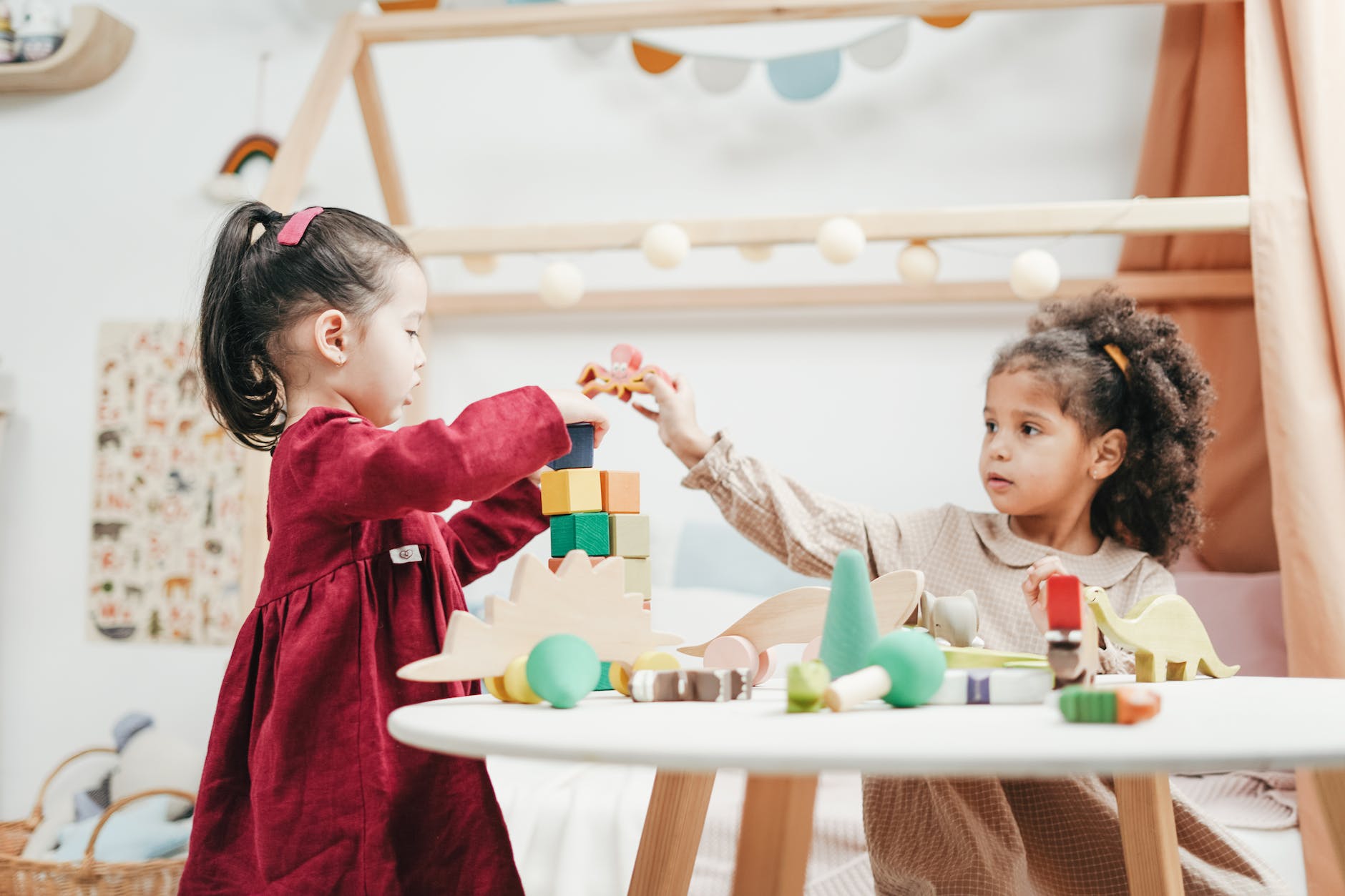
When I’m building in the block room, please don’t say I’m “Just Playing.” For you see, I’m learning as I play about balances and shapes. Who knows, I may be an architect some day.
When I’m getting all dressed up; setting the table, caring for the babies, Don’t get the idea I’m “Just Playing.” For, you see, I’m learning as I play; I may be a mother or father some day.
When you see me sitting in a chair, reading to an imaginary audience. Please don’t laugh and think I’m “Just Playing.” For, you see, I’m learning as I play; I may be a teacher someday.
When you see me combing the bushes for bugs, Or packing my pockets with choice things I find; don’t pass it off as “Just Play.” For, you see, I’m learning as I play; I may be a scientist someday.
When you see me engrossed in a puzzle or some “plaything” at my school, Please don’t feel the time is wasted. For, you see, I’m learning as I play. I’m learning to solve problems and concentrate. I may be in business some day.
Photo by cottonbro studio
When you see me cooking or tasting foods, Please don’t think that because I enjoy it, it is “Just Play.” I’m learning to follow directions and see differences. I may be a cook someday.
When you see me learning to skip, hop, run and move my body; Please don’t say I’m “Just Playing.” For, you see, I’m learning as I play; I’m learning how my body works. I may be a doctor, nurse or athlete someday.
When you asked me, what I’ve done at school today, And I say “I just played”; please don’t misunderstand me. For, you see, I’m learning as I play. I’m learning to enjoy and be successful in my work; I’m preparing for tomorrow. Today, I am a child and my work is play.
“A lot of people think that we’re just here to play [and change diapers] they forget that we’re actually here to teach.”
– Preschool Teacher
One of the best decisions I ever made in my life was withdrawing from an undergraduate in Human Resources Management and going on to study Early Childhood Education (ECE). It was 8 years ago, September 2012, when my journey to become an ECE began and I walked into my first class at George Brown College. While it was an average class size of about 30 students, one of the first things I realized was that most of the class consisted of female students. This was something that had stuck with me throughout my academic career.
To give you an idea of what the Early Childhood Education program was like for me at the time…
Year 1, Semester 1: The first 7 weeks of the program began in class, where I was enrolled in about 7 courses. The following 7 weeks were spent out at a field placement where I would gain valuable, hands-on experience working and learning alongside my host-teacher. A host-teacher works at the placement site, guides you throughout your placement experience and is responsible for your evaluations. My first placement experience was working at a childcare centre with school-age children enrolled in an after-school program. Since placements generally consist of full 8-hour days, I worked in the preschool classrooms until my group of children arrived at the after-school program at the end of their school day.
An ice rink I created for the children at my preschool placement as an extension to the learning that was taking place.
Year 1, Semester 2: Once that placement was completed, it was back to class for another 7 weeks. My first year of the program would end with another placement which was working entirely with preschoolers. In between my 7 weeks of classes and 7 weeks at placement was one week off, commonly known as Reading Week. I’m grateful and lucky to have had that time to travel.
Year 2, Semester 3:My second year began the same way my first did. Seven weeks in class followed by 7 weeks in the field. By this point, I was at my third placement at a Lab school with infants. A Lab school has high expectations as it is operated in association with a college or university. I had never worked with infants prior to this placement but in the end, it was by far my most challenging and rewarding one.
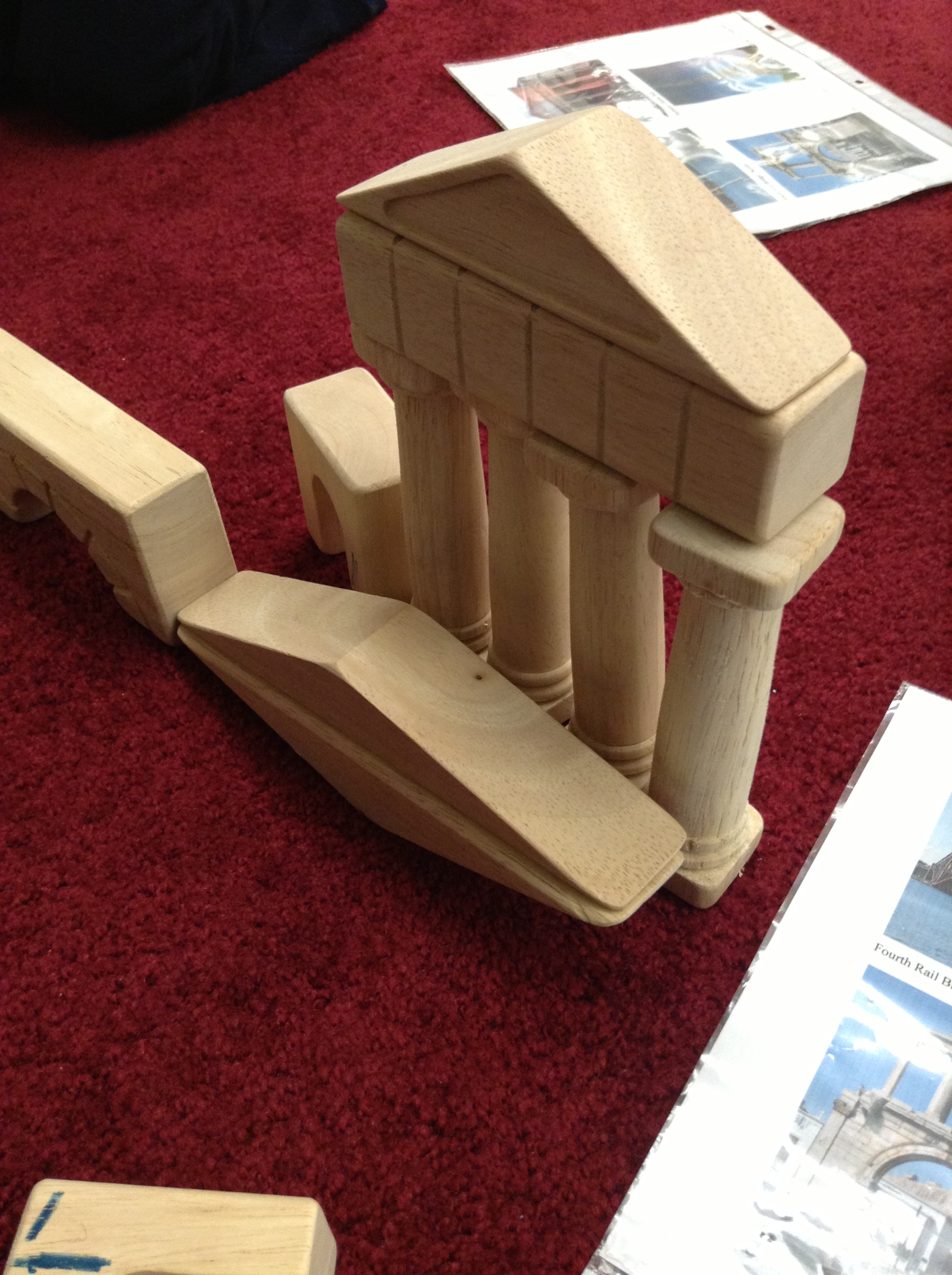
Students at my kindergarten placement re-created real life structures using wooden blocks.
Year 2, Semester 4: After my reading week, I returned to class for another 7 weeks and my final placement was working in a full-day kindergarten classroom within the Toronto Catholic District School Board. Once the program was completed, I registered with the College of Early Childhood Educators to be able to practice formally as a Registered Early Childhood Educator (RECE). Not too long after I graduated in April of 2014, I began working at a childcare centre with toddlers and preschoolers.
My academic career wouldn’t end there as I went on to complete 2.5 years of the Honours Bachelor of Child Development (BCD) degree program at Seneca College.
Having completed my ECE, I entered the fourth semester of the BCD degree program which is why I only had to complete 2.5 years of the 4-year program. The learning I gained in this program opened my eyes to a whole new depth of childhood and child development; from studying about children’s emotional well-being, to brain research and cognitive development, to screening and assessment tools and so much more. My whole understanding, approach and attitude towards the field was shaped drastically by everything I had learned in this program. I ended the BCD program having completed a research study titled, “Job Satisfaction Amongst Male ECE’s and Primary School Teachers”. Having realized how few males there were in both of the two programs I had been in and within the field itself, I had set out to uncover and learn the reasons why by interviewing men who were working as an early childhood educator or a primary school teacher about their level of job satisfaction in their role. Hats off to all the male educators who are working and making a difference in this profession!
My journey to becoming an Early Childhood Educator, followed by a Bachelors in Child Development was such a rewarding and enlightening experience for me, and I’m so grateful for all that I’ve learned from the children, families and educators at placements and from working in the field. For me, this is a journey that will never be over because I believe there is always room for growth and new experiences. This year, I obtained a certificate of completion for the Self-Reg in Early Childhood Development Program and I’m currently working towards completing a Self-Reg Facilitators course. I currently teach and inform educators about the importance of early childhood experiences, brain development, understanding self-regulation, stress and so much more. There really is no end to the learning of an educator as this is a field that is always changing. I’m so glad to have been able to make the choices in my life that allowed me to find the profession that I’m passionate about and proud to be apart of. Much love and appreciation goes out to my family who has always and continues to support me along my path.
Best of luck to all those studying to become Early Childhood Educators. May your passion for children and the profession grow stronger each day.
WEBSITE DISCLAIMER
This website is provided only for informational purposes and not intended to be used to replace professional advice, treatment or professional care. Always speak to your physician, healthcare provider or pediatrician if you have concerns about your own health or the health of a child.
As part of my Self-Reg Facilitator’s Program course with The MEHRIT Centre, we are always tasked with responding to a series of discussion questions. For last week’s module, we were asked to reflect and respond to one of two quotes. I decided to share the quote and my short reflection on it.
Reading this quote by Susan Hopkins brings to mind what Dr. Stuart Shanker said about the womb not being a stress-free environment, but rather, a stress-reduced environment. Self-regulation is how we manage stress. Even before we are born into this world full of different stressors, we have already encountered and been exposed to a certain degree of stress (low to high) from and through our mother, while in the womb. This can be due to her adjusting to the changes that come with pregnancy (hormonal, emotional, mood, daily routines), possible existing health challenges, environmental stressors, just to list a few. The fetal brain and spinal cord (central nervous system) is the first to develop during fetal development at about week 3 until full term (see: Sensitive Periods of a Baby’s Development). Our nervous system is what’s responsible for our stress response. So even before we are born, that system has already been actively developing and engaged in the womb, and if there are no complications, should be fully developed by the time we are born. Babies are ready for self-regulation from the time their central nervous system is beginning to develop. A fetus in the womb depends on its mother’s ability to self-regulate (manage the stress and changes that come with life and pregnancy) before they are born. As Stuart says in Reframed: Self-Reg for a Just Society, they are “transitioning from one type of womb to another, an ‘external womb'”. Since babies can’t yet self-regulate on their own, once they enter the “external womb” (the world), they depend on the adults in their lives to help them to do so.
“In the last trimester, fetuses are capable of simple forms of learning, like habituating (decreasing their startle response) to a repeated auditory stimulus, such as a loud clap just outside the mother’s abdomen. Late-term fetuses also seem to learn about the sensory qualities of the womb, since several studies have shown that newborn babies respond to familiar odors (such as their own amniotic fluid) and sounds (such as a maternal heartbeat or their own mother’s voice). In spite of these rather sophisticated abilities, babies enter the world with a still-primitive cerebral cortex, and it is the gradual maturation of this complex part of the brain that explains much of their emotional and cognitive maturation in the first few years of life.”
Children are always ready for self-regulation. There is only and always now.
WEBSITE DISCLAIMER
This website is provided only for informational purposes and not intended to be used to replace professional advice, treatment or professional care. Always speak to your physician, healthcare provider or pediatrician if you have concerns about your own health or the health of a child.
Kids have stress too!? Yes! Just like us, kids do have stress.
Here are simple ways to understand and help your kids cope with and manage stress.
Stress in the Womb Even in utero, a fetus can experience the stress of its mother. Whether that be emotional, physical or physiological, the fetus can feel and be impacted by what the mother is experiencing. Especially when her stress levels are high and/or she has poor health.
The Stress Response System Regardless of age, the stress response system, formally known as our Autonomic Nervous System (ANS) operates in the exact same way. What I mean by that is, children can experience the same physiological fight, flight or freeze reaction in a threat-like situation. Stress is caused by an adrenaline surge and elevated cortisol levels to create a quick action response. Alternatively, acetylcholine and serotonin are released to slow things down for recovery.
Feelings of Distress Babies cry to express when they are stressed/in distress such as when they’re tired, hungry, need to be changed or comforted. Babies are not born with coping strategies to deal with stress; therefore, they can solely rely on the love and care from the adults in their life. Matter of fact, coping strategies to deal with stress can continue to develop well into adulthood.
Photo by Alexander Dummer
Types of Stressors Children can experience a range of stressors such as biological – feeling hungry, tired, having allergies, emotional – feeling lonely, guilty, embarrassed, cognitive – feeling confused, overstimulated, learning new things, just to list a few. You’d be surprised some of the things that can be considered stressful for a child. The stress that humans experience can also range from positive stress – a normal and healthy part development, tolerable stress – more severe stressors with a limited duration, or toxic stress – adversity with a frequent and/or prolonged duration. Supportive relationships are what help to buffer and reverse the effects of stress. (See: Stress & Stressors)
Stress Behaviours The manifestation of stress can be interpreted as challenging behaviours such as the following: temper tantrums, a change in eating (undereating or overeating) and/or sleep habits, physical aggression (biting, hitting, kicking), complaining of physical symptoms such as a tummy ache, headache, frequent illnesses due to a low immune system, just to list a few.
Understanding the science behind stress can be quite complex.
In fact, not all stress is bad for us. It’s a normal key part of development and daily life. Stress is what gets us up in the morning, pushes us to do our best and helps us to Keep Going.
The most important thing to consider when understanding stress would first be to realize that you too experience stress. This will help you to think about how your child may be experiencing and displaying in an age-appropriate way that they’re stressed, and how best you can support them through all the ups and downs that life will inevitably bring their way. Such as the first day of school, trying out for a sports club or going for a job interview.
HERE ARE A FEW WAYS YOU CAN HELP YOUR CHILD COPE WITH AND MANAGE STRESS:
Photo by cottonbro
Ensure they are eating healthy and balanced meals and are getting enough sleep
Develop their emotional literacy by helping them to recognize, acknowledge, identify, express and talk about their feelings
Engage them in relaxation strategies such as deep breathing, mindfulness/meditation or yoga, as well as in physical activities. These create endorphins in the brain which help to reduce stress
Try to create stress-free environments such as device-free dinners/family time and limiting screen time
Read age-appropriate books with characters who overcome challenging situations
Kids like predictability. Maintain consistency in their daily routines and explain to them in advance when changes may be happening
Explain to them that stress is normal part of life and growing up and set positive examples of how you deal with it
WEBSITE DISCLAIMER
This website is provided only for informational purposes and not intended to be used to replace professional advice, treatment or professional care. Always speak to your physician, healthcare provider or pediatrician if you have concerns about your own health or the health of a child.
Flow is a concept that was identified by a psychologist by the name of Mihaly Csikszentmihalyi. In researching happiness and creativity, he found that people were happiest in this state. Flow is defined as:
The mental state of operation in which a person performing an activity is fully immersed in a feeling of energized focus, full involvement, and enjoyment in the process of the activity. Wikipedia
Flow can also be described as “being in the zone” and can occur in activities such as playing a sport or music, writing, dancing, baking, and even while working, learning or creating.
Experiencing a transformation of time as either going fast or slow
Feeling that the task is intrinsically rewarding
A balance between the level of challenge of a task and your skill level
A feeling of control over the task
Losing sense of self or self-consciousness
A desire to repeat/continue the task
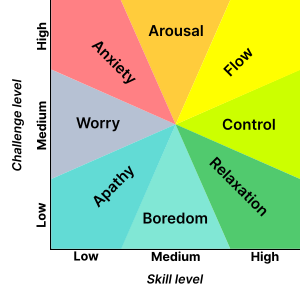
In reference to #5, Flow can’t happen if a task is too easy or too difficult. There needs to be a balance between how challenging a task is and your skill level. For example:
Photo by Wikipedia
If the challenge of a task is low (too easy) and your skill level is high in relation to the task, it can lead to boredom
If the challenge of a task is high (too difficult) and your skill level is low in relation to the task, it can lead to anxiety
Children can experience Flow at a young age, particularly during their play which is something they naturally love to do. Think back to a time from your childhood when you were so absorbed in playing that you didn’t even realize how much time had passed. What exactly was it you were doing?
If you experienced Flow as a child, it’s likely that:
You concentrated on what you were doing, undisturbed by what was happening around you
You were intentional in your play, often with a desire to see things through to completion
You lost awareness of how much time had passed
You felt proud and a sense of accomplishment in what you did or discovered
You were persistent in your play because you were curious, interested, it was challenging enough and it matched your skill level
You were actively in control of what you were doing/accomplishing
You lost awareness of internal cues (e.g., not realizing that you were hungry or tired)
You desired to repeat the experience again
Can you recall specific moments from your childhood when you experienced/felt any of these?
Maybe there are moments now. What moments are those?
Here are a few benefits to children experiencing Flow:
Photo by cottonbro
Children learn best when they are curious (which they naturally are), interested in learning something, and have choices and options
Children are continuously learning to understand themselves. Skill level, what is deemed as challenging, and states of Flow will differ for each child. When children are in a state of Flow, they are in control of what they are doing (behaviour and actions) which nurtures their ability to self-regulate and persist through experiences that are challenging, age-appropriate and matches their skills and abilities
Play is viewed as children’s work. What this means is that through play, children are naturally engaging in learning experiences that improve their skills, strengthen their capabilities and grow their self-development
In uninterrupted states of Flow, children can stretch themselves to great possibilities
When nurtured, Flow can turn into a child’s lifelong passion, profession and interest
I hope there were moments from your childhood when you experienced Flow.
If quarantine didn’t lead you to discover it again, I hope that you might find or experience something that does.
WEBSITE DISCLAIMER
This website is provided only for informational purposes and not intended to be used to replace professional advice, treatment or professional care. Always speak to your physician, healthcare provider or pediatrician if you have concerns about your own health or the health of a child.
“A lasting psychological connectedness between human beings.” – John Bowlby
Humans are social beings. From the moment we are born, we enter a world filled with people. Babies make sense of their world through the relationships and interactions they have with their primary caregivers. This is how an attachment is formed and generally this takes place within the first year of life. An attachment is an emotional bond with another person. It can be formed with a child, parent, friend, teacher or student.
Attachment Theory.
At the heart of evolutionary theory of attachment is a psychiatrist by the name of John Bowlby. His work at a clinic in the 1930s with children who were emotionally disturbed led him to explore the importance of the mother-child relationship in children’s earliest stages of development. Bowlby noticed that children showed great distress when separated from their mothers and that they represented a source of security for the child to explore and engage with the world. He suggested that this mother-child relationship sets the template for which children will view future social relationships they encounter later in life. He believed the window for attachment to develop is from birth to 5 years of age and if an attachment is not established within this time, there are consequences to a child’s development (McLeod, 2017).
Attachment Styles.
At the heart of attachment styles is a psychologist by the name of Mary Ainsworth. She was interested in investigating the varying styles of attachment among children. Ainsworth devised an experimental study in the 1970s called the Strange Situation which observed the interaction between a mother and child in a room, the behaviour and reaction of the child when a stranger entered the room, when the mother left the child with the stranger and then when she returned. The results from the study yielded three main attachment styles among 1 to 2-year-old babies:
Secure – The attachment figure is a safe base (a source of safety, security and comfort) for the child to freely explore and in times of distress. When a child feels a sense of safety and security they will feel comfortable with exploring and interacting with their environment. The child is easily soothed when the mother leaves the room and returns. The attachment figure is overall available, caring, attuned, consistent and responsive to the child’s needs (McLeod, 2018).
Insecure-Avoidant – The
child is physically and emotionally independent of the attachment figure. The attachment
figure is not sought out by the child during distress when the mother leaves
the room and returns. The attachment figure is likely unavailable, insensitive
and rejecting of the child’s needs (McLeod, 2018).
Insecure Ambivalent/Resistant – The child displays clingy, dependent behaviour
towards their attachment figure. The child does not feel a sense of security
from their attachment figure and is hard to soothe and feel comforted when in
distress. The attachment figure is considered inconsistency in their responsiveness
to the child’s needs (McLeod, 2018).
The level of sensitivity and responsiveness that a caregiver displays plays a role in the type of attachment style a child will develop and the way in which the child will view themselves and their worth as they grow older and into an adult. Children who have a secure attachment may likely develop a positive outlook, seeing themselves as worthy of care and respect, and may view others as trusting and helpful. A secure attachment tends to lead to healthy self-regulation and coping skills and the development of future relationships that have a balance of intimacy, independence, reliability and trust (McLeod, 2018).
Children with an avoidant attachment style may likely to view themselves as devalued, unworthy and unacceptable due to the rejecting nature of their caregiver. As an adult, they may be emotionally distance from others, fear closeness, intimacy and being vulnerable, as a means of protecting themselves from getting hurt. They may view the world as unreliable, leading them to be self-reliant, self-dependent and protective (McLeod, 2018).
Children with an ambivalent/resistant attachment style may likely have a negative self-image, be angry and confused and seek out ways to gain attention. They may be disinterested and anxious towards others and struggle with forming strong and positive emotional connections. They may also have feelings of insecurity, be overdependent and always seek approval from others (McLeod, 2018).
While a caregiver’s level of sensitivity is one factor, there are many other factors that can influence a child’s attachment style such as their temperament and experiences. Ultimately, early attachment sets the template for the future development of relationships later in life. This is why it’s important that families, parents/caregivers and provided and offered with supports to ensure the healthy development of their child’s social-emotional and overall development.
References
If you are interested in exploring attachment theories further, I have referenced a couple of links below where you can find more information:
This website is provided only for informational purposes and not intended to be used to replace professional advice, treatment or professional care. Always speak to your physician, healthcare provider or pediatrician if you have concerns about your own health or the health of a child.
“Let’s raise children who won’t have to recover from their childhoods.” – Pamela Leo
Early Childhood Development, (often referred to as ECD), is the development that occurs within a child’s life from 0-8 years of age. This is a time of rapid growth in the social, emotional, cognitive, linguistic, and physical development of a child. This all takes place in the context in which a child is developing such as the home, child care centre and/or community.
But what exactly is happening during ECD?
The most important and crucial time of a child’s development is essentially the first 3 years of their life. But why is this? Well, during this stage of development, there are 1 million new neural connections every second that are happening in the brain when a baby learns and makes sense of their environment and everything that is happening around them. The genetics that a baby is born with also play an important role as well. Genetics, early experiences, interactions and relationships with the people in their life, as well as the environment in which they live, all interact and influence the quality and architectural foundation of the developing brain. The development of a solid and sturdy foundation is optimal.
So, how is a solid and sturdy foundation built?
A solid and sturdy foundation is built through serve and return interactions (see: “More on Serve & Return” below). This consists of the back-and-forth interactions between a young child and an adult. When a child uses facial expressions, babbling and gestures to interact, serve and return consists of the level of sensitivity in the actions, gestures, eye contact and words that an adult uses to appropriately respond to the child and their needs. During serve and return interactions, neural connections in a child’s brain are being made, strengthened and ultimately set the foundation for the development of future communication and social skills.
What happens when there is little to no serve and return interactions happening between a child and an adult?
When there is a lack of serve and return maintained by the adult or their responses are inconsistent and/or inappropriate, this contributes to creating a weak foundation, possibly an insecure attachment, resulting in the architecture of a child’s brain not developing as it should. Consequently, this impacts their learning, behaviour and development, and could lead to long-term health and developmental issues. At its earliest development, the human brain is “plastic”, meaning it’s malleable, flexible and easier to change. Over time, connections from experiences and interactions that are repeated and “hardwired” into the brain become harder to reverse. Long-term experiences and interactions that lack serve and return become harder to repair later.
How does a sturdy foundation impact future development?
Not only does serve and return build a sturdy foundation, it also fosters a baby’s social and emotional development. When a baby cries, she may be easily comforted by her caregiver’s touch. When a baby babbles, he learns new words from his caregiver’s gentle and calm responses. When these early experiences are happening, they positively influence the development of future, more complex, emerging and interrelated abilities that build on top such as cognition and language (see: The Science of Early Childhood). These are skills that become essential when a child enters school.
So, what does all this mean?
Early childhood is a time of rapid development, growth and potential. When a sturdy social and emotional foundation is not established, which includes the development of self-regulation (which an adult plays a crucial role in helping a child to develop), a child will have difficulty developing more complex skills. For example, a child who struggles with regulating their emotions because they did not have the experiences with an adult that would have helped to foster the development of this may have a challenging time remaining focused at more complex skills and tasks. The type of foundation that is set during this time is so important and fundamental to the successful future development of a child. When a sturdy foundation is established through the care, interaction and response of an adult, a child has the capacity to build upon the development of necessary future skills.
Let’s ensure that children’s early childhood is a time of great care, attention and understanding. Let’s get it right from the start. As Pamela Leo said, “Let’s raise children who won’t have to recover from their childhoods“.
This website is provided only for informational purposes and not intended to be used to replace professional advice, treatment or professional care. Always speak to your physician, healthcare provider or pediatrician if you have concerns about your own health or the health of a child.












 the calm educator