Maximizing School Breaks: Tips for Parents to Help Kids Stay on Track

Early Childhood

Shared by Hazel Bridges

Ms. Bridges is the creator of Aging Wellness, a website that aims to provide health and wellness resources for aging seniors. She’s a breast cancer survivor. She challenges herself to live life to the fullest and inspires others to do so as well.


mother and son reading a book
Photo by Ivan Samkov

School breaks are essential for kids to recharge their batteries and relax. However, it is equally important to keep their minds active during this period. Parents can play a crucial role in supporting their child’s academic progress during school breaks. Here is a guide that will explore simple ways parents can help their kids with their studies during school breaks. 

Create a Multipurpose Room 

Creating a study space for your child is a great way to help them stay focused and organized. Consider adding a desk and chair, bookshelves, and a bulletin board to their room, to create a multipurpose room that will not only help your child’s focus but will also increase your house’s appraisal value. It is essential to ensure that lighting is adequate, and the room has minimum distractions. Having a designated study area can make studying more enjoyable, efficient, and effective. 

Encourage Journaling 

Journaling is a great way to practice writing skills and express thoughts and emotions. Encourage your child to keep a journal during school breaks. They can write about their experiences, goals, and aspirations, and reflect on what they’ve learned. You can provide them with prompts or ideas to get them started. This will help improve their writing skills and also encourage self-expression. 

Volunteer Together 

Volunteering is an excellent way to teach kids about empathy, compassion, and community involvement. Research together and find a volunteer opportunity that aligns with your family’s values. Volunteering at a local animal shelter, food bank, or nursing home can be a great way to give back to the community. This will teach your child the importance of social responsibility, empathy, and kindness. 

Practice Public Speaking 

Public speaking is a fundamental skill that can benefit kids throughout their lives. Practicing public speaking during school breaks can help build confidence and improve communication skills. Encourage your child to practice speeches, debates, or presentations on a topic they are passionate about. You can act as an audience and provide feedback to improve their delivery. 

Encourage Reading 

Reading is an essential skill that can improve vocabulary, comprehension, and critical thinking. Encourage your child to read during school breaks, and make it fun by choosing books that align with their interests. Allow them to choose the books they want to read, whether it’s a classic novel or a comic book. Reading together with your child can also be a great bonding experience. 

Organize Playdates with an Educational Twist 

Organizing playdates with other kids can be a fun way to learn and socialize. Consider organizing playdates with an educational twist, such as a science experiment or an art project. This can help kids learn new skills while having fun with their friends. It’s important to ensure that the activities are age-appropriate and safe. 

Practice Problem-Solving 

Problem-solving is a valuable skill that can help kids navigate challenges and make sound decisions. Encourage your child to practice problem-solving during school breaks. You can provide them with puzzles, brain teasers, or math problems to solve. This will help improve their critical thinking, analytical, and decision-making skills. 

Support Your Child’s Development 

Parents can play a vital role in supporting their child’s academic progress during school breaks. Creating a dedicated workspace, encouraging journaling, volunteering together, etc., are all great ways parents can help their kids with their studies during school breaks. These activities not only help kids stay mentally engaged but also teach them valuable life skills that will benefit them throughout their lives. 


What are some ways that you keep your child/ren busy and engaged over breaks? Share them in the comments below!


WEBSITE DISCLAIMER

This website is provided only for informational purposes and not intended to be used to replace professional advice, treatment or professional care. Always speak to your physician, healthcare provider or pediatrician if you have concerns about your own health or the health of a child.


5 Ways to Support Early Literacy Skills

Early Childhood

“Children are made readers on the laps of their parents.” – Emilie Buchwald

Earlier this year, the Ontario Human Rights Commission released a Right to Read document on issues affecting students with reading disabilities. While thinking about how schools are opening back next week for children in Ontario, I wanted to share 5 ways that parents/caregivers can begin supporting early literacy skills at home and from an early age.

1. Develop an early love for books: Books can be introduced to little ones, even while they are in the womb! Did you know that in the final trimester of pregnancy, babies become better able at hearing a range of tones, and might even react to the sounds and voices that they hear outside of the womb? If a fetus hears the same melody over and over again, they will likely recognize this sound as a newborn later on. Check out Annie Murphy Paul’s TedTalk on What we learn before we’re born. Instilling a reading routine from a young age and continuing as your child gets older will contribute to strengthening and building their imagination, curiosity and interest in books.

woman reading book to toddler

2. Have books available in the home: Have books that you love to read and a selection of children’s books available. Did you know that children love to imitate the actions of adults? If they witness your love and interest for reading, they too will start to build that interest themselves. The library is also a wonderful place to explore a wide selection of books on shapes, letters, colours, emotions, and so much more. Sometimes I like to put eBooks and eAudiobooks on hold from the Toronto Public Library. Whether you live in Toronto or not, their amazing Ready for Reading program is worth checking out, as it’s filled with lots of great information about children’s early literacy. If you do live in or near Toronto, make sure to check out one of their KidsStop early literacy centres near to you, and get a free library card if you don’t already have one!

books on rack

3. Teach the alphabet: What better way of learning the letters A-Z than through the alphabet song. Talk with your child about the different shape or symbol formation of the upper and lower case letters of the alphabet. Fun ways to explore this can also be from an alphabet puzzle, poster, and especially books. There are many books about the alphabet and lots that are written in more than one language. One of my favourite alphabet books is ABC Mindful Me by Christiane Engel.

white red green and yellow letter letter letter letter letter letter letter letter letter letter

4. Talk often and teach new vocabulary: Long gone are the days when “goo-goo, ga-ga” was used to communicate back to a baby. Young children develop their expressive language, what they say and communicate, both verbally or non-verbally, from their receptive language, what they hear, see and understand from the people around them. Expose your child to a range of new vocabulary and explain to them what complex words in books mean. This will support them when they begin to talk, read and write.

photo of woman and girl talking while lying on bed

5. Play together: Children learn and understand so much about themselves and the world around them through play. With and alongside you, and even through their own independent exploration. Sing rhyming songs, listen to music, play games and activities with letters and words, create your own stories, or simply play pretend. Play materials such as blocks, toys and manipulatives help to develop the muscles in their hands that they will soon need for holding writing tools.

a mother playing ukulele while singing to her daughter

Ever wonder what goes on in a child’s brain while you’re reading together? Check out this video 👇


Additional Resources:

About the Right to Read Inquiry

Encyclopedia on Early Childhood Development – Language Development and Literacy

Zero to Three – Reading Resources

Toronto Public Library – Ready for Reading

Toronto Public Library – Resources for Teachers & Parents

Toronto Public Library – Children’s Books List

Sunnyseed – Book Club

Reading with Littles: Free Tips, Milestones, and Foundational Early Literacy Skills for Babies & Beyond (Thank you for allowing us to share your resources, Sunnyseed!)

The Canadian Children’s Book Centre

Resources for Children with Hearing and/or Vision Needs:

Literacy for Children with Combined Vision and Hearing Loss

Paths to Literacy – Overview of Literacy for Children and Youth Who Are Deafblind

The Outreach Center for Deafness and Blindness – Language and Literacy Resources

National Center on Deaf-Blindness – Literacy


WEBSITE DISCLAIMER

This website is provided only for informational purposes and not intended to be used to replace professional advice, treatment or professional care. Always speak to your physician, healthcare provider or pediatrician if you have concerns about your own health or the health of a child.

Just Playing

Early Childhood
little black girl in medical robe playing with toy stethoscope
Photo by Amina Filkins

By Anita Wadley

When I’m building in the block room, please don’t say I’m “Just Playing.”
For you see, I’m learning as I play about balances and shapes.
Who knows, I may be an architect some day.


When I’m getting all dressed up; setting the table, caring for the babies,
Don’t get the idea I’m “Just Playing.”
For, you see, I’m learning as I play;
I may be a mother or father some day.


When you see me sitting in a chair, reading to an imaginary audience.
Please don’t laugh and think I’m “Just Playing.”
For, you see, I’m learning as I play;
I may be a teacher someday.


When you see me combing the bushes for bugs,
Or packing my pockets with choice things I find; don’t pass it off as “Just Play.”
For, you see, I’m learning as I play;
I may be a scientist someday.


When you see me engrossed in a puzzle or some “plaything” at my school,
Please don’t feel the time is wasted.
For, you see, I’m learning as I play. I’m learning to solve problems and concentrate.
I may be in business some day.

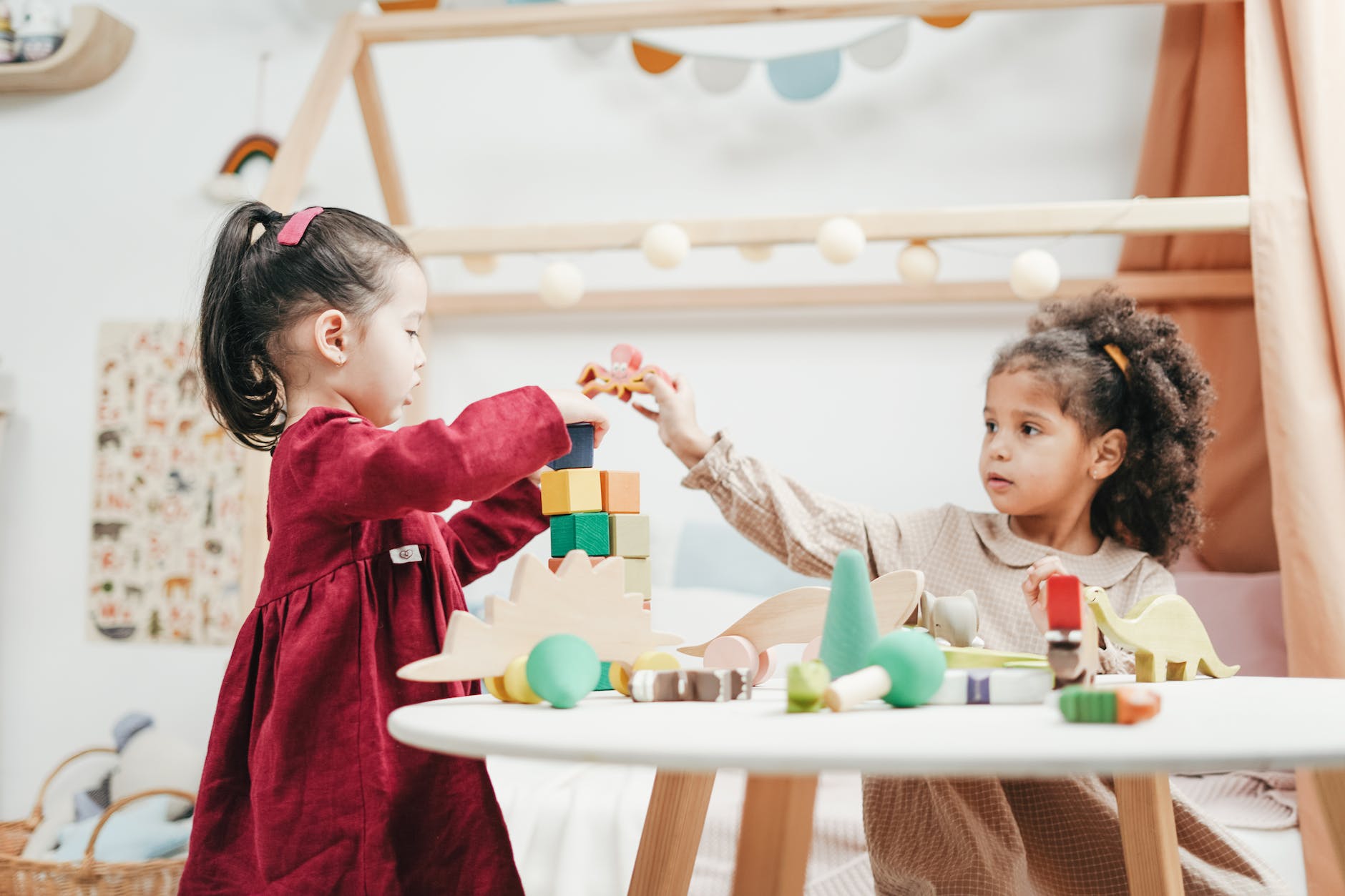
girl in red dress playing a wooden blocks
Photo by cottonbro studio


When you see me cooking or tasting foods,
Please don’t think that because I enjoy it, it is “Just Play.”
I’m learning to follow directions and see differences.
I may be a cook someday.


When you see me learning to skip, hop, run and move my body;
Please don’t say I’m “Just Playing.”
For, you see, I’m learning as I play; I’m learning how my body works.
I may be a doctor, nurse or athlete someday.


When you asked me, what I’ve done at school today,
And I say “I just played”; please don’t misunderstand me.
For, you see, I’m learning as I play.
I’m learning to enjoy and be successful in my work;
I’m preparing for tomorrow.
Today, I am a child and my work is play.


Happy Early Childhood Educator Appreciation Day!

Flow is Happiness & Children’s Play

Early Childhood

Photo by cottonbro

Flow is a concept that was identified by a psychologist by the name of Mihaly Csikszentmihalyi. In researching happiness and creativity, he found that people were happiest in this state. Flow is defined as:

The mental state of operation in which a person performing an activity is fully immersed in a feeling of energized focus, full involvement, and enjoyment in the process of the activity. Wikipedia

Flow can also be described as “being in the zone” and can occur in activities such as playing a sport or music, writing, dancing, baking, and even while working, learning or creating.

Photo by Jansel Ferma

The characteristics of Flow include:

Positive Psychology

  1. Complete concentration
  2. Having a clear goal and reward in mind
  3. Experiencing a transformation of time as either going fast or slow
  4. Feeling that the task is intrinsically rewarding
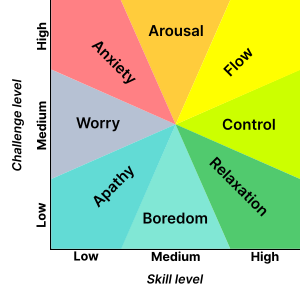
  5. A balance between the level of challenge of a task and your skill level
  6. A feeling of control over the task
  7. Losing sense of self or self-consciousness
  8. A desire to repeat/continue the task

In reference to #5, Flow can’t happen if a task is too easy or too difficult. There needs to be a balance between how challenging a task is and your skill level. For example:

Photo by Wikipedia
  • If the challenge of a task is low (too easy) and your skill level is high in relation to the task, it can lead to boredom
  • If the challenge of a task is high (too difficult) and your skill level is low in relation to the task, it can lead to anxiety

Children can experience Flow at a young age, particularly during their play which is something they naturally love to do. Think back to a time from your childhood when you were so absorbed in playing that you didn’t even realize how much time had passed. What exactly was it you were doing?

If you experienced Flow as a child, it’s likely that:

  1. You concentrated on what you were doing, undisturbed by what was happening around you  
  2. You were intentional in your play, often with a desire to see things through to completion 
  3. You lost awareness of how much time had passed
  4. You felt proud and a sense of accomplishment in what you did or discovered
  5. You were persistent in your play because you were curious, interested, it was challenging enough and it matched your skill level
  6. You were actively in control of what you were doing/accomplishing
  7. You lost awareness of internal cues (e.g., not realizing that you were hungry or tired)
  8. You desired to repeat the experience again

Can you recall specific moments from your childhood when you experienced/felt any of these?

Maybe there are moments now. What moments are those?

Here are a few benefits to children experiencing Flow:

Photo by cottonbro
  • Children learn best when they are curious (which they naturally are), interested in learning something, and have choices and options
  • Children are continuously learning to understand themselves. Skill level, what is deemed as challenging, and states of Flow will differ for each child. When children are in a state of Flow, they are in control of what they are doing (behaviour and actions) which nurtures their ability to self-regulate and persist through experiences that are challenging, age-appropriate and matches their skills and abilities
  • Play is viewed as children’s work. What this means is that through play, children are naturally engaging in learning experiences that improve their skills, strengthen their capabilities and grow their self-development
  • In uninterrupted states of Flow, children can stretch themselves to great possibilities
  • When nurtured, Flow can turn into a child’s lifelong passion, profession and interest

I hope there were moments from your childhood when you experienced Flow.

If quarantine didn’t lead you to discover it again, I hope that you might find or experience something that does.


WEBSITE DISCLAIMER

This website is provided only for informational purposes and not intended to be used to replace professional advice, treatment or professional care. Always speak to your physician, healthcare provider or pediatrician if you have concerns about your own health or the health of a child.