Christmas brings a special kind of magic for children. The arrival of Santa Claus, lights, presents under the tree, winter break, and the thrill of all the fun and wonderful things that the holiday season brings. What we often overlook is how meaningful this anticipation is. It naturally teaches kids self-regulation, delayed gratification, and emotional balance.
Growing up, I was allowed to open one gift the night of Christmas Eve and could open the rest after breakfast on Christmas Day. As a child, that wait felt endless, but it taught me to sit with excitement instead of acting on it right away. It contributed to shaping my ability to handle stress, cope with big emotions, and appreciate the moment.
Today, children are growing up in an overstimulated world. Instant entertainment, constant notifications, and fast-paced digital experiences leave little room for slowing down or practicing patience. This constant stream of stimulation hasn’t just changed how kids engage with the world, it’s altered their emotional pacing. For many children, slowing down feels harder, quiet feels uncomfortable, and waiting feels unfamiliar. As a result, the emotional skills that used to develop organically now need more intentional nurturing.
Wonder naturally emerges during the holiday season and it invites children (and even adults) to pause, breathe, and slow down.
When we choose to nurture these moments:
Reading holiday books together
Counting down on an advent calendar
Baking cookies and waiting for them to cool
Wrapping presents slowly and thoughtfully
Saving certain traditions for “the special day”
…we’re not just creating memories. We’re building emotional muscles.
These experiences help children:
manage excitement
cope with big emotions
tolerate waiting
navigate the highs and lows of anticipation
build resilience for everyday stress
These are the skills that help kids weather frustration, disappointment, and overwhelm. Skills they will use far beyond childhood. Although childhood is always changing, the magic of waiting is one of the most powerful gifts we can give children.
Happy Holidays!
WEBSITE DISCLAIMER
This website is provided only for informational purposes and not intended to be used to replace professional advice, treatment or professional care. Always speak to your physician, healthcare provider or pediatrician if you have concerns about your own health or the health of a child.
I began drafting this post a few months ago while thinking about the birthday of a friend and the meaning that I feel birthdays hold beyond the day itself. Being my birthday month, I decided to finally share this post.
Birthdays can often spark mixed feelings. Some people love the spotlight, while others would rather skip the fuss altogether. I used to be someone who soaked up the celebration and attention, but as I’ve gotten older, I’ve found myself caring less about being the center of it all. What I’ve come to recognize, though, is that a birthday isn’t only about how we feel in that moment or about that day. It’s about giving the people in our lives a chance to pause, recognize us, and say, “I see you, I appreciate you, I’m glad you’re here.”
Photo by Natalie Bond
That recognition has roots in childhood. Think back to your earliest birthdays- maybe the thrill of balloons and cake, or the nervous feeling when everyone sang Happy Birthday. Maybe your birthday wasn’t marked at all, and it passed quietly like any other day. For many kids, whatever their experience, birthdays become early moments to practice self-regulation: managing excitement, soothing overwhelm, or simply getting through a day that feels ordinary. Those experiences don’t just stay in childhood. They echo into adulthood, shaping how we respond to attention, connection, and celebration, whether abundant or absent. I’m grateful for the way my birthdays were celebrated growing up, and for the parties my friends invited me to. Those experiences shaped the appreciation I have for being celebrated on and around my birthday, and for getting to celebrate others for theirs.
Even if we feel uncomfortable with the attention due to former experiences, allowing ourselves to be celebrated gives others the gift of expressing their love and appreciation for us. And when we receive that recognition, whether big or small, with openness, it nurtures calm within us. Reminding our nervous system that we are safe, valued, and part of something larger than our day-to-day routines.
It may be just one day on the calendar, but the impact ripples across the other 364. A kind word, a thoughtful message, or a small act of recognition, reinforces the invisible threads of connection that hold our relationships and even our well-being together.
So the next time your birthday rolls around, whether you’re excited or hesitant, or see it as just another day altogether, take a deep breath and remember this: it’s a chance to let the people in your life say, “You matter.” And when you carry that feeling forward, it becomes a quiet source of strength, grounding, and calm, all year long.
What feelings come up for you when you think about your birthday or the birthday of others?
Would love to hear your thoughts in the comments.
WEBSITE DISCLAIMER
This website is provided only for informational purposes and not intended to be used to replace professional advice, treatment or professional care. Always speak to your physician, healthcare provider or pediatrician if you have concerns about your own health or the health of a child.
With back-to-school around the corner or having already started (depending where you are in the world), it tends to often come with a mix of anticipation and anxiety; not only for teachers, but for students and parents as well. Whether you’re returning to the same classroom or stepping into a new role, this time of year can bring a rush of emotions and an ever-growing to-do list. As teachers, we prepare materials and plan lessons, but it’s just as important to prepare ourselves for the year ahead.
Here are five grounding tips to help teachers start the school year with clarity, confidence, and care for both themselves and their students.
1. Begin With Check-Ins – Before you start setting up your classroom or organizing your lesson plans, take time to check-in with yourself. What will allow you to feel grounded and present this year? Is it quiet mornings? A new boundary around after-hours work? A daily walk before school starts? Creating even a small check-in ritual can help you anchor into the moment before the full pace of school life kicks in.
Before the school year begins, I like to start getting myself into a routine. For me that means getting to sleep earlier, and waking up feeling well rested so that I can start my day with some gentle movement. That way when the first day of school arrives, I’m already feeling grounded and prepared for the exciting and busy day ahead.
What helps you come back to yourself when things feel chaotic? What helps your students?
Photo by RDNE Stock project
2. Set the Tone With Intention– It’s tempting to want everything to be “just right” on the first day, but what’s more important is your presence. Set your tone for the year by showing up as someone who is real, warm, and responsive, and not someone who’s holding it all together at the expense of their own well-being. Whether it’s your classroom environment or your teaching style, let your values guide the tone you set.
As each new school year arrived, I began to realize that the most important thing instead of wishing the day would go perfectly, was to just let it unfold as it would. Many of my preschool students would cry as they adjusted to their new school routine. What was important was that they felt safe and attended to. Not so much that they had participated in the first day of school activities.
How do you want your students to feel in your classroom and how can you model that for them?
Photo by cottonbro studio
3. Build Routines That Work for You– Structure matters for students and teachers. Think about your daily rhythms, not just your schedule. Do your current routines energize or exhaust you or your students? Are there small shifts you can make to create smoother transitions or calmer mornings? Consistency doesn’t mean rigidity. It means developing patterns that support both teaching and living well.
I always found that it took a few weeks of everyone settling, adjusting to a new school year, classroom and cohort, before a smooth flow was established. It took time to determine what was and wasn’t going to work with my classroom depending on the needs of my students. Some years required a bit more movement integrated into the day, while others a more slower pace and supportive transitions.
What routines help you and your students feel steady and supported throughout the day?
Photo by Yan Krukau
4. Nourish Connection First– Relationships are the heart of any classroom. Before diving into academics, invest time in establishing trust, safety, and joy. Whether you’re welcoming back returning students or meeting a new group, slowing down to build connections will make the learning stick later on.
Without making space and taking the time to get to know my students, build a relationship with them, and a level of safety and trust, there would be very little room for much learning to take place. Beginning of school year activities such as Star of the Week gave my students the opportunity to learn about one another.
How can you create more moments of genuine connection in your classroom each day?
5. Give Yourself Permission to Evolve – You’re not the same teacher you were last year and that’s a good thing! Maybe your priorities have shifted. Maybe you’ve learned what you don’t want to carry forward. Let yourself grow and try new approaches. You don’t need to recreate the past and you’re allowed to reimagine what works for you now.
With a little over ten years of experience working with children, I’ve been able to look back and see just how much I have grown. I’ve learned many lessons along the way and different ways of doing things. By no means do I consider myself an expert. When I open myself up to continuing to learn and evolve in my role, I can bring the best version of myself to my classroom in order to best support my students.
Think about what you have learned about yourself as an educator over the past year(s). What are you ready to leave behind and what are you ready to lean into?
The start of a new school year is an opportunity to not just teach, but to lead with presence, purpose, and care. Remember, the energy you bring into the room matters. By grounding yourself first, you make space for others to do the same. Here’s to a school year rooted in connection, calm, and conscious growth.
Got more tips for teachers going back to school? Share them in the comments below!
WEBSITE DISCLAIMER
This website is provided only for informational purposes and not intended to be used to replace professional advice, treatment or professional care. Always speak to your physician, healthcare provider or pediatrician if you have concerns about your own health or the health of a child.
With a renewed sense of purpose for my website, I decided to bring it back under a new name. What led me here isn’t just a shift in direction or something completely new, but a deep and growing concern. In the span of just a few months, multiple heartbreaking incidents involving young teens and fatal violence have made headlines.
Listening Closely & Responding with Purpose
Despite my best efforts to shield myself from these heartbreaking stories, they always seem to find their way to me, and they weigh heavily on my heart. As an educator working closely with young children, I’ve come to understand just how important it is that I pay attention to these issues. They’re a reminder of why the work I do, and the information I share on this website, matters. It’s about bringing light to the connection between emotional wellbeing, healthy development, and continuing to advocate for the support and understanding that all children deserve. Because unfortunately, not everyone understands how children’s early childhood development impacts them into adulthood. Through my website, I share information across three key areas.
Lately, I’ve found myself deeply affected by the tragic stories in the news of young teens caught up in crime, often acting out of pain, disconnection, or unmet needs. These headlines aren’t just stories; they’re a stark reminder of what happens when emotional regulation, nurturing, safety, connection, support, and so much more are missing during critical stages of early childhood development.
Planting Seeds of Calm
In addition to the relaunch of my website, I’d like to share that I’m also pursuing a certification as a children’s yoga teacher. I believe yoga and mindfulness can offer young people tools to understand their emotions, manage stress, and reconnect with themselves before they reach a breaking point. I know this, because as an adult, these practices have supported me in many ways to find my own internal calm and balance. Through movement, breath, and stillness, I hope to help children build inner resources that not only support their learning but may one day shift the trajectory of their lives.
By sharing my website and the resources it has to offer, I appreciate your support of the work that I do.
Ms. Bridges is the creator of Aging Wellness, a website that aims to provide health and wellness resources for aging seniors. She’s a breast cancer survivor. She challenges herself to live life to the fullest and inspires others to do so as well.
Photo by Ivan Samkov
School breaks are essential for kids to recharge their batteries and relax. However, it is equally important to keep their minds active during this period. Parents can play a crucial role in supporting their child’s academic progress during school breaks. Here is a guide that will explore simple ways parents can help their kids with their studies during school breaks.
Create a Multipurpose Room
Creating a study space for your child is a great way to help them stay focused and organized. Consider adding a desk and chair, bookshelves, and a bulletin board to their room, to create a multipurpose room that will not only help your child’s focus but will also increase your house’s appraisal value. It is essential to ensure that lighting is adequate, and the room has minimum distractions. Having a designated study area can make studying more enjoyable, efficient, and effective.
Encourage Journaling
Journaling is a great way to practice writing skills and express thoughts and emotions. Encourage your child to keep a journal during school breaks. They can write about their experiences, goals, and aspirations, and reflect on what they’ve learned. You can provide them with prompts or ideas to get them started. This will help improve their writing skills and also encourage self-expression.
Volunteer Together
Volunteering is an excellent way to teach kids about empathy, compassion, and community involvement. Research together and find a volunteer opportunity that aligns with your family’s values. Volunteering at a local animal shelter, food bank, or nursing home can be a great way to give back to the community. This will teach your child the importance of social responsibility, empathy, and kindness.
Practice Public Speaking
Public speaking is a fundamental skill that can benefit kids throughout their lives. Practicing public speaking during school breaks can help build confidence and improve communication skills. Encourage your child to practice speeches, debates, or presentations on a topic they are passionate about. You can act as an audience and provide feedback to improve their delivery.
Encourage Reading
Reading is an essential skill that can improve vocabulary, comprehension, and critical thinking. Encourage your child to read during school breaks, and make it fun by choosing books that align with their interests. Allow them to choose the books they want to read, whether it’s a classic novel or a comic book. Reading together with your child can also be a great bonding experience.
Organize Playdates with an Educational Twist
Organizing playdates with other kids can be a fun way to learn and socialize. Consider organizing playdates with an educational twist, such as a science experiment or an art project. This can help kids learn new skills while having fun with their friends. It’s important to ensure that the activities are age-appropriate and safe.
Practice Problem-Solving
Problem-solving is a valuable skill that can help kids navigate challenges and make sound decisions. Encourage your child to practice problem-solving during school breaks. You can provide them with puzzles, brain teasers, or math problems to solve. This will help improve their critical thinking, analytical, and decision-making skills.
Support Your Child’s Development
Parents can play a vital role in supporting their child’s academic progress during school breaks. Creating a dedicated workspace, encouraging journaling, volunteering together, etc., are all great ways parents can help their kids with their studies during school breaks. These activities not only help kids stay mentally engaged but also teach them valuable life skills that will benefit them throughout their lives.
What are some ways that you keep your child/ren busy and engaged over breaks? Share them in the comments below!
WEBSITE DISCLAIMER
This website is provided only for informational purposes and not intended to be used to replace professional advice, treatment or professional care. Always speak to your physician, healthcare provider or pediatrician if you have concerns about your own health or the health of a child.
With the stress of the holiday season mostly behind us, I figured what better time than now to repost this article that I wrote during the height of the 2020 global pandemic, when the whole world was under a great deal of stress. With the new year approaching, my hope is that this article might be helpful to readers with understanding how to navigate through times of stress.
Originally published July 2020
I never for a second thought I’d be writing about the days I struggled through during lockdown, with all that I know about the human brain, body, its response to stress and stress management. But, here I am and here you are reading this.
A little over a year ago, I came across The MEHRIT Centre, an organization focused on grounding learning and living in self-regulation. I completed two courses with them and I share many of their resources throughout the self-regulation sections of this website. One of their many useful resources is the Thayer-Matrix. I discovered the Thayer-Matrix last year (2019), but it wasn’t until recently when I revisited its connection to motivation.
Being in Lockdown
Around mid-May 2020, as I was nearing the end of the school year, there were days when my motivation was so low that I found myself mentally checking out from online teaching. I had missed being in the classroom and with my students. Prior to school closures in March 2020, I was spending many hours at school each day, so working from home was quite the adjustment for me. As the school year progressed through online learning, I struggled with transitioning into a new routine and there were days when I didn’t even feel like getting out of bed.
Now let me explain what the Thayer-Matrix is.
The Thayer-Matrix
The Thayer-Matrix was created by Robert E. Thayer, an American psychologist known for his work on the connection between mood, energy, tension and stress which is reflected in his energy/tension (Thayer-Matrix) model (see image below).
(The information and examples provided below are entirely my interpretation of how I’ve applied this model to my own experience, what I’ve learned, and how I understand it.)
High-Energy/Low-Tension (HE/LT)
When our energy is high and tension (i.e., stress) is low, we are in a High-Energy/Low-Tension state. In this state we might tend to feel:
Well-rested and energized
Calm and relaxed
Ready to start the day ahead
An example of this state might be waking up on a day-off, or while on vacation, feeling well-rested (high-energy) and ready to ease into an open-ended kind of day (low-tension).
High-Energy/High-Tension (HE/HT)
When our energy and tension are both high, we are in a High-Energy/High-Tension state. In this state we might tend to feel:
Motivated with complete concentration and focus
Able to remain at a task for longer and with the most effort
Positive and productive
An example of this state might be waking up feeling well-rested (high-energy) and motivated to tackle a busy day ahead (high-tension).
Low-Energy/Low-Tension (LE/LT)
When our energy and tension are both low, we are in a Low-Energy/Low-Tension state. In this state we might tend to feel:
Tired, especially towards the end of a long and busy day
Ready to wind down and relax
Prepared to sleep and replenish our energy
An example of this state might be arriving home, tired from a busy and productive day (low-energy), and ready to ease into the night with a hot cup of tea (low-tension).
Low-Energy/High-Tension (LE/HT)
When our energy is low and tension is high, we are in a Low-Energy/High-Tension state. In this state we might tend to feel:
Drained and exhausted
The least motivated (i.e., listless)
Stressed, possibly with lots still to do or on your mind
This was how I was feeling on my lowest day. Super drained with little to no motivation (low-energy), but with a lot on my plate (high-tension). These were the days where I struggled with getting out of bed, starting my workday or working towards getting things done.
Moving Through the Thayer-Matrix
Naturally, we should be moving through each of these states and not get stuck in any one of them for long periods of time. If stuck in a HE/HT state, this is likely being sustained through stimulators such as caffeine or energy boosters, and the natural production of adrenaline that works to keep you at a high-energy state to deal with high-tension. However, high-tension naturally drains our energy reserves. When we aren’t restoring enough through natural and essential sources of energy, such as through a restful sleep, eating healthy foods, and engaging in sustainable routines and practices, we may tend to seek alternative (and often maladaptive) ways to do so, especially at times when we really need to, or simply to cope. From what I learned in my course, being chronically stuck in a LE/HT state can lead to mood disorders. Having a support system and stress awareness and management practices are essential. While staying in a HE/LT state might seem nice to some, that is just not how life flows. Stressors from all around and inside us is what keeps us going, and when effectively managed, thriving. Lastly, we also don’t want to get stuck in a LE/LT state, becoming passive and listless. Humans (as well as animals) have a seeking system that exists in the brain and drives us to meet a need, craving, goal, desire and ultimately, to survive1.
Now, here’s how I was able to get through some of my lowest days in lockdown.
Moving from a LE/HT to a HE/HT State
Leading an online learning session with my students
First to begin, I needed to be aware of when I was in a low-energy/high-tension (LE/HT) state and what that felt like for me. I knew I had low energy because I felt physically, emotionally and mentally drained, listless, and a lack of motivation or desire to do anything. At the beginning of lockdown, a telltale sign of this was when I started losing track of the days. I woke up one morning thinking it was Sunday, when in fact, it was Thursday. I eventually realized this was happening because I wasn’t getting outside and in the sun. The sun sends signals/cues to regulate our circadian rhythm which is our internal sleep-wake 24-hour body clock. It also gives us energy, makes us feel good, and increases serotonin, a neurotransmitter in our body that is responsible for mood, well-being and feelings of happiness. BINGO! So, I knew I needed to get outside more, or as much as I possibly could, considering the circumstances. In addition, the sun is our ultimate source of energy and if we could eat it, we probably would! Instead, we must settle for eating the foods that absorb the sun’s energy for us (to learn more, google: “high vibration foods”). As I think back to it now, that seemed so obvious, right? But at that point in time, it actually wasn’t as clear cut, and I guess that came with adjusting and transitioning to being at home, rather than at school, teaching and preoccupied for most of the day. While I was getting enough sleep, I wasn’t waking up feeling energized and refreshed. (I highly recommend this podcast episode: How to Sleep Well). Having been physically active my whole life, my body wasn’t used to not moving around as much. Because I wasn’t moving around as much as I had been (I was working with toddlers), I wasn’t exerting as much energy, nor was I able to reach a high-energy state. As a result, I knew I needed to resume more physical activity which had always been an energy booster for me. I recognized I was in a high-tension state because of the stressors that were affecting me. Not being able to leave the house as much, see my friends or go out. The list can go on. I was looking at a screen way more and for longer periods at a time for online learning, meetings, program planning, corresponding with colleagues, attending webinars, social media, etc. Because my eyes were feeling strained near the end of the day, I knew I needed to be as mindful as possible of my screen time. I couldn’t change the fact that I still needed to work, be online and in front of a screen, but what I could change was my energy state to match it. Therefore, once I started getting outside (while taking the necessary precautions), working out at home and managing my screen time better, I was able to move myself from a low-energy to a high-energy state in order to meet the demands of my high-tension work week.
Moving from a HE/HT to a LE/LT State
As soon as I was able to balance my energy and tension to a HE/HT state, I began feeling motivated, greater concentration, was able to remain working for longer and with more effort, and overall, I felt good, productive and accomplished. By the end of my workday, my meetings and online learning were done for the day. This is where I transitioned from the high-tension state I was in throughout the day into a low-tension state. By the end of a busy day, our body naturally transitions into a low-energy state, depending on the amount of energy that was exerted, and the tension experienced throughout the day. When the things that are a source of high-tension (i.e., stressors) in your life are recognized, managed and reduced, you can begin to move into a low-tension state. Although this may not always be the case, ideally, LE/LT is where you want to be at the end of the day and it’s all a matter of finding what works for you to maneuver your way in, out and through these states, while knowing your stress load capacity. Some people can cope with and under more stress than others. It’s important to note that children experience and transition through these states as well, but their capacity to deal with stress is much lower than adults. Therefore, supporting them with navigating through these states is very important.
Strategies for Moving through Energy & Tension States
Become aware of what your mind and body feel like in each state of energy and tension. For example:
High-Energy:
Energized (e.g., during or after a workout)
Feeling well-rested and healthy
Having positive feelings (e.g., when laughing or talking with others)
Feeling motivated
Having complete concentration and focus
High-Tension:
Having lots to do
A busy day ahead (e.g., a heavy workload, working on tasks)
Feeling stressed or overwhelmed (see: Stress & Stressors to identify the source of your tension)
Low-Energy:
Feeling tired and exhausted
Lack of motivation
Feeling sick (when we are sick, our body naturally produces chemicals that make us sleepy)
Drained from high-tension
Low-Tension:
Feeling calm, relaxed, at ease
Having stress management strategies in place (e.g., meditation, yoga, deep breathing, prayer, listening to music)
Relying on a positive support system, such as family, friends, community and/or professionals
Maintaining effective routines and practices
Know what personal strategies work to move you to the state you want or need to be in:
Getting into a High-Energy state:
Getting good sleep: amount, quality, timing, state of mind (these are mentioned in the podcast)
Eating healthy and nutritious (high vibration) foods and drinking lots of water
We usually don’t choose to enter this state. Our body naturally enters high-tension states because of the stressors that exist within (e.g., hunger) and around us (e.g., morning traffic). Stressors affect each of us differently, so it’s important to know which ones have the most impact on you. For example, feeling too hot, feeling sick, excessive screen time, watching the news, changes in routine (see: Stress & Stressors).
Entering a Low-Energy state:
Again, we don’t choose to enter this state. Our body naturally enters low-energy states as we exert energy and experience stress, which is what drains our energy reserve throughout our day. However, we can settle into this state at the end of a long day with an evening routine that might consist of low-tension practices such as reading a book, drinking a cup of tea, praying/spiritual practices, expressing gratitude in writing, meditating, taking a bath, or doing bedtime yoga.
Getting into a Low-Tension state:
This requires recognizing your stressors, reducing and/or managing them. Engaging in self-care and low-tension practices is also important here. This isn’t always easy, but with time and support, you can develop these practices and habits. For example, I know that too much time in front of a screen strains my eyes so I balance and manage my screen time by taking breaks from it, adjusting display settings, and shutting my devices down at the end of the day and long before bed.
Build and maintain a routine:
Humans like routine; however, the pandemic disrupted what our normal routines used to be. People lost jobs or had to shift to working from home. When our schedules are different than we are used to, we may be doing less (or more) than we had been before. Develop a morning and an evening routine to move yourself through the energy and tension states you want or need to be in to be productive, make the most, and meet the demands of your day.
Engage in movement and physical activity:
Our bodies are designed to recover from energy exertion through our parasympathetic system. When we don’t move, our body doesn’t know what to do with the extra energy and this can impact sleep. Go walking, running, bike riding, to the gym, do gardening, spend some time out in nature, sweat and burn energy whenever and however you can.
Don’t be so hard on yourself:
We are human and we do the best we can in each moment. Remember that the human body consists of a nervous system that responds to stress. What’s most important is understanding this and how to manage it. A great place to start is by learning about self-regulation (see: What is Self-Regulation?) and reframe your understanding about how your body naturally responds when under different types of stress. You can then start to identify what are sources of high-tension (stressors) for you and develop personal stress management strategies that help you navigate through energy and tension states. Realize when things are beyond your control and when needed, seek professional support and connect with people you can talk to and that you trust.
I hope that this article was helpful or useful to you in some way or another. Please feel free to share it with others. Wishing you the very best for 2023. 💞
Reference: 1Shanker, Stuart. Reframed: Self-Reg for a Just Society. University of Toronto Press, 2020.
If you enjoyed reading this article, subscribe for free to receive them straight to your inbox!
WEBSITE DISCLAIMER
This website is provided only for informational purposes and not intended to be used to replace professional advice, treatment or professional care. Always speak to your physician, healthcare provider or pediatrician if you have concerns about your own health or the health of a child.
“Children are made readers on the laps of their parents.” – Emilie Buchwald
Earlier this year, the Ontario Human Rights Commission released a Right to Read document on issues affecting students with reading disabilities. While thinking about how schools are opening back next week for children in Ontario, I wanted to share 5 ways that parents/caregivers can begin supporting early literacy skills at home and from an early age.
1. Develop an early love for books: Books can be introduced to little ones, even while they are in the womb! Did you know that in the final trimester of pregnancy, babies become better able at hearing a range of tones, and might even react to the sounds and voices that they hear outside of the womb? If a fetus hears the same melody over and over again, they will likely recognize this sound as a newborn later on. Check out Annie Murphy Paul’s TedTalk on What we learn before we’re born. Instilling a reading routine from a young age and continuing as your child gets older will contribute to strengthening and building their imagination, curiosity and interest in books.
2. Have books available in the home: Have books that you love to read and a selection of children’s books available. Did you know that children love to imitate the actions of adults? If they witness your love and interest for reading, they too will start to build that interest themselves. The library is also a wonderful place to explore a wide selection of books on shapes, letters, colours, emotions, and so much more. Sometimes I like to put eBooks and eAudiobooks on hold from the Toronto Public Library. Whether you live in Toronto or not, their amazing Ready for Reading program is worth checking out, as it’s filled with lots of great information about children’s early literacy. If you do live in or near Toronto, make sure to check out one of their KidsStop early literacy centres near to you, and get a free library card if you don’t already have one!
3. Teach the alphabet: What better way of learning the letters A-Z than through the alphabet song. Talk with your child about the different shape or symbol formation of the upper and lower case letters of the alphabet. Fun ways to explore this can also be from an alphabet puzzle, poster, and especially books. There are many books about the alphabet and lots that are written in more than one language. One of my favourite alphabet books is ABC Mindful Me by Christiane Engel.
4. Talk often and teach new vocabulary: Long gone are the days when “goo-goo, ga-ga” was used to communicate back to a baby. Young children develop their expressive language, what they say and communicate, both verbally or non-verbally, from their receptive language, what they hear, see and understand from the people around them. Expose your child to a range of new vocabulary and explain to them what complex words in books mean. This will support them when they begin to talk, read and write.
5. Play together: Children learn and understand so much about themselves and the world around them through play. With and alongside you, and even through their own independent exploration. Sing rhyming songs, listen to music, play games and activities with letters and words, create your own stories, or simply play pretend. Play materials such as blocks, toys and manipulatives help to develop the muscles in their hands that they will soon need for holding writing tools.
Ever wonder what goes on in a child’s brain while you’re reading together? Check out this video 👇
This website is provided only for informational purposes and not intended to be used to replace professional advice, treatment or professional care. Always speak to your physician, healthcare provider or pediatrician if you have concerns about your own health or the health of a child.
There is no way that I can share my passion and interest around studying, learning about, and understanding child and brain development without mentioning Dr. Bruce Perry, how I met him, and how this journey all began for me. This article is all about the events that led up to the day that I met Dr. Bruce Perry, exactly 6 years ago today.
ReadAbout Me, and one important moment you will learn about my story is that I spent 2 years studying in a program that I eventually came to discover was not for me. Coming from a high school that focused on technology, computer science and business, a significant selection of the courses I was enrolled in at the time were computer/business related, such as accounting, marketing and business leadership. With all of those courses already under my belt, I naturally assumed I would be best suited towards (and most likely to be accepted to) an academic career within the field of business. As a result, it was towards a Bachelors in Human Resources Management (BHRM) that I ventured. By the end of my second year, my marks had taken a further dip. I found myself at the Academic Advising Office with an appointment to discuss my academic pathway options. I shuffled through some old emails and managed to find the original email that was send to me:
Dear Samantha Yarde,
This is a friendly reminder that your appointment to meet with an Academic Advisor is scheduled for May 25, 2012, 9:00am Location: Central Square, 103
After my appointment with an advisor, the only option I was left with was that I would be withdrawn from the BHRM program, but could enroll into a different business program and re-take a few of the core courses I needed in order to re-enter and continue in the BHRM program. The email that followed 5 days later stated:
Dear student;
Your grade report for the Fall/Winter 2011 academic session indicates that you are ineligible to proceed in your program. As a result, you have been exited from your (BAS, BDEM, BHRM, BPA or BSW) degree program.
And just like that, I was no longer enrolled in the BHRM program and faced with 2 decisions to make:
Continue in another program, bring up my marks, and re-enter the BHRM program at some point. I had already started the program anyways. Or,
Withdraw from the program altogether and reflect on the direction of my future.
I’m sure you know by now the choice I decided to make.
Initially, my plan was to take a year off, do some volunteering, and figure out what I wanted to do with my life. However, it didn’t take long for me to come to terms with exactly what it was I needed to do; which was to follow the passion I had as a child of becoming a teacher. By September 2012, the same year I had withdrawn from the BHRM program, I was already beginning the next chapter of my life. I applied and was accepted into a four-year Bachelor of Early Childhood Leadership program; but, within a couple of days, quickly decided that I didn’t want to make the same mistake twice to end up exactly where I had started. By the second week, I was transferred into a two-year Early Childhood Education program. While those were two really great years of my academic career, I knew that I wanted to continue my studies. In January of 2014, I was nearing graduation. I started thinking about what I wanted to do next and where I wanted to go. The easiest option for me was to stay at George Brown College, and take the bridging courses I needed to transition back into the Early Childhood Leadership program, which I had initially applied to. By this point in my life, I was confident that I wanted to continue pursuing a career within the field of early childhood. So, I thought to myself, why not just continue on, at this school, and with this program? And I probably would have, if it wasn’t for the Career & Education Fair:
“The Career & Education Fair provides opportunities to meet potential employers, explore educational pathways, learn about professional organizations and attend workshops supporting professional development.” (GBC Newsletter, 2014)
The day of the fair, I learned of 2 new paths I could take: I could go on to obtain a Bachelor in Early Childhood Education, or I could apply to the Honours Bachelor of Child Development (BCD) program; which, of course, was the direction I ended up going. Thinking back now, there was something about my course on Infant and Child Development (PSYC1075), and learning all about developmental health, the architecture of the brain, early brain development, neural and sensory pathways, self-regulation, genes and environment, developmental milestones, and so much more that struck my interest. By September of 2014, not only was I enrolled and ready to begin the BCD program, but I had also discovered Dr. Bruce Perry and of his work, while he was a guest on the Oprah Winfrey Show, many years ago. I recall him mentioning a book he had published in 2006 titled, The Boy Who Was Raised as a Dog: And Other Stories from a Child Psychiatrist’s Notebook–What Traumatized Children Can Teach Us About Loss, Love, and Healing. Captivated to continue learning more, I decided to order a copy of this book.
Meeting Dr. Bruce Perry on May 11, 2015 at the Roots of Empathy Research Symposium
Over the following two and a half years in the BCD program, not only would I be required to read this same book for one of my courses, but I’d also be invited by one of my professors to an event that Dr. Perry would be speaking at. Fast forward to May 11, 2015, where I’d be sitting alongside my peers at the Roots of Empathy Research Symposium in Toronto, Canada. That day, exactly 6 years ago today, I had the chance to meet one of my greatest inspirations in the field. Back in 2014 when I finally had a clearer idea of what I wanted to do with my life and what I was most passionate about, Dr. Perry further opened the doors to my interest in child and brain development, neuroscience, trauma and the importance of early childhood experiences. This brings me to the 2 reasons why I wanted to write and share this article with you:
The Roots of Empathy will be hosting their 2021 Research Symposium on May 11th (today! what a coincidence) & 12th from 1:00-3:00 PM ET. It is virtual, free and open to the public. This event will bring together neuroscientists, psychiatrists, and experts on empathy like Dr. Richard Davidson, Dr. Dan Siegel, and of course, Dr. Bruce Perry.
While I won’t be able to attend the Roots of Empathy Research Symposium this year, I share it with the hopes that you might be able to attend and learn from it, as well as share it with others. I did, however, attend one of Perry and Winfrey’s virtual book tours and look forward to continuing reading What Happened to You? I can already see that it is making a significant impact on the world, and the ways that we view and understand early childhood experiences, brain science, trauma and healing. Have you gotten your copy yet? 📖
Interested in learning more about Roots of Empathy?
Interested in learning more about the What Happened to You?
WEBSITE DISCLAIMER
This website is provided only for informational purposes and not intended to be used to replace professional advice, treatment or professional care. Always speak to your physician, healthcare provider or pediatrician if you have concerns about your own health or the health of a child.
As this year comes to an end, I wanted to reflect on and share with you all that this year has taught me. We can all agree that 2020 has been a year like no other that we will look back on and surely not forget. But despite the obvious reasons why, this year, in particular, I have experienced, embraced and learned many things that I know will impact how I carry out the new year and each day and moment within it that is yet to come, and I’m sure you have too. Here are the 5 lessons that 2020 has taught me.
1. Don’t Hesitate.
Earlier this year, I came to learn of the passing of someone who was like a second mom to me. Although I didn’t get to see her in the months prior as I had wanted to, I knew that I already held so many great memories with her that I would never forget. What I learned from this and all throughout this year as it unfolded, was that we shouldn’t hesitate; to tell the people in our lives how much they mean to us, to make the time to connect with someone we care about, or even to do something we’ve always wanted to for ourselves. While this year has made it harder for us to see and connect with some of our loved ones and friends, in person, as much as we would like to or used to, there are still so many ways we can express our love and appreciation to someone in our life, or even to give to someone in need. Something I took up doing this year was mailing hand-written letters to friends to express my appreciation for them. Maybe you might consider donating towards an organization that is doing great work in the community or supporting a local business. Maybe you take the time to do something for yourself. Whatever it is, don’t hesitate to do it.
2. Embrace Opportunities.
“Change is necessary. It is important, and it is also what makes life exciting. When we embrace change, we open ourselves to the understanding that anything is possible. Life is not supposed to stay the same. We are not supposed to stay the same. Our life, our communities, our world, are always in bloom. When we understand this, we see that change is growth; and growth is essential for each of us to reach our individual and collective potential.”
– Cleo Wade
This school year, I have been working with senior kindergarten after some time working with preschool students. At the time, SK was an age group I had little experience working with. The only experience I had working with SK students was through volunteer work and a placement opportunity in JK/SK classrooms. Despite all of this, an opportunity for change and growth had been presented to me. Oftentimes, the fear of change can hold us back from embracing and accepting new opportunities and experiences. We may fear that we may not be good enough, capable, or are just used to and comfortable with staying within our comfort zone. However, this can limit us from growing in personal and/or professional roles, learning new things, developing greater skills and capacities or even meeting new people. While opportunities for growth in my professional role began prior to this year, I am truly grateful for all of them. They have given me the confidence to continue trying new things and remind me to embrace change and new opportunities. I have had great achievements as a result, and that is something I’ll always be proud of. What opportunities have you embraced this year or are ready to for the new year?
3. Be Vulnerable.
This year, one of the ways I have stepped outside of my comfort zone has been with creating and sharing the contents of this website. I realized that I could write as many great articles as I wanted to, but it wouldn’t matter if I wasn’t promoting and sharing them with others and writing content that would be meaningful and relatable. The most vulnerable article I wrote was one where I shared my experience being in lockdown. In deciding to write that article, I knew I wanted to do more than just share my experience. While it’s a longer read than most of the articles I have written, it was important for me to share the tools that enabled me to notice what I was going through, how I was able to overcome it, along with tips and strategies. It turned out to be one of my most viewed and favourite articles to write. If you haven’t already, check it out: How I Got Through Some of My Lowest Days in Lockdown.
4. Process Over Outcome.
Towards the end of last year, I was highly encouraged to apply to a master’s program. I still remember being told how it would open doors for me. I knew that it could, and the thought of that was always very appealing to me. Prior to that conversation, I knew that my passion for the field would be the reason why I’d go on to get a master’s degree. I had also been motivated to do so by other mentors along the way. It was something that was on my mind leading up to completing a bachelor’s degree in child development at the end of 2016. So, with that push of encouragement and support, I spent the first half of January getting my documents together and writing my letter of interest which was reviewed, edited countless times, and perfected. Whenever I read that letter, I am reminded that choosing not to immediately continue my studies after completing my degree left a lot of opportunity for me to grow personally and professionally. All of my experiences and growth in that 3-year timeframe (2017-2020) was the reason why I felt prepared for the program. In April, I was accepted to the Master of Arts in Early Childhood Studies program at Ryerson University. However, for various reasons, I decided to withdraw from the program days before even starting. It wasn’t an easy decision to make and I felt like I would be letting others down more than myself. I continue to wonder if my motivation to obtain a master’s was more about the outcome (the doors that would open for me and having the MA title), than the process (the experiences, learning, growth and character development I would have gained over the course of the program). Maybe now just wasn’t the right time, or there were other programs that I would have been more interested in pursuing and I had settled. Whatever the true reasons may be why I withdrew from the program, I’ve come to realize that for me, the process is more valuable than the final outcome, and I wanted to be sure that I could give my 100% towards it and embrace all of the opportunities that would have presented themselves along the way. But I didn’t feel I would have been able to. At least not now. Therefore, withdrawing from the program, I believe, was the better decision for me to have made, and I couldn’t have done it without my family, who continuously support me through all of the hard decisions I’ve had to make. I am endlessly grateful and blessed to have them. What hard decisions have you had to make this year?
5. Be Present.
“Being present is the only way to live a truly rich and full life.”
– Jay Shetty
I’m sure many could agree that this year has forced them to slow down, even if just for a little bit. While I don’t feel as though I needed to be forced to slow down in any way, I do feel that there was room for me to become more present to my day-to-day moments, experiences, and interactions with others. I got so used to the grind of waking up to be at work for 7:30 am and going about my usual day, up until lockdown in March when I had to work from home. The pace of my days naturally slowed down, and the extra time in the mornings and evenings which were consumed by commuting, I had for other things, such as reflection. This was when I began getting more seriously into yoga and meditation and understanding the science behind it. Turning inward and better understanding myself, allowed me to become more outwardly present to everything happening around me. This included being better at noticing anything in my external environment that may have been impacting me and what I could or needed to do to change it, as well as recognizing how I could be more present in each moment and to my relationships. Whether it’s washing the dishes, folding laundry, or talking with a friend, being present in these small moments has allowed me to have greater appreciation for the big ones. I get to wake up each morning feeling what I have found to be a rich and fulfilling life. Remember that each day is truly a blessing, so be present to every moment of it.
What lessons has 2020 taught you?
“If there’s anything 2020 has shown us, it’s that we desperately need more. More compassion. More peace. More love. More time. More togetherness.” – Ainsley Arment
🥂
Cheers to the new year and all that is to come for you in 2021!
WEBSITE DISCLAIMER
This website is provided only for informational purposes and not intended to be used to replace professional advice, treatment or professional care. Always speak to your physician, healthcare provider or pediatrician if you have concerns about your own health or the health of a child.
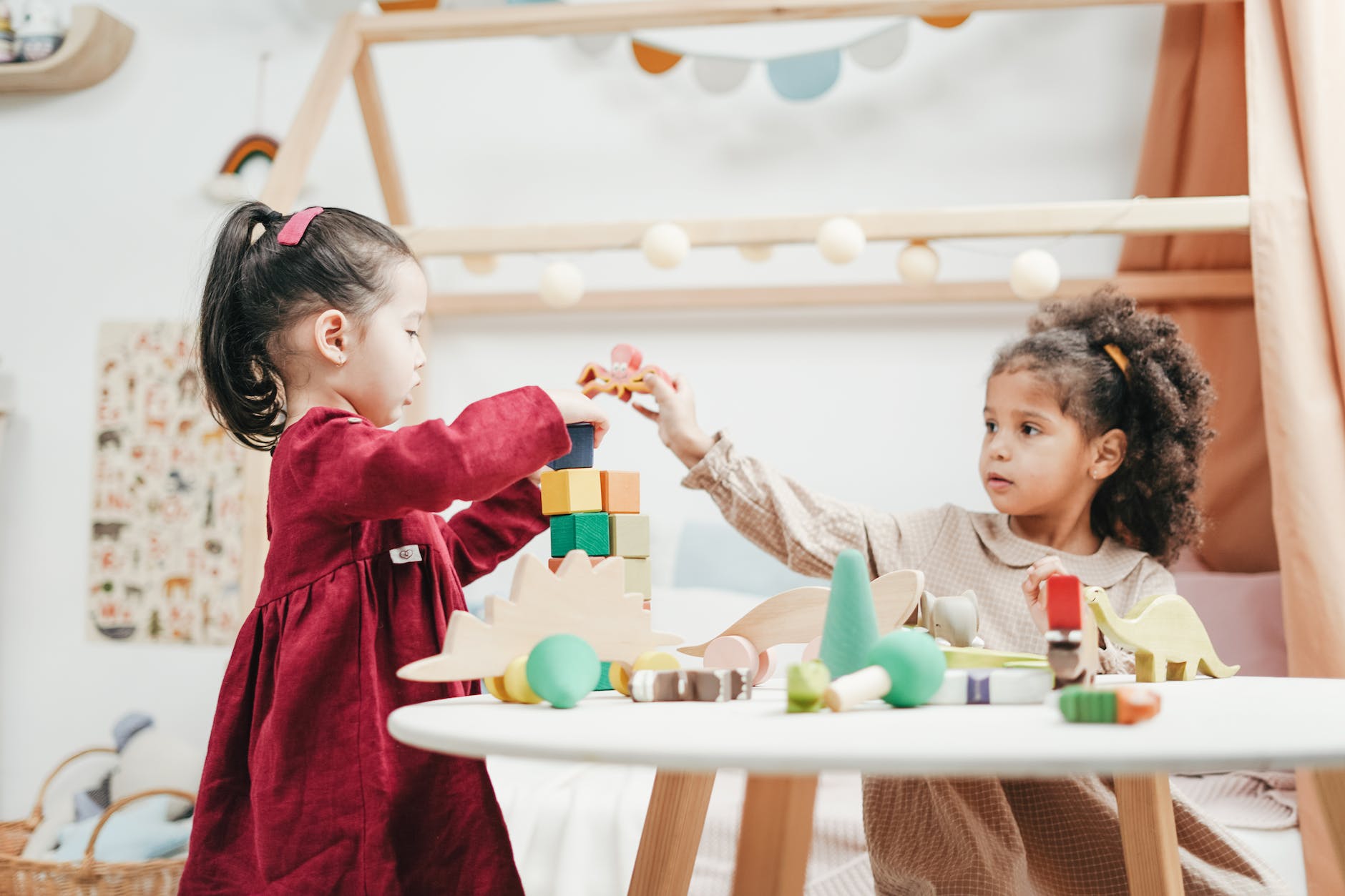
When I’m building in the block room, please don’t say I’m “Just Playing.” For you see, I’m learning as I play about balances and shapes. Who knows, I may be an architect some day.
When I’m getting all dressed up; setting the table, caring for the babies, Don’t get the idea I’m “Just Playing.” For, you see, I’m learning as I play; I may be a mother or father some day.
When you see me sitting in a chair, reading to an imaginary audience. Please don’t laugh and think I’m “Just Playing.” For, you see, I’m learning as I play; I may be a teacher someday.
When you see me combing the bushes for bugs, Or packing my pockets with choice things I find; don’t pass it off as “Just Play.” For, you see, I’m learning as I play; I may be a scientist someday.
When you see me engrossed in a puzzle or some “plaything” at my school, Please don’t feel the time is wasted. For, you see, I’m learning as I play. I’m learning to solve problems and concentrate. I may be in business some day.
Photo by cottonbro studio
When you see me cooking or tasting foods, Please don’t think that because I enjoy it, it is “Just Play.” I’m learning to follow directions and see differences. I may be a cook someday.
When you see me learning to skip, hop, run and move my body; Please don’t say I’m “Just Playing.” For, you see, I’m learning as I play; I’m learning how my body works. I may be a doctor, nurse or athlete someday.
When you asked me, what I’ve done at school today, And I say “I just played”; please don’t misunderstand me. For, you see, I’m learning as I play. I’m learning to enjoy and be successful in my work; I’m preparing for tomorrow. Today, I am a child and my work is play.













 the calm educator