E.g., 1 a.m. to 2 a.m. is the time our liver is functioning at its highest;
If we’re staying up until 2 a.m., our liver is not getting the support needed to detox the things in our body which can cause inflammation, our immune system to not function at its best, and/or poor bowel movements
In Western culture, we recognize the natural cortisol curve
Should be highest first thing in the morning and tapers off mid-day (groggy feeling we experience)
Can shift with your body, such as if you work nights
Ideally, you should be asleep by 11 p.m. and wake around 7 a.m. (at least 8 hours; can be adjusted depending on your schedule)
Why?
Detox support
Works with our natural cortisol curve
How to Practice Good Sleep Hygiene
Nighttime routines are essential to prepare for bed
Putting phone away 1 hour before bed
Turning off notifications while sleeping
Sleep with phone outside room
Quality is just as important as quantity
Have room as dark as possible (e.g., eye mask, blackout curtains)
Try white noise or ear plugs
Avoid alcohol close to bed so body can digest it before you sleep
This website is provided only for informational purposes and not intended to be used to replace professional advice, treatment or professional care. Always speak to your physician, healthcare provider or pediatrician if you have concerns about your own health or the health of a child.
Macronutrients – a class of chemical compounds which humans consume in the largest quantities; carbohydrates, protein, lipids.
Fletcherizing – a term introduced by Horace Fletcher, also known as “The Great Masticator,” in which one thoroughly, and slowly, chews their food making it easier to digest, as chewing creates more amylase in the mouth, which is the primary carbohydrate-digestive enzyme.
Amylase – the primary carbohydrate-digestive enzyme found in saliva and pancreatic fluid, that converts starch and glycogen into simple sugars.
Digestive enzymes – substances produced by our bodies that help us to digest the foods we eat. These enzymes are secreted by various parts of our digestive system and helps to break down food components such as proteins, carbohydrates, and fats.
What is a Food Journal?
Taking inventory of what you’re eating each day
Recognizing diversity is important when it comes to nutrition (“eating the rainbow”: as many colours in each meal; vitamins, nutrients, phytonutrients)
An awareness to what you’re eating and why
Is it for nourishment and fuel or emotional comfort?
Recognizing what emotional states are motivating food choices (when feeling happy, sad, stressed, etc.)
Paying attention to the body and how you feel 30-50 mins after each meal
How to Keep a Food Journal
Photo by Taryn Elliott
List what you ate
List ingredients in a meal
Calculate range of calories, proteins, macronutrients
Identify feelings before, during and after a meal
Example:
Before: Ate a chocolate bar because was feeling lonely
Look for consistent patterns (e.g., always eating chocolate when lonely)
During: Distracted on phone, forgot the taste of meal, not present; ate too fast
After: Bloated from almond milk; gluten sensitivity (bloated, sluggish)
5. Set intentions, changes, and goals for next meals:
Will go for dark chocolate or an alternative snack when feeling lonely
Will be more present, eliminate distractions
Will slow down, savour more
Will try a different type of milk; will go gluten-free
Why Keep a Food Journal?
Gives you a snapshot of what you’re feeling (before, during and after a meal)
Allows you to make necessary goals or changes for your next meals
Helps you to determine your relationship with food (e.g., eating based on emotions)
The aim is to create a positive, loving relationship, being as present as possible
Fletcherizing – Horace Fletcher
The more you chewed your food, the easier it is to digest
Chewing creates amylase in mouth
For optimal nutrient absorption of food over the course of digestion, it must be reduced to tiny particles and blended evenly with saliva
Benefits of Keeping a Food Journal
Photo by Madison Inouye
Keeps track of what you’re eating daily
Helps to see if there are opportunities to create more diversity in what you’re eating
Develops a better understanding of how you’re feeling when you eat foods
To see if you’re present or not to what you’re eating
The journal can be created in your own way
Establishes a practice of being more present at every meal
To enjoy feasting with your eyes first, by taking in the food before you consume it (e.g., close your eyes even before your first bite)
To take in the smell, relax, breath, and sink into the experience
Allows yourself to be undistracted
Unlocks gratitude and appreciation for the meal
Allows you to eat slower, chew mindfully, allowing for more nutrients absorption (helps to pre-digest the food)
Allows for a deeper connected experience to what you’re eating by being more grateful to the fact that you’re nourishing yourself with amazing food every single day!
This website is provided only for informational purposes and not intended to be used to replace professional advice, treatment or professional care. Always speak to your physician, healthcare provider or pediatrician if you have concerns about your own health or the health of a child.
With the stress of the holiday season mostly behind us, I figured what better time than now to repost this article that I wrote during the height of the 2020 global pandemic, when the whole world was under a great deal of stress. With the new year approaching, my hope is that this article might be helpful to readers with understanding how to navigate through times of stress.
Originally published July 2020
I never for a second thought I’d be writing about the days I struggled through during lockdown, with all that I know about the human brain, body, its response to stress and stress management. But, here I am and here you are reading this.
A little over a year ago, I came across The MEHRIT Centre, an organization focused on grounding learning and living in self-regulation. I completed two courses with them and I share many of their resources throughout the self-regulation sections of this website. One of their many useful resources is the Thayer-Matrix. I discovered the Thayer-Matrix last year (2019), but it wasn’t until recently when I revisited its connection to motivation.
Being in Lockdown
Around mid-May 2020, as I was nearing the end of the school year, there were days when my motivation was so low that I found myself mentally checking out from online teaching. I had missed being in the classroom and with my students. Prior to school closures in March 2020, I was spending many hours at school each day, so working from home was quite the adjustment for me. As the school year progressed through online learning, I struggled with transitioning into a new routine and there were days when I didn’t even feel like getting out of bed.
Now let me explain what the Thayer-Matrix is.
The Thayer-Matrix
The Thayer-Matrix was created by Robert E. Thayer, an American psychologist known for his work on the connection between mood, energy, tension and stress which is reflected in his energy/tension (Thayer-Matrix) model (see image below).
(The information and examples provided below are entirely my interpretation of how I’ve applied this model to my own experience, what I’ve learned, and how I understand it.)
High-Energy/Low-Tension (HE/LT)
When our energy is high and tension (i.e., stress) is low, we are in a High-Energy/Low-Tension state. In this state we might tend to feel:
Well-rested and energized
Calm and relaxed
Ready to start the day ahead
An example of this state might be waking up on a day-off, or while on vacation, feeling well-rested (high-energy) and ready to ease into an open-ended kind of day (low-tension).
High-Energy/High-Tension (HE/HT)
When our energy and tension are both high, we are in a High-Energy/High-Tension state. In this state we might tend to feel:
Motivated with complete concentration and focus
Able to remain at a task for longer and with the most effort
Positive and productive
An example of this state might be waking up feeling well-rested (high-energy) and motivated to tackle a busy day ahead (high-tension).
Low-Energy/Low-Tension (LE/LT)
When our energy and tension are both low, we are in a Low-Energy/Low-Tension state. In this state we might tend to feel:
Tired, especially towards the end of a long and busy day
Ready to wind down and relax
Prepared to sleep and replenish our energy
An example of this state might be arriving home, tired from a busy and productive day (low-energy), and ready to ease into the night with a hot cup of tea (low-tension).
Low-Energy/High-Tension (LE/HT)
When our energy is low and tension is high, we are in a Low-Energy/High-Tension state. In this state we might tend to feel:
Drained and exhausted
The least motivated (i.e., listless)
Stressed, possibly with lots still to do or on your mind
This was how I was feeling on my lowest day. Super drained with little to no motivation (low-energy), but with a lot on my plate (high-tension). These were the days where I struggled with getting out of bed, starting my workday or working towards getting things done.
Moving Through the Thayer-Matrix
Naturally, we should be moving through each of these states and not get stuck in any one of them for long periods of time. If stuck in a HE/HT state, this is likely being sustained through stimulators such as caffeine or energy boosters, and the natural production of adrenaline that works to keep you at a high-energy state to deal with high-tension. However, high-tension naturally drains our energy reserves. When we aren’t restoring enough through natural and essential sources of energy, such as through a restful sleep, eating healthy foods, and engaging in sustainable routines and practices, we may tend to seek alternative (and often maladaptive) ways to do so, especially at times when we really need to, or simply to cope. From what I learned in my course, being chronically stuck in a LE/HT state can lead to mood disorders. Having a support system and stress awareness and management practices are essential. While staying in a HE/LT state might seem nice to some, that is just not how life flows. Stressors from all around and inside us is what keeps us going, and when effectively managed, thriving. Lastly, we also don’t want to get stuck in a LE/LT state, becoming passive and listless. Humans (as well as animals) have a seeking system that exists in the brain and drives us to meet a need, craving, goal, desire and ultimately, to survive1.
Now, here’s how I was able to get through some of my lowest days in lockdown.
Moving from a LE/HT to a HE/HT State
Leading an online learning session with my students
First to begin, I needed to be aware of when I was in a low-energy/high-tension (LE/HT) state and what that felt like for me. I knew I had low energy because I felt physically, emotionally and mentally drained, listless, and a lack of motivation or desire to do anything. At the beginning of lockdown, a telltale sign of this was when I started losing track of the days. I woke up one morning thinking it was Sunday, when in fact, it was Thursday. I eventually realized this was happening because I wasn’t getting outside and in the sun. The sun sends signals/cues to regulate our circadian rhythm which is our internal sleep-wake 24-hour body clock. It also gives us energy, makes us feel good, and increases serotonin, a neurotransmitter in our body that is responsible for mood, well-being and feelings of happiness. BINGO! So, I knew I needed to get outside more, or as much as I possibly could, considering the circumstances. In addition, the sun is our ultimate source of energy and if we could eat it, we probably would! Instead, we must settle for eating the foods that absorb the sun’s energy for us (to learn more, google: “high vibration foods”). As I think back to it now, that seemed so obvious, right? But at that point in time, it actually wasn’t as clear cut, and I guess that came with adjusting and transitioning to being at home, rather than at school, teaching and preoccupied for most of the day. While I was getting enough sleep, I wasn’t waking up feeling energized and refreshed. (I highly recommend this podcast episode: How to Sleep Well). Having been physically active my whole life, my body wasn’t used to not moving around as much. Because I wasn’t moving around as much as I had been (I was working with toddlers), I wasn’t exerting as much energy, nor was I able to reach a high-energy state. As a result, I knew I needed to resume more physical activity which had always been an energy booster for me. I recognized I was in a high-tension state because of the stressors that were affecting me. Not being able to leave the house as much, see my friends or go out. The list can go on. I was looking at a screen way more and for longer periods at a time for online learning, meetings, program planning, corresponding with colleagues, attending webinars, social media, etc. Because my eyes were feeling strained near the end of the day, I knew I needed to be as mindful as possible of my screen time. I couldn’t change the fact that I still needed to work, be online and in front of a screen, but what I could change was my energy state to match it. Therefore, once I started getting outside (while taking the necessary precautions), working out at home and managing my screen time better, I was able to move myself from a low-energy to a high-energy state in order to meet the demands of my high-tension work week.
Moving from a HE/HT to a LE/LT State
As soon as I was able to balance my energy and tension to a HE/HT state, I began feeling motivated, greater concentration, was able to remain working for longer and with more effort, and overall, I felt good, productive and accomplished. By the end of my workday, my meetings and online learning were done for the day. This is where I transitioned from the high-tension state I was in throughout the day into a low-tension state. By the end of a busy day, our body naturally transitions into a low-energy state, depending on the amount of energy that was exerted, and the tension experienced throughout the day. When the things that are a source of high-tension (i.e., stressors) in your life are recognized, managed and reduced, you can begin to move into a low-tension state. Although this may not always be the case, ideally, LE/LT is where you want to be at the end of the day and it’s all a matter of finding what works for you to maneuver your way in, out and through these states, while knowing your stress load capacity. Some people can cope with and under more stress than others. It’s important to note that children experience and transition through these states as well, but their capacity to deal with stress is much lower than adults. Therefore, supporting them with navigating through these states is very important.
Strategies for Moving through Energy & Tension States
Become aware of what your mind and body feel like in each state of energy and tension. For example:
High-Energy:
Energized (e.g., during or after a workout)
Feeling well-rested and healthy
Having positive feelings (e.g., when laughing or talking with others)
Feeling motivated
Having complete concentration and focus
High-Tension:
Having lots to do
A busy day ahead (e.g., a heavy workload, working on tasks)
Feeling stressed or overwhelmed (see: Stress & Stressors to identify the source of your tension)
Low-Energy:
Feeling tired and exhausted
Lack of motivation
Feeling sick (when we are sick, our body naturally produces chemicals that make us sleepy)
Drained from high-tension
Low-Tension:
Feeling calm, relaxed, at ease
Having stress management strategies in place (e.g., meditation, yoga, deep breathing, prayer, listening to music)
Relying on a positive support system, such as family, friends, community and/or professionals
Maintaining effective routines and practices
Know what personal strategies work to move you to the state you want or need to be in:
Getting into a High-Energy state:
Getting good sleep: amount, quality, timing, state of mind (these are mentioned in the podcast)
Eating healthy and nutritious (high vibration) foods and drinking lots of water
We usually don’t choose to enter this state. Our body naturally enters high-tension states because of the stressors that exist within (e.g., hunger) and around us (e.g., morning traffic). Stressors affect each of us differently, so it’s important to know which ones have the most impact on you. For example, feeling too hot, feeling sick, excessive screen time, watching the news, changes in routine (see: Stress & Stressors).
Entering a Low-Energy state:
Again, we don’t choose to enter this state. Our body naturally enters low-energy states as we exert energy and experience stress, which is what drains our energy reserve throughout our day. However, we can settle into this state at the end of a long day with an evening routine that might consist of low-tension practices such as reading a book, drinking a cup of tea, praying/spiritual practices, expressing gratitude in writing, meditating, taking a bath, or doing bedtime yoga.
Getting into a Low-Tension state:
This requires recognizing your stressors, reducing and/or managing them. Engaging in self-care and low-tension practices is also important here. This isn’t always easy, but with time and support, you can develop these practices and habits. For example, I know that too much time in front of a screen strains my eyes so I balance and manage my screen time by taking breaks from it, adjusting display settings, and shutting my devices down at the end of the day and long before bed.
Build and maintain a routine:
Humans like routine; however, the pandemic disrupted what our normal routines used to be. People lost jobs or had to shift to working from home. When our schedules are different than we are used to, we may be doing less (or more) than we had been before. Develop a morning and an evening routine to move yourself through the energy and tension states you want or need to be in to be productive, make the most, and meet the demands of your day.
Engage in movement and physical activity:
Our bodies are designed to recover from energy exertion through our parasympathetic system. When we don’t move, our body doesn’t know what to do with the extra energy and this can impact sleep. Go walking, running, bike riding, to the gym, do gardening, spend some time out in nature, sweat and burn energy whenever and however you can.
Don’t be so hard on yourself:
We are human and we do the best we can in each moment. Remember that the human body consists of a nervous system that responds to stress. What’s most important is understanding this and how to manage it. A great place to start is by learning about self-regulation (see: What is Self-Regulation?) and reframe your understanding about how your body naturally responds when under different types of stress. You can then start to identify what are sources of high-tension (stressors) for you and develop personal stress management strategies that help you navigate through energy and tension states. Realize when things are beyond your control and when needed, seek professional support and connect with people you can talk to and that you trust.
I hope that this article was helpful or useful to you in some way or another. Please feel free to share it with others. Wishing you the very best for 2023. 💞
Reference: 1Shanker, Stuart. Reframed: Self-Reg for a Just Society. University of Toronto Press, 2020.
If you enjoyed reading this article, subscribe for free to receive them straight to your inbox!
WEBSITE DISCLAIMER
This website is provided only for informational purposes and not intended to be used to replace professional advice, treatment or professional care. Always speak to your physician, healthcare provider or pediatrician if you have concerns about your own health or the health of a child.
This website is provided only for informational purposes and not intended to be used to replace professional advice, treatment or professional care. Always speak to your physician, healthcare provider or pediatrician if you have concerns about your own health or the health of a child.
Can increase the powerhouses of energy in the body
Want more energy? Build up the big muscles in your body
The coordination of eyes, mind, body, breath
Activates the brain
Attention turns inward
Awareness of what is happening inside the body
Can modulate and control the parasympathetic (rest & digest) nervous system
How to Tap – with Nick Ortner of The Tapping Solution
Emotional Freedom Technique (EFT)
Originated by Nicolas Ortner (CEO of The Tapping Solution)
Tapping on end points of meridian on the body to calm body and release stress and overwhelm
Meridians on the body:
Pathways in which qi (our energy) flows
When there’s pain there’s a blockage of qi
Meridians connect all of the organs and qi flow
Tapping on end points sends a calming signal to counteract fear responses (from the amygdala)
What are your stress healing solutions?
WEBSITE DISCLAIMER
This website is provided only for informational purposes and not intended to be used to replace professional advice, treatment or professional care. Always speak to your physician, healthcare provider or pediatrician if you have concerns about your own health or the health of a child.
“Appreciation is a form of wellness. It’s also what keeps us moving through difficult times and what brings us back to love, time and again. More importantly, when we tie our gratitude to the ‘why’ of it, we develop new forms of appreciation and depths of connection for living.” (Commune)
Gratitude, Appreciation & Connection
Photo by Created Stories
Consciously focusing on our blessings have emotional and interpersonal benefit
Appreciation is a form of wellness
“ I am grateful…. because.…”
Being specific increases the sensation of appreciation; gives you access to more positive, life affirming feelings
Allows you to go deeper into the meaning behind the circumstances and people in your life you are thankful for
Expands your awareness of gratitude; illuminating the positive feelings
This website is provided only for informational purposes and not intended to be used to replace professional advice, treatment or professional care. Always speak to your physician, healthcare provider or pediatrician if you have concerns about your own health or the health of a child.
Postures, stretches, exercises, movements, breathing and relaxation techniques
Affects our body’s overall functioning
Self-Regulation
Ability to control internal stress and emotional responses
Leads to resilience to stress, self-efficacy and equanimity in the face of emotions
Mind-Body Awareness
Feeling and experiencing what’s going on in the body and mind (being able to observe the flow of thought)
Leads to increased mindfulness that can change behaviours in a positive way
Experiencing Deeper States
Spiritual, transformative, leads to positive lifestyle and goals, improves and enhances life meaning and purpose
Photo by Ketut Subiyanto
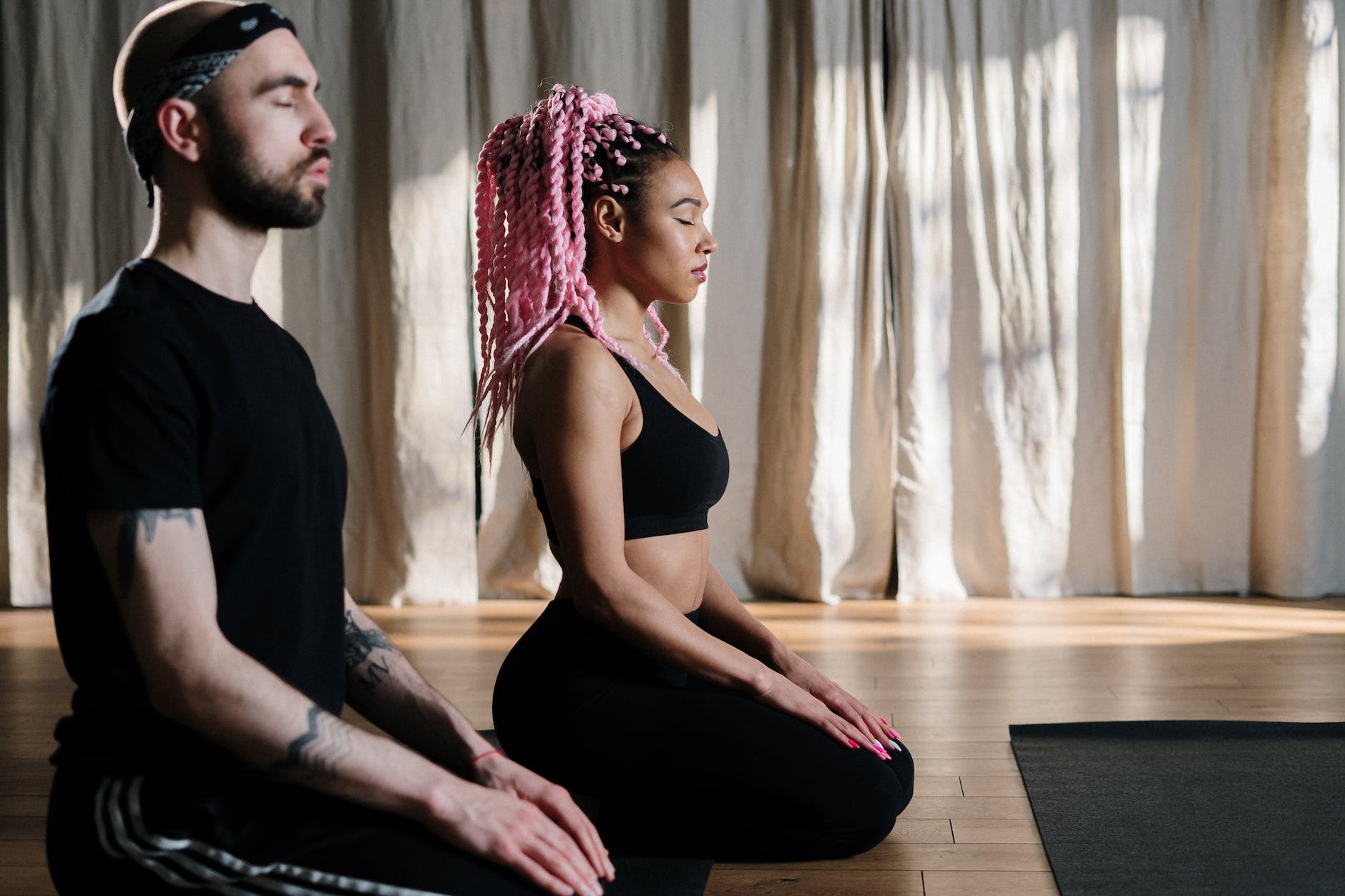
Benefits of Yoga
Research has shown measures of reduction in:
Depression
Anxiety
Psychological distress
Frequency of negative experiences
Increase in resiliency and the frequency of positive experiences
Improvement in mental health
Creates much needed space in the body and mind
Establishes connections by moving energy through the body
Yoga stretches the body; meditation empties the mind
Enables management of the stress response system
Breathing
Breath is the most powerful tool that everyone has to bring their stress response under their control
It’s possible to reduce blood pressure by controlling breathing
Blood pressure is controlled by the sympathetic nervous system (the messenger of the stress response)
Postures in yoga creates challenge that our mind is constantly dealing with; this can be controlled through breathing
Breathing + effort of regulating thought enhance parasympathetic nervous signal and brings sympathetic nervous signal down
Breathing can be practiced within yoga and in daily life
Mind & Brain
Yoga strengthens the power of the mind and how we connect with the world
The mind controls our health and biology
1% of illness is related to genes; 90% of illness is related to stress
Yoga brings the mind into focus and can change brain activity and structure (such as plasticity, resulting in the brain becoming conducive to the benefits that come with yoga and meditation)
Can change and enhance gene activity that’s good for you (improved immune response); down-regulates negative gene activity when under chronic stress (inflammation)
Photo by Polina Tankilevitch
Barriers to Moving Yoga Forward
Perception and misconceptions about yoga, often created by the media:
Yoga viewed as complex exercise forms and postures; requires you to be flexible, thin, young to practice; is difficult, specific and not adaptable to individual circumstances
Yoga practices can be adapted to any population, and still train the same properties (mind-body coordination, mindfulness, awareness)
Chair yoga for elders
Can be done with young children
Global Benefits
Survival requires the foundation of human behaviours and the way we respond to life and to change
Using our individual power for harmony, connection, union
First done by the individual through healing themselves, taking back power over their behaviour, becoming in harmony and good health
Establishing awareness, self-regulation, immunity to stress, compassion, high-mindedness, clarity
Our collective nature as individuals becomes stronger and harmonious, leading to a greater influence on the planet
Engaging in yoga is a practice of evolution and transformation on society as a whole
This website is provided only for informational purposes and not intended to be used to replace professional advice, treatment or professional care. Always speak to your physician, healthcare provider or pediatrician if you have concerns about your own health or the health of a child.
Presented by Rhiannon Lockhart, RHN with Organika (source)
Photo by Needpix
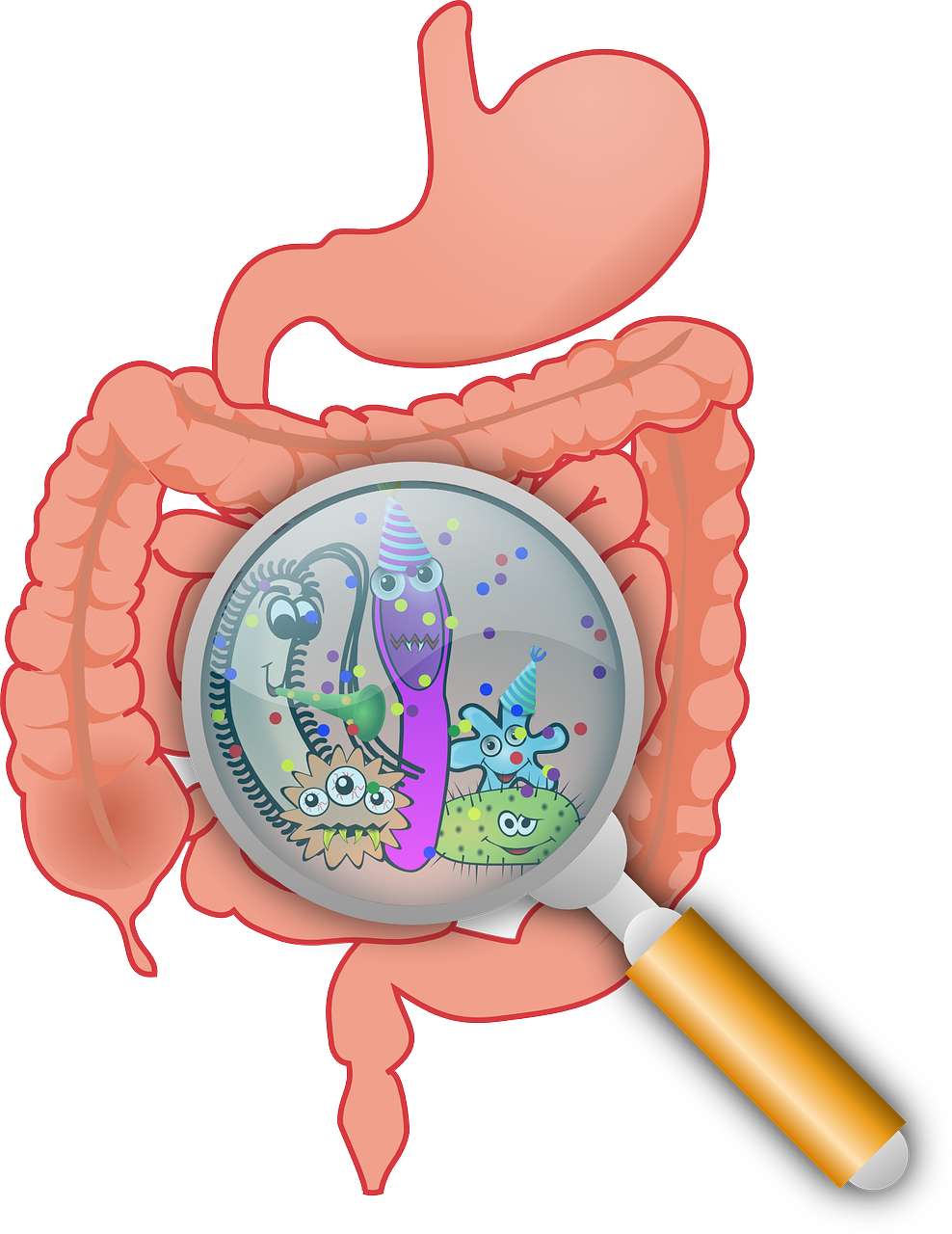
Gut Microbiome
Gut: everything from the mouth to rectum
Microbiome: bacteria, viruses that live on and in the body
Everything has a microbiome (even the skin)
Gut microbiome is like a “little rainforest” in your body that is made up of cells and organisms
Everything works in conjunction (you need good and bad; problems can arise when off balance)
Medication or illness can disrupt microbiome and cause an imbalance
Dysbiosis
An imbalance of too much bad or not enough good organisms composed in the gut
Candida (yeast overgrowth)
Small Intestinal Bacterial Overgrowth (SIBO)
Irritable Bowel Syndrome/Disease (IBS/IBD)
Indicators: uncontrollable sugar cravings, bloating after meals, constipation
Leaky Gut
Formally known as Intestinal Permeability
Our intestinal wall has small gaps (called tight junctions) to let water and nutrients that our body needs daily to pass through
Due to inflammatory factors (e.g., foods, medication, illness), small gaps can grow larger in the lining of our gut, allowing toxins and undigested food particles through
Gut Disruptors
Refined sugar intake
Processed foods, white sugar; can lead to candida (yeast overgrowth)
Non-Steroidal Anti-Inflammatory Drugs (NSAIDs)
Advil
Excessive alcohol
Depletes good bacteria
Nutrient deficiencies
Vitamin A, E, Zinc
Inflammation
Leaky gut causing irritation/dysbiosis
Stress
Causes hormone imbalances
Antibiotics
Pulls out good gut bacteria
Taking probiotics after or alongside antibiotics helps create good bacteria
Certain medication
Gut-Brain Connection
Photo by Pixabay
There are 500 million neurons in our gut that connect to our brain
The gut (also referred to as our “second brain”) communicates with our actual brain through our nervous system, hormones and immune system
Is also known as our “gut-brain axis”
The vagus nerve is a major nerve connecting our gut and brain
Critical for digestion, heart rate, blood, sleep
Important to rest and digestion; slowing down breathing supports digestion and nutrient absorption (engages stomach acid preparing us to eat)
Our gut is a hub for neurotransmitter production of:
Serotonin: the happy hormone
Impacts our mood and how we digest food
Gamma-Aminobutyric Acid (GABA): controls fear and anxiety
How we feel impacts gut; gut can impact how we feel
Gut-Immunity Connection
Gut consists of 70% of the cells that make up our immune system
Intestinal lining is our first line of defense in our immune health
If our lining isn’t working optimally, our immune system may jump in to support
Poor gut health can lead to increased inflammation
Foods to Consume 👍
Photo of kimchi by makafood
Foods to reduce inflammation:
Fatty fish
Leafy greens
Nuts
Foods high in probiotics:
Sauerkraut
Kimchi
Kombucha
Kefir
Tempeh
Foods high in fibre:
Fruits & vegetables
Oats
Quinoa
Beans
Foods that increase neurotransmitters:
Tryptophan (an amino acid that is important for the production of serotonin)-rich foods like poultry, eggs, spinach, seeds
GABA-increasing foods like bone broth, whole grains, fermented foods, oolong tea
This website is provided only for informational purposes and not intended to be used to replace professional advice, treatment or professional care. Always speak to your physician, healthcare provider or pediatrician if you have concerns about your own health or the health of a child.
“When you put your needs last, you’re like a plant without water that’s worried about providing enough shade for others.”
– Alexis Jones (activist and motivational speaker)
I’m sure we’ve all heard these words before: “You can’t pour from an empty cup”. In other words, if you aren’t taking good care of yourself, you can’t effectively take care of others. It’s so important that you find the time for self-care and attention.
Here are 7 ways you can practice self-care:
Stay Nourished 🥗
They say you are what you eat. Care for your body by fueling it with healthy and nourishing meals and snacks. Be mindful of certain foods that don’t make you feel good and consider eliminating them from your diet. Especially during warmer weather, remember to stay hydrated by drinking lots of water throughout the day and everyday.
This is not only about how many hours of sleep you get, but also about the quality of your sleep. You work hard throughout the day, so take the time needed to restore. While it’s ideal to get at least 7-9 hours of sleep, make sure you feel comfortable while you are and that you’re waking up feeling well-rested.
Physical activity is great for your body and mind. Your brain releases endorphins, a feel-good brain chemical that helps to reduce stress. You deserve to feel good! Plus, it boosts your energy, immune system and improves sleep. So, strap on your running shoes. A nice 30-minute walk is all it takes.
Connect with Others 📞
Whether it’s a family member, friend or colleague, connect and spend time with people you know and trust. Know when to ask for help when you need it. That is a form of self-care.
Take a Pause ⏸
Stop, slow down, and make time for pause. Listen to calming music, journal, pray, meditate, go for a walk in nature, take a few deep breaths or stretch. Taking a pause is a great way to pace yourself and reset.
Never be so hard on yourself! Embrace yourself fully – all your mistakes and accomplishments. We are human after all. Know that you are doing the best you can. Try this: Look in the mirror and say something kind to yourself each day.
Stay Committed 📆
Build a self-care routine and try your very best to stay committed to it. Without a doubt, the demands of life can be stressful. Now more than ever, remember to first fill up your own cup. Find what feels good to you, stick to it, and keep going!
What are other ways you practice self-care? Share them in the comments section! 👇
Subscribe to receive articles straight to your inbox. It’s totally free!
WEBSITE DISCLAIMER
This website is provided only for informational purposes and not intended to be used to replace professional advice, treatment or professional care. Always speak to your physician, healthcare provider or pediatrician if you have concerns about your own health or the health of a child.
“Great communication begins with connection.” ~ Oprah Winfrey
How would you describe the way you communicate with others? Lately, I’ve been thinking a lot about the way people communicate. The way that I communicate. Especially since the COVID-19 pandemic shifted the way we had to communicate and the new ways that we do now.
Every single day we communicate. Whether it’s through our words, lack thereof, body language and/or actions, we are engaged in some form of communication. There are many different ways we can communicate with others. Face-to-face, over the phone, virtually/remotely, or in writing. Such as through text messages or written letters. Just to list a few. Compared to years ago, we have so many more methods of communication available to us.
Because of just how important communication is in our personal and professional relationships, I believe it’s important that we take time to reflect more deeply about how we communicate with others, and about ways we can do so mindfully and effectively. One of those ways can be through mindful communication.
What is Mindful Communication?
Mindful communication is the way in which we can bring awareness, attention and compassion to how we communicate with others. When we become aware of how we communicate with others through our words, body language and/or actions, we can start to pay close attention to how it influences the nature of our conversations and relationships. While there are many different methods that can be used in mindful communication, I’m going to share one I discovered by Gregory Kramer, author of Insight Dialogue: The Interpersonal Path to Freedom. He shares 6 meditation instruction steps (Insight Dialogue Guidelines) that can be used in interpersonal relationships.
1. Pause: Mindfulness
This consists of stepping out of the daily rush and letting go of whatever the mind may be attached to at the moment. It is a movement of the mind towards being more awake and present to a moment of dialogue. This can happen through paying attention to the breath and having a sense of body awareness to ground you. It includes noticing where you are externally (e.g., anything outside and around you), and internally (e.g., thoughts and feelings). In this way, you can enter communication with the whole mind, body and heart.
2. Relax: Tranquility & Receptivity
This step consists of relaxing muscles that are tense and paying attention to the feelings that come with relaxing, such as ease, allowing, and letting go. This can be tested in places that are not usually attended to such as the muscles below the eyes. Relaxation of other parts of the body such as the jaw and shoulders allows the mind and emotions to follow. This step helps to bring about mental tranquility and serenity, and can be explored as you speak and listen to others.
3. Open: Relationality
This step is about how we relate to others and invites an open inquiry into our internal and external experiences. It allows us to look at how mindfulness is resting, whether it be internally, externally or both. This is an intimate experience which allows us to notice where the mind is in each moment and what is being received (e.g., voice, face, eyes, pain, love, beauty, horror, tragedy, potential).
4. Trust Emergence: Attunement
This step is about having the flexibility to trust what will emerge in conversation.
5. Listen Deeply: Meditate
This is all about showing up and paying full attention. It includes a steady quality of listening which matures and develops through concentration. Through this step, you can begin to notice how you make sense and attend to something, while also observing and listening to the phasing, pauses, pitch and changes in loudness in another person’s voice. This also includes noticing beyond one’s language and words and actually hearing the person.
6. Speak the Truth: Language
This step pairs together with the former step – listen deeply, since speaking begins with listening. This step also flows out of the first 4 steps. Kramer says, “It rests on the mindfulness of the pause. It stabilizes with relax. It engages relationally with open. It gains flexibility with trust emergence. To speak the truth, we have to first know what the truth is”. It also includes discerning what gets spoken and what is left unspoken, and giving language to the moment of awareness.
How might you begin to integrate any of these steps into your communication with others?
Are you interested in sharing a post on a topic or adding to our resources page? Let’s connect!
WEBSITE DISCLAIMER
This website is provided only for informational purposes and not intended to be used to replace professional advice, treatment or professional care. Always speak to your physician, healthcare provider or pediatrician if you have concerns about your own health or the health of a child.









 the calm educator