5 Lessons 2020 Has Taught Me

Early Childhood, Health & Lifestyle, Self-Regulation

As this year comes to an end, I wanted to reflect on and share with you all that this year has taught me. We can all agree that 2020 has been a year like no other that we will look back on and surely not forget. But despite the obvious reasons why, this year, in particular, I have experienced, embraced and learned many things that I know will impact how I carry out the new year and each day and moment within it that is yet to come, and I’m sure you have too. Here are the 5 lessons that 2020 has taught me.

1. Don’t Hesitate.

Earlier this year, I came to learn of the passing of someone who was like a second mom to me. Although I didn’t get to see her in the months prior as I had wanted to, I knew that I already held so many great memories with her that I would never forget. What I learned from this and all throughout this year as it unfolded, was that we shouldn’t hesitate; to tell the people in our lives how much they mean to us, to make the time to connect with someone we care about, or even to do something we’ve always wanted to for ourselves. While this year has made it harder for us to see and connect with some of our loved ones and friends, in person, as much as we would like to or used to, there are still so many ways we can express our love and appreciation to someone in our life, or even to give to someone in need. Something I took up doing this year was mailing hand-written letters to friends to express my appreciation for them. Maybe you might consider donating towards an organization that is doing great work in the community or supporting a local business. Maybe you take the time to do something for yourself. Whatever it is, don’t hesitate to do it.

2. Embrace Opportunities.

“Change is necessary. It is important, and it is also what makes life exciting. When we embrace change, we open ourselves to the understanding that anything is possible. Life is not supposed to stay the same. We are not supposed to stay the same. Our life, our communities, our world, are always in bloom. When we understand this, we see that change is growth; and growth is essential for each of us to reach our individual and collective potential.”

– Cleo Wade
This school year, I have been working with senior kindergarten after some time working with preschool students. At the time, SK was an age group I had little experience working with. The only experience I had working with SK students was through volunteer work and a placement opportunity in JK/SK classrooms. Despite all of this, an opportunity for change and growth had been presented to me. Oftentimes, the fear of change can hold us back from embracing and accepting new opportunities and experiences. We may fear that we may not be good enough, capable, or are just used to and comfortable with staying within our comfort zone. However, this can limit us from growing in personal and/or professional roles, learning new things, developing greater skills and capacities or even meeting new people. While opportunities for growth in my professional role began prior to this year, I am truly grateful for all of them. They have given me the confidence to continue trying new things and remind me to embrace change and new opportunities. I have had great achievements as a result, and that is something I’ll always be proud of. What opportunities have you embraced this year or are ready to for the new year?

3. Be Vulnerable.

This year, one of the ways I have stepped outside of my comfort zone has been with creating and sharing the contents of this website. I realized that I could write as many great articles as I wanted to, but it wouldn’t matter if I wasn’t promoting and sharing them with others and writing content that would be meaningful and relatable. The most vulnerable article I wrote was one where I shared my experience being in lockdown. In deciding to write that article, I knew I wanted to do more than just share my experience. While it’s a longer read than most of the articles I have written, it was important for me to share the tools that enabled me to notice what I was going through, how I was able to overcome it, along with tips and strategies. It turned out to be one of my most viewed and favourite articles to write. If you haven’t already, check it out: How I Got Through Some of My Lowest Days in Lockdown.

4. Process Over Outcome.

Towards the end of last year, I was highly encouraged to apply to a master’s program. I still remember being told how it would open doors for me. I knew that it could, and the thought of that was always very appealing to me. Prior to that conversation, I knew that my passion for the field would be the reason why I’d go on to get a master’s degree. I had also been motivated to do so by other mentors along the way. It was something that was on my mind leading up to completing a bachelor’s degree in child development at the end of 2016. So, with that push of encouragement and support, I spent the first half of January getting my documents together and writing my letter of interest which was reviewed, edited countless times, and perfected. Whenever I read that letter, I am reminded that choosing not to immediately continue my studies after completing my degree left a lot of opportunity for me to grow personally and professionally. All of my experiences and growth in that 3-year timeframe (2017-2020) was the reason why I felt prepared for the program. In April, I was accepted to the Master of Arts in Early Childhood Studies program at Ryerson University. However, for various reasons, I decided to withdraw from the program days before even starting. It wasn’t an easy decision to make and I felt like I would be letting others down more than myself. I continue to wonder if my motivation to obtain a master’s was more about the outcome (the doors that would open for me and having the MA title), than the process (the experiences, learning, growth and character development I would have gained over the course of the program). Maybe now just wasn’t the right time, or there were other programs that I would have been more interested in pursuing and I had settled. Whatever the true reasons may be why I withdrew from the program, I’ve come to realize that for me, the process is more valuable than the final outcome, and I wanted to be sure that I could give my 100% towards it and embrace all of the opportunities that would have presented themselves along the way. But I didn’t feel I would have been able to. At least not now. Therefore, withdrawing from the program, I believe, was the better decision for me to have made, and I couldn’t have done it without my family, who continuously support me through all of the hard decisions I’ve had to make. I am endlessly grateful and blessed to have them. What hard decisions have you had to make this year?

5. Be Present.

“Being present is the only way to live a truly rich and full life.”

– Jay Shetty

I’m sure many could agree that this year has forced them to slow down, even if just for a little bit. While I don’t feel as though I needed to be forced to slow down in any way, I do feel that there was room for me to become more present to my day-to-day moments, experiences, and interactions with others. I got so used to the grind of waking up to be at work for 7:30 am and going about my usual day, up until lockdown in March when I had to work from home. The pace of my days naturally slowed down, and the extra time in the mornings and evenings which were consumed by commuting, I had for other things, such as reflection. This was when I began getting more seriously into yoga and meditation and understanding the science behind it. Turning inward and better understanding myself, allowed me to become more outwardly present to everything happening around me. This included being better at noticing anything in my external environment that may have been impacting me and what I could or needed to do to change it, as well as recognizing how I could be more present in each moment and to my relationships. Whether it’s washing the dishes, folding laundry, or talking with a friend, being present in these small moments has allowed me to have greater appreciation for the big ones. I get to wake up each morning feeling what I have found to be a rich and fulfilling life. Remember that each day is truly a blessing, so be present to every moment of it.

What lessons has 2020 taught you?


“If there’s anything 2020 has shown us, it’s that we desperately need more. More compassion. More peace. More love. More time. More togetherness.” – Ainsley Arment

🥂

Cheers to the new year and all that is to come for you in 2021!


WEBSITE DISCLAIMER

This website is provided only for informational purposes and not intended to be used to replace professional advice, treatment or professional care. Always speak to your physician, healthcare provider or pediatrician if you have concerns about your own health or the health of a child.
Let’s Talk Adaptogens!

Health & Lifestyle

“All plants contain adaptogenic/tonic compounds, because plants have to contend with a good deal of stress themselves.” – James Duke

What are Adaptogens?

food on white background
Photo by Pixabay

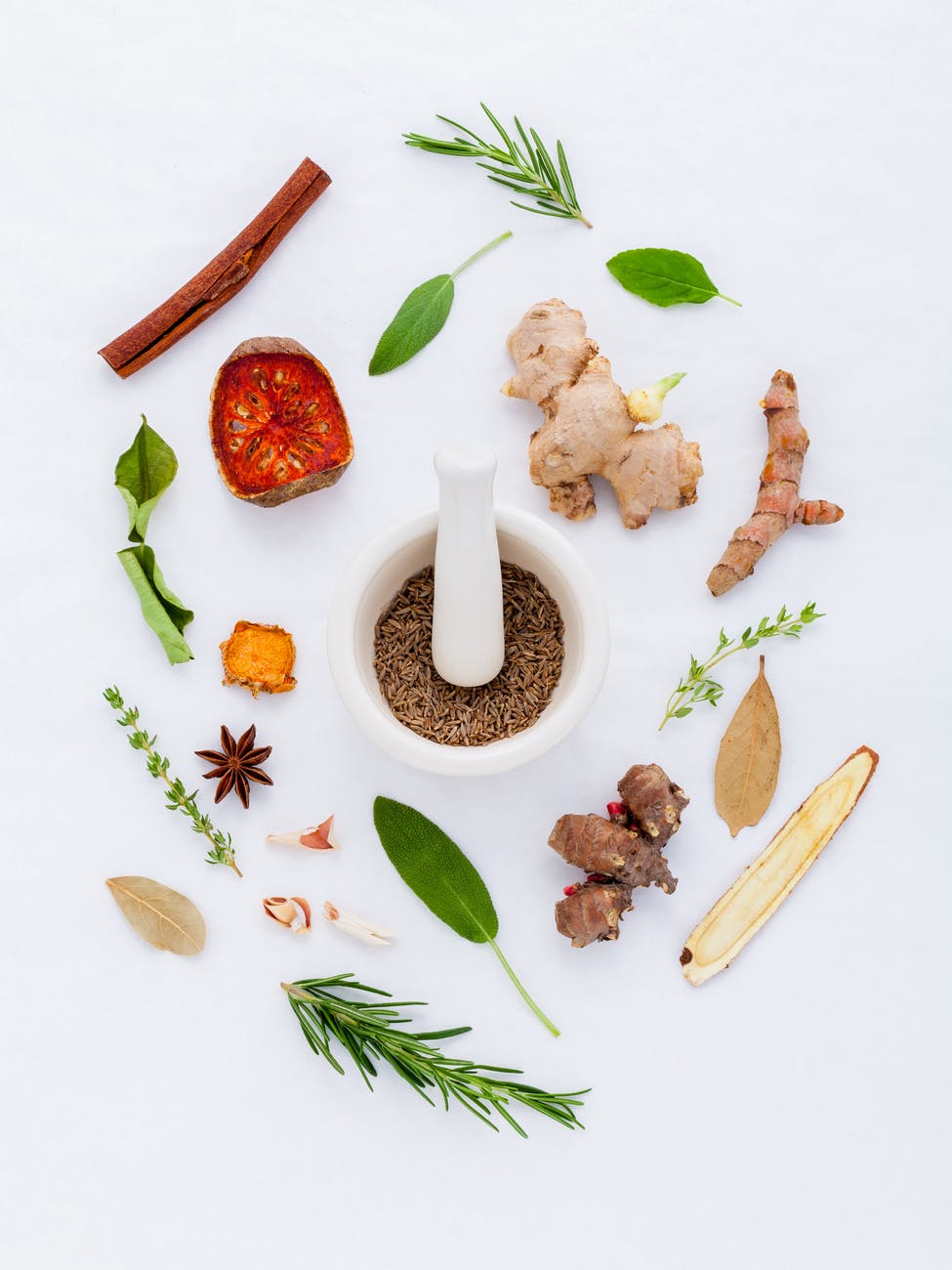
Adaptogens have been around for thousands of years and have traditionally been used in Indian and Chinese medicine. They are a type of herb (or mushroom) that helps the body adapt to stress. Hence their name, adaptogens! They adapt according to what the body needs; whether that be mental (e.g., increased memory and focus), physical (e.g., energy boost) or emotional (e.g., anxiety relief). Adaptogens won’t take away stress, but help to regulate the body’s stress response system (adrenal glands) and bring it back into balance (homeostasis). They can be found in various forms such as powders, capsules, tinctures (herbal extracts), or in drinks and teas. Adaptogens can be a healthy alternative to prescribed medication and stimulants such as caffeine and sugar. Although their benefits can vary, (as with any supplement), they are most effective when taken over a period of time. They work best not in isolation, but as part of a holistic lifestyle that should include a healthy diet, sleep, exercise and personalized wellness practices. While research has shown how adaptogens can be used to prevent and treat various ailments, I can only speak to my personal experience using them.

My Experience with Adaptogens

It wasn’t until I was introduced to adaptogens through Organika’s webinars (see: Your Hormones: Finding Balance for the Modern-Day Woman or Your Mental Health Matters: Extra Brain-Love During Times of Stress) that I gained a greater interest and understanding of them. These webinars almost always mentioned adaptogens, recipes that include the use of them, and their many benefits. After learning so much, I decided to try out one of their many adaptogen powders. The first one I decided to try was their Organic Chaga Mushroom Calm Powder. That, along with a few of my other favourite Organika products made it to My Wellness Kit! While I was only using this powder on and off shortly after I had purchased it, I started taking it more frequently over the past couple of months since being back to work. I would add roughly one teaspoon of it alongside SMOOV’s euphoric blend (which contains maca, an adaptogen that has hormone-balancing benefits; see below) when I made my oatmeal in the morning. Other times, I mixed it in with my tea or a smoothie. With consistent use, I have been experiencing its benefits. I have found that I’m able to remain quite relaxed throughout a very busy and stressful day, and that it has significantly helped to alleviate menstrual symptoms I have dealt with for many years. Since finishing the chaga mushroom powder, I decided to try Organika’s Organic Ashwagandha Mood Powder. The first two recipes I tried was Moon Milk and Chia & Ashwagandha Overnight Oats (see below). I highly recommend both powders and recipes!

Commonly Used Adaptogens & Their Benefits

Ashwagandha
Photo by Google Images
  • Ashwagandha
    • Regulates thyroid function which controls emotional hormones
    • Balances and boosts mood and positive feelings
    • Decreases the effects of stress by reducing cortisol levels
  • Chaga Mushroom
    • High in antioxidant, vitamins and minerals
    • Reduces the effects of stress, anxiety and regulates hormones
    • Contains anti-inflammatory properties
  • Ginseng
    • Helps to reduce inflammation and boost the immune system
    • Reduces the effect of stressors
    • Improves focus and memory
  • Holy Basil
    • A source of antioxidant
    • Boosts immune system and energy
    • Reduces stress and anxiety
    • Supports healthy digestion
  • Lion’s Mane Mushroom
    • Contains hericenones and erinacines which stimulate the growth of brain cells and protects brain tissue
    • Improves memory and brain function
  • Moringa
    • A multivitamin containing vitamin A, C, calcium, iron, protein, potassium
    • A source of antioxidant
  • Maca Root
    • A good source of vitamins and minerals (containing essential amino acids)
    • Improves mood and energy
    • Helps to balance hormones and supports the immune system
    • Boosts libido in men and women
  • Reishi Mushroom
    • Reduces stress by calming the mind (e.g., nerves) and body (e.g., muscle tension)
    • Improves the quality of sleep through the regulation of stress hormones
    • Boosts the functioning of the immune system in its defense against viruses and bacteria
  • Rhodiola rosea
    • Helps to reduce stress
    • Improve mental functioning by reducing fatigue
    • Boosts physical energy

Things to Consider

As with any supplement, results can vary from person to person and over time. What may have worked a week ago may not be effective a year from now. It’s important to pay attention to your body and how you may be responding positively or negatively to certain supplements such as adaptogens. As previously mentioned, it may take some time before you notice the benefits of a supplement. Only after using adaptogens consistently for a few months was I able to experience its benefits. While they are generally safe, it’s important to note that adaptogens could interfere with certain medication. If you’re interested in trying them, it’s best to first talk with your physician and/or a naturopath, especially if you’re taking medication. As always, ensure you are following the recommended dosage identified on the packaging.

Where to Buy Adaptogens

Adaptogens can be found and purchased at health food stores. I have purchased mine at Healthy Planet, but they can also be found on websites such as well.ca.

Ready to get started?

See: Five Stress Healing Solutions for more ways to reduce stress!


Take care, and be well.


WEBSITE DISCLAIMER

This website is provided only for informational purposes and not intended to be used to replace professional advice, treatment or professional care. Always speak to your physician, healthcare provider or pediatrician if you have concerns about your own health or the health of a child.

Tips for Teachers Going Back to Work

Early Childhood, Health & Lifestyle, Self-Regulation

See my latest post: 5 Tips for Teachers to Start the School Year Grounded


I still can’t believe I’ve been out of the classroom for half a year. I say half a year because it’s actually really been that long. Since going on March Break, I have not been back to my school building since. In the last 6 months, I navigated and transitioned to online learning with preschoolers and then went straight into summer break. This has been an interesting year to say the least and I’m surprised at how quickly it has flown by, despite everything that has happened. I can’t help but say that I’m excited, (but mostly nervous) to go back to work, considering it’s been such an uncertain and scary time. That being said, I decided to put together a few tips for teachers who, like myself, will be heading back to the classroom (or maybe teaching online), very soon. Writing this and sharing these resources has given me some confidence, optimism and peace of mind about however this 2020-21 school year is meant to unfold, and my hope is that after reading this you will feel the same too.

self care isn t selfish signage
Photo by Madison Inouye

Find Your Calm – Explore Self-Reg and you will come to learn about Lending Your Calm. (I’m in the process of taking a second course with them.) However, I believe that in order for teachers (or anyone) to be able to lend their calm to their students and parents during this time, they first need to be able to find it. Stop and think to yourself, what exactly does calm feel like for me? What are some things that help me to feel calm? For me, it’s doing yoga, listening to music, working out, reading a book, and other times it’s meditating or taking a few deep breaths. Through these practices and activities, I’ve learned what calm feels like. When I’m not feeling it, I know exactly what helps me to get to that state. These past few months have been stressful on us all. This is why it’s so important to practice self-care and find what brings you calm so that you can bring that with you (as best as you can!) each day to work. We’ll surely need it!

alphabet class conceptual cube
Photo by Pixabay

Lend Your Calm – Once you discover what brings you calm and what that feels like, create that in your classroom environment. Calm begets calm. Our body is an energy source, allowing us to feel the vibrations from others. This is also known as limbic resonance or emotional contagion. Children are also able to feel and feed off of the energy from the adults in their lives and from their peers. For example, have you ever noticed how sometimes it only takes one student to change the energy of the entire class? When you feel calm, you can create that same feeling in your students, simply by just feeling it yourself. The beginning of the school year is naturally always stressful for teachers, parents and students. Apart from being calm yourself, think about the many ways you can create a calm and inviting classroom, overall school environment, or virtual learning experience. Whether it’s having less things mounted on the walls, playing calming music, integrating mindfulness-based activities (by engaging your student’s senses), or simply asking your student’s how they’re doing and feeling; when kids are not stressed and feel a sense of safety and calm, they are ready and able to learn at their best. 

woman applying hand sanitizer
Photo by Anna Shvets

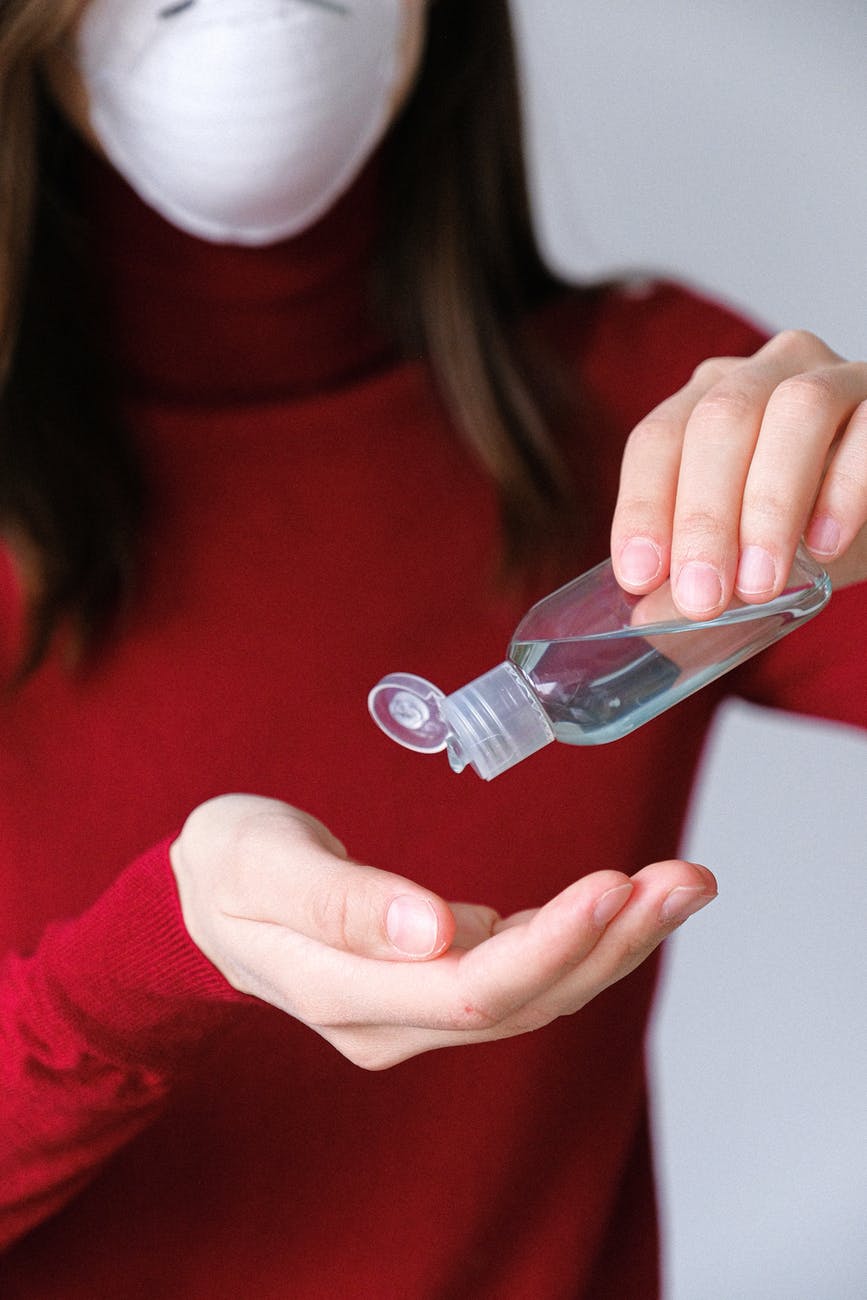
Practice Consistency – The beginning of this school year will certainly be like no other. With new policies, guidelines and routines put into place, I imagine it will feel very different and new for us. If you’re physically back at school, it may take time to remember all the new rules and best practices such as washing or sanitizing your hands before and after removing your mask, but with consistency, you will naturally build up the habit of doing so. I’ve already started doing this when I go out so that it won’t all feel entirely new when I go back to work. It’s also important to build these practices with your students. It’ll all be new for them too and it’s much easier to build a routine and habit at the very start of a school year rather than later or halfway through it. Keep in mind that these procedures are in place to ensure the health, safety and well-being of both the school and external community. If you’re unsure about something regarding any of the new changes, don’t hesitate to ask and find out the right answers.

woman in white long sleeve shirt holding white smartphone
Photo by cottonbro

Stay Connected – Whether it’s with your family, friends or colleagues, stay connected with the people in your life. Maybe it’s catching up with a friend over the phone or sending an email to a fellow colleague to see how they’re doing. At the end of the day, we are social beings with a desire to connect, and simply having a chat with someone important in your life may be all it takes to turn your own or someone else’s day around. Lean on your support system when needed and make opportunities for connection with others a part of your daily routine. You’ll truly notice the difference it makes in your attitude, the way you feel, the way you go about each day, and it’s also a great way to boost your immune system!

anonymous ethnic tutor helping little multiracial students with task in classroom
Photo by Katerina Holmes

Take It Slow – Regardless if you’ve been teaching for 20 years or are a new teacher starting your first year, this school year will be new for all of us. New students, families, routines, schedules, procedures, guidelines, expectations, and much more. If you’re finding that you’re already beginning to feel overwhelmed, go back to Finding Your Calm. Notice what you’re feeling and find what feels good and what brings you a sense of calm. One thing I always practice is mindfulness and living in the present moment. I can’t worry and be anxious about the first day of school because I don’t know what to expect. I’m only in control of the here and now so that’s what I choose to focus on. As each day comes and goes, take it slow, ask the questions you need answers to, build relationships and connections, and most importantly, be kind and do your best. And remember, you are the expert in pedagogy and curriculum. Be confident in your abilities, strengths and everything you already know. We got this!

Got more tips for teachers going back to school? Share them in the comments below!


WEBSITE DISCLAIMER

This website is provided only for informational purposes and not intended to be used to replace professional advice, treatment or professional care. Always speak to your physician, healthcare provider or pediatrician if you have concerns about your own health or the health of a child.

How I Got Through Some of My Lowest Days in Lockdown

Health & Lifestyle, Self-Regulation

I’d first like to respectfully acknowledge the varying impacts we’ve each experienced during this global pandemic. While there is no one way to deal with a life-altering event such as this, and many others that are happening around the world, my hopes by sharing this article of my own experience (and this website) is to bring to light the knowledge, information and resources that have supported me in better understanding the ways we as humans cope with and experience the flow of life.


I never for a second thought I’d be writing about the days I struggled through during lockdown, with all that I know about the human brain, body, its response to stress and stress management. But, here I am and here you are reading this.

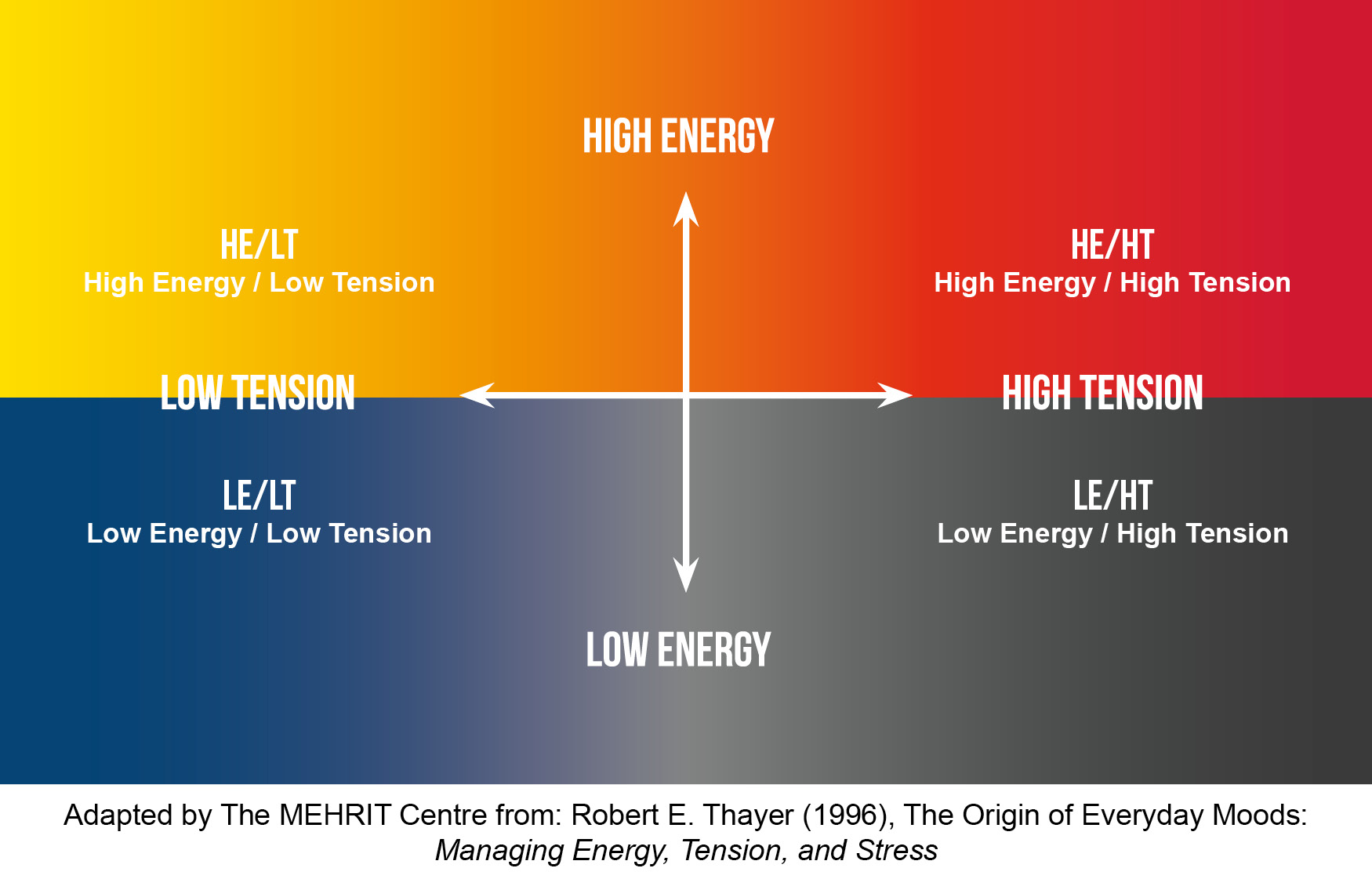
A little over a year ago I came across The MEHRIT Centre, an organization focussed on grounding learning and living in self-regulation. I’m currently in the process of completing a second course from them and have shared some of their resources throughout the self-regulation sections of this website. One of their many useful resources is the Thayer-Matrix. I discovered the Thayer-Matrix last year, but it wasn’t until recently when I revisited its connection to motivation.

Being in Lockdown

Around mid-May, as I was nearing the end of the school year, there were days when my motivation was so low that I found myself mentally checking out from online learning. I had missed being in the classroom and with my students. Prior to school closures in March, I was spending many hours at school each day, so working from home was quite the adjustment for me. As the school year progressed through online learning, I struggled transitioning into a new routine and there were days when I didn’t even feel like getting out of bed.

Now let me explain what the Thayer-Matrix is.

The Thayer-Matrix

The Thayer-Matrix was created by Robert E. Thayer, an American psychologist known for his work on the connection between mood, energy, tension and stress which is reflected in his energy/tension (Thayer-Matrix) model (see image below).

(The information and examples provided below are entirely my interpretation of how I’ve applied this model to my own experience, what I’ve learned and how I understand it)

High-Energy/Low-Tension (HE/LT)

When our energy is high and tension (i.e., stress) is low, we are in a High-Energy/Low-Tension state. In this state we tend to feel:

  • Well-rested and energized
  • Calm and relaxed
  • Ready to start the day at hand

An example of this state would be waking up on a day-off, or while on vacation, feeling well-rested (high-energy) and ready to ease into an open-ended kind of day (low-tension).

High-Energy/High-Tension (HE/HT)

When our energy and tension are both high, we are in a High-Energy/High-Tension state. In this state we tend to feel:

  • Motivated with complete concentration and focus
  • Able to remain at a task for longer and with the most effort
  • Positive and productive

An example of this state would be waking up feeling well-rested (high-energy) and motivated to tackle a busy day ahead (high-tension).

Low-Energy/Low-Tension (LE/LT)

When our energy and tension are both low, we are in a Low-Energy/Low-Tension state. In this state we tend to feel:

  • Tired, especially towards the end of a long and busy day
  • Ready to wind down and relax
  • Prepared to sleep and replenish our energy

An example of this state would be arriving home, tired from a busy and productive day (low-energy) and ready to ease into the night with a hot cup of tea (low-tension).

Low-Energy/High-Tension (LE/HT)  

When our energy is low and tension is high, we are in a Low-Energy/High-Tension state. In this state we tend to feel:

  • Drained and exhausted
  • The least motivated (i.e., listless)
  • Stressed, possibly with lots still to do or lots on your mind

This was how I was feeling on my lowest day. Super drained with little to no motivation (low-energy), but with a lot on my plate (high-tension). These were the days where I struggled with getting out of bed, starting my workday or working towards getting things done.

Moving Through the Thayer-Matrix

Ideally, we should be moving through each of these states and not get stuck in any one of them for a long period of time. If stuck in a HE/HT state, this is likely being sustained through stimulators such as caffeine or energy boosters, and the natural production of adrenaline that works to keep you at a high-energy state to deal with high-tension. However, high-tension naturally drains our energy reserves. When we aren’t restoring enough through natural and essential sources of energy, such as through a restful sleep, eating healthy foods, and engaging in sustainable routines and practices (such as going for a walk outside), we may tend to seek alternative (and often maladaptive) ways to do so, especially at times when we really need to, or simply to cope. From what I learned in my course, being chronically stuck in a LE/HT state can lead to mood disorders. Having a support system and stress awareness and management practices are essential. While staying in a HE/LT state would be nice, that is just not how life flows. Stressors from all around and inside us is what keeps us going, and when effectively managed, thriving. Lastly, we also don’t want to get stuck in a LE/LT state, becoming passive and listless. Humans (as well as animals) have a seeking system that exists in the brain and drives us to meet a need, craving, goal, desire and ultimately, to survive1.

Now, here’s how I was able to get through some of my lowest days in lockdown.

Moving from a LE/HT to a HE/HT State

Leading an online learning session with my students

First to begin, I needed to be aware of when I was in a low-energy/high-tension (LE/HT) state and what that felt like for me. I knew I had low energy because I felt physically, emotionally and mentally drained, listless, a lack of motivation or desire to do anything. At the beginning of lockdown, a telltale sign of this was when I started losing track of what day it was. I woke up one morning thinking it was Sunday, when in fact, it was Thursday. I eventually realized this was happening because I wasn’t getting outside and in the sun. The sun sends signals/cues to regulate our circadian rhythm which is our internal sleep-wake 24-hour body clock. It also gives us energy, makes us feel good and increases serotonin, a neurotransmitter in our body that is responsible for mood, well-being and feelings of happiness. BINGO! So, I knew I needed to get outside more, or as much as I possibly could (considering the circumstances). In addition, the sun is our ultimate source of energy and if we could eat it, we probably would! Instead, we must settle for eating the foods that absorb the sun’s energy for us (to learn more, google: “high vibration foods”). As I think back to it now, that seems so obvious, right? But at that point in time, it actually wasn’t as clear cut, and I guess that came with adjusting and transitioning to being at home, rather than at school for almost 10 hours of the day. While I was getting enough sleep, I wasn’t waking up feeling energized and refreshed (I highly recommend this podcast episode: How to Sleep Well). Having been physically active my whole life, my body wasn’t used to not moving around as much. Because I wasn’t moving around as much as I had been (I work with toddlers), I wasn’t exerting as much energy, nor was able to reach a high-energy state. As a result, I knew I needed to resume more physical activity which had always been an energy booster for me. I recognized I was in a high-tension state because of the stressors that were affecting me. Not being able to leave the house as much, see my friends or go out. The list can go on. I was looking at a screen way more and for longer periods at a time for online learning, meetings, program planning, corresponding with colleagues, attending webinars, social media, etc. Because my eyes were feeling strained near the end of the day, I knew I needed to be as mindful as possible of my screen time. I couldn’t change the fact that I still needed to work, be online and in front of a screen, but what I could change was my energy state to match it. Therefore, once I started getting outside (while taking the necessary precautions), working out at home and managing my screen time better, I was able to move myself from a low-energy to a high-energy state in order to meet the demands of my high-tension work week.

Moving from a HE/HT to a LE/LT State

As soon as I was able to balance my energy and tension to a HE/HT state, I began feeling motivated, greater concentration, was able to remain working for longer and with more effort, and overall, I felt good, productive and accomplished. By the end of my workday, my meetings and online learning were done for the day. This is where I transitioned from the high-tension state I was in throughout the day into a low-tension state. By the end of a busy day, our body naturally transitions into a low-energy state, depending on the amount of energy that was exerted, and the tension experienced throughout the day. When the things that are a source of high-tension (i.e., stressors) in your life are recognized, managed and reduced, you can begin to move into a low-tension state. Although this may not always be the case, ideally, LE/LT is where you want to be at the end of the day and it’s all a matter of finding what works for you to maneuver your way in, out and through these states, while knowing your stress load capacity. Some people can cope with and under more stress than others. It’s important to note that children experience and transition through these states as well, but their capacity to deal with stress is much lower than adults. Therefore, helping them navigate through these states is so important.

Strategies for Moving through Energy & Tension States

  • Become aware of what your mind and body feel like in each state of energy and tension. For example:
    • High-Energy:
      • Energized
      • Feeling well-rested and healthy
      • Having positive feelings (e.g., when laughing or talking with others)
      • Feeling motivated
      • Having complete concentration and focus
    • High-Tension:
      • Having lots to do
      • A busy day ahead (e.g., heavy workload, working on tasks)
      • Feeling stressed or overwhelmed (see: Stress & Stressors to identify the source of your tension)
    • Low-Energy:
      • Feeling tired and exhausted
      • Lack of motivation
      • Feeling sick (when we are sick, our body naturally produces chemicals that make us sleepy)
      • Drained from high-tension
    • Low-Tension:
      • Feeling calm, relaxed, at ease
      • Having stress management strategies in place (e.g., meditation, yoga, deep breathing, prayer)
      • Relying on a positive support system (family, friends, community and/or professionals)
      • Maintaining effective routines and practices
  • Know what personal strategies work to move you to the state you want or need to be in:
    • Getting into a High-Energy state:
      • Getting good sleep: amount, quality, timing, state of mind (these are mentioned in the podcast)
      • Eating healthy and nutritious (high vibration) foods and drinking lots of water
      • Movement (e.g., working out, going for a walk)
      • Re-fuel by practicing self-care (see: Self-Care is Not Selfish)
    • Entering a High-Tension state:
      • We usually don’t choose to enter this state. Our body naturally enters high-tension states because of the stressors that exist around us. Stressors affect each of us differently so it’s important to know which ones have the most impact on you. For example, feeling too hot, feeling sick, excessive screen time, watching the news, changes in routine (see: Stress & Stressors).
    • Entering a Low-Energy state:
      • Again, we don’t choose to enter this state. Our body naturally enters low-energy states as we exert energy and experience stress, which is what drains our energy reserve throughout our day. We can settle into this state at the end of a long day with an evening routine that might consist of practices that lower tension such as reading a book, drinking a cup of tea, prayer, expressing gratitude in writing, meditating, taking a bath or doing bedtime yoga.
    • Getting into a Low-Tension state:
      • This requires recognizing your stressors, managing and reducing them. Engaging in self-care and low-tension practices is also important here. This isn’t always easy, but with time and support, you can develop these practices and habits. For example, I know that too much time in front of a screen strains my eyes so I balance and manage my screen time by taking breaks from it, adjusting display settings, and shutting my devices down at the end of the day and long before bed.
  • Build and maintain a routine:
    • Humans like routine; however, the pandemic has disrupted what our normal routines used to be. Our schedules are different and as a result we may be doing less (or more) than we had been before. Develop a morning and an evening routine to move yourself through the energy and tension states you want or need to be in to be productive, make the most, and meet the demands of your day.
  • Engage in movement and physical activity:
    • Our bodies are designed to recover from energy exertion through our parasympathetic system. When we don’t move, our body doesn’t know what to do with the extra energy and this can impact sleep. Go walking, running, bike riding, do gardening, spend some time out in the sun, sweat and burn energy whenever and however you can.
  • Don’t be so hard on yourself:
    • We are all human and we do the best we can in each moment. Remember that the human body consists of a nervous system that responds to stress. What’s most important is understanding this and how we manage it. A great place to start is by learning about self-regulation (see: What is Self-Regulation?) and reframe your understanding about how your body naturally responds when under various types of stress. You can then start to identify what are sources of high-tension (stressors) for you and develop personal stress management strategies that help you navigate through energy and tension states. Realize when things are beyond your control and when needed, seek professional support and always connect with people you can talk to and trust.

We are in this together.

I hope this article was helpful in some way or another.

Wishing you the very best.


If you enjoyed reading this article, subscribe (for free) to receive the next one straight to your inbox!


Reference: 1Shanker, Stuart. Reframed: Self-Reg for a Just Society. University of Toronto Press, 2020.


For More Information & Learning:


See: What’s Self-Regulation?

See: Stress & Stressors

See: Self-Regulation Resources

Visit: Self-Reg Toolkit

Visit: A Guide to COVID-19 and Early Childhood Development

Got questions? Contact Me


WEBSITE DISCLAIMER

This website is provided only for informational purposes and not intended to be used to replace professional advice, treatment or professional care. Always speak to your physician, healthcare provider or pediatrician if you have concerns about your own health or the health of a child.
My Wellness Kit

Health & Lifestyle

Wellness and healthy well-being is so important to me and I hope it is for you too!

Here I share with you the brands, products and items that are apart of my wellness kit.


SMOOV Superfood Blends

SMOOV is a Canadian brand of all-natural superfood blends. I have been using these blends since last winter and let me tell you, they are amazing! These blends are organic, come in a wide variety and contains the cleanest ingredients such as alfalfa grass, goji berry, maca, spirulina and many others. If you’re looking to boost energy, mood or immunity, satisfy a sweet tooth craving (as I’m always doing), detox and get your intake of greens, manage stress… there’s a blend for you. Best of all, they’re a convenient way to get your vitamins and nutrients, are easy to use and most are great for kids too. I’ve made smoothie bowls, protein balls and added it to my oats. I honestly love them all (including the berry exotic blend captured in the photo), but I have to say, my top 2 favourite SMOOV Superfood Blends are: green blend and euphoric blend. I haven’t gone a week without using one or the other. See: Kid-friendly Superfoods for Health and Immunity to learn more about the green blend and Kid-friendly Superfoods for that Sweet Tooth to learn more about the euphoric blend.

Saje Natural Wellness

Saje Natural Wellness is a Canadian brand of essential oils, skin care and household products. I have been using this brand for a few years now. The first item I owned by them was their travel-size Pocket Farmacy Remedy Kit which includes a set of roll-on oils for stress, pain, indigestion, headaches and colds. This brand carries a variety of all-natural wellness products such as essential oils and diffusers, body and skin care products, household cleaning products and more. Essential oils are extracted from plants and go through an extensive process to become an oil. They have many healing benefits such as alleviating pain, relieving stress by aiding in calm and relaxation, soothing stomach and digestion issues, improving skin conditions and so much more. Some of my many favourite Saje products are: Echinacea Throat Spray, After the Rain Diffuser Blend, Fortify Cough & Cold Nasal Inhaler, Goddess Natural Deodorant Spray, and Muscle Melt.

DAVIDsTEA

DAVIDsTEA is one of the largest Canadian-based specialty tea and tea accessories brand. I still remember one of the first orders of loose-leaf teas I made from them. One of their travel mugs that was gifted to me a few years ago was one of the only mugs that kept my tea hot for many hours throughout the day. I brought it everywhere – to work, morning classes and on trips out of the city. My favourite DAVIDsTEA products are: Organic North African Mint tea, lock top travel mug, perfect infuser and tea filters. Unfortunately, they have recently announced that they will be closing a number of their stores across Canada as part of a reconstructuring plan. Thankfully, they are available online!

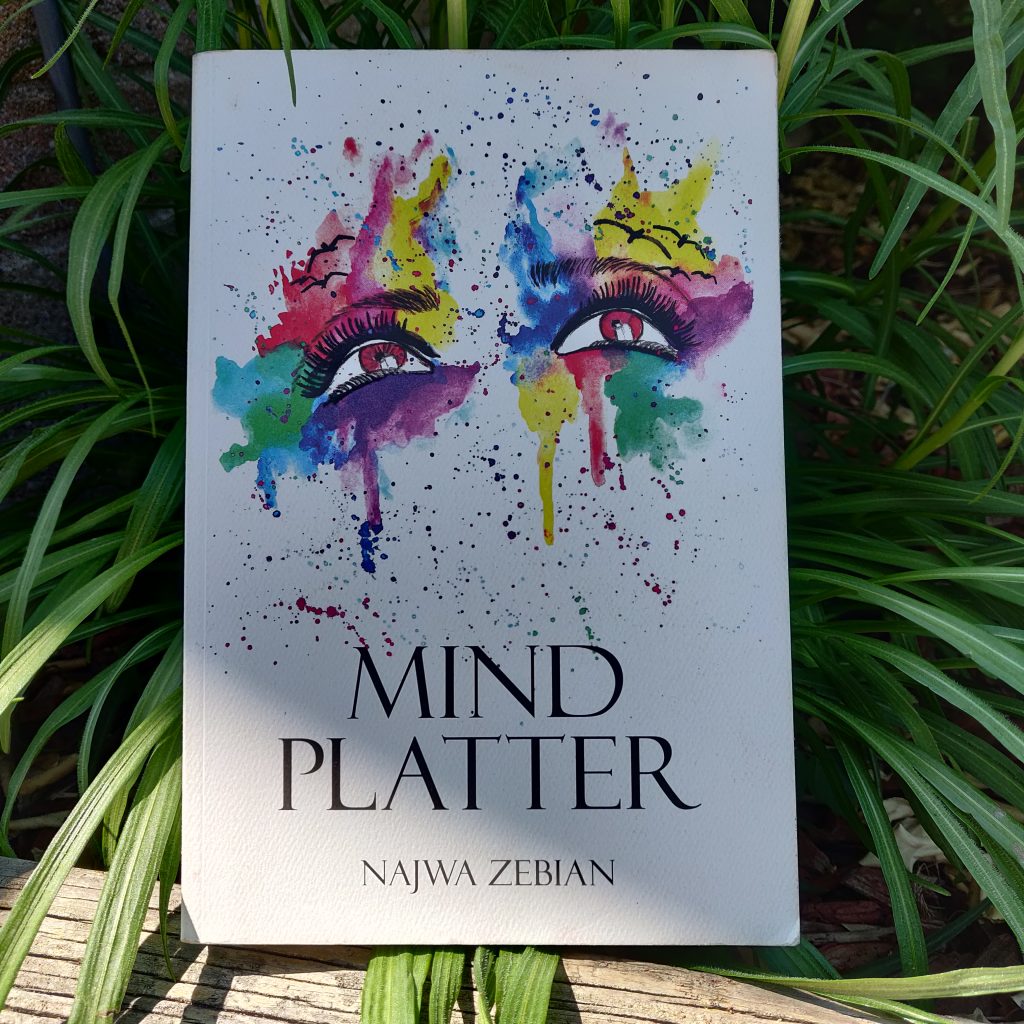
Mind Platter by Najwa Zebian

Mind Platter is a book written by a Lebanese-Canadian author by the name of Najwa Zebian. This book is food for the soul, containing a collection of single-page reflections on topics such as love, motivation, friendship, inspiration and more. What I love about these reflections is that they are entirely up to your interpretation. I came across this book randomly while browsing around at Eaton Centre’s Indigo. I instantly fell in love with the artistic book cover and the message on the back. It reads:

“At the end of the day, no one will walk your journey for you.

You have to do that.

At the end of the day, no one will dream from you.

You have to do that.”

After reading through a few of the reflections, I knew I had to own it.

Organika

Organika is a Canadian-based company of quality vitamins, supplements and functional food products. While I’ve known of this brand for some time, I’ve only started using their products this year. This is mainly due to the informative webinars they have hosted over the past few months. In these webinars they promote many of their products such as their line of collagen, adaptogens and various other supplements. My most recent and favourite Organika products are: Enhanced Collagen, Probiotic + Prebiotic Powder and Calm – Organic Chaga Mushroom Powder.

Below you will find a collection of notes I’ve taken on a number of Organika’s free webinars:

Gut Health 101

Strengthening Your Immune System

Sleep & Stress Management

Your Mental Health Matters: Extra Brain-Love During Times of Stress

Beyond Skin Deep: Holistic Health for Glowing Skin


What are your favourite wellness and health brands, products or items? Share in the comments below!


WEBSITE DISCLAIMER

This website is provided only for informational purposes and not intended to be used to replace professional advice, treatment or professional care. Always speak to your physician, healthcare provider or pediatrician if you have concerns about your own health or the health of a child.

A Personal Experience with Body Healing Modalities

Health & Lifestyle

Shared by Taylor Findlay

Taylor being awarded gold at the 2019 Pan Jiu-Jitsu IBJJF Championship.

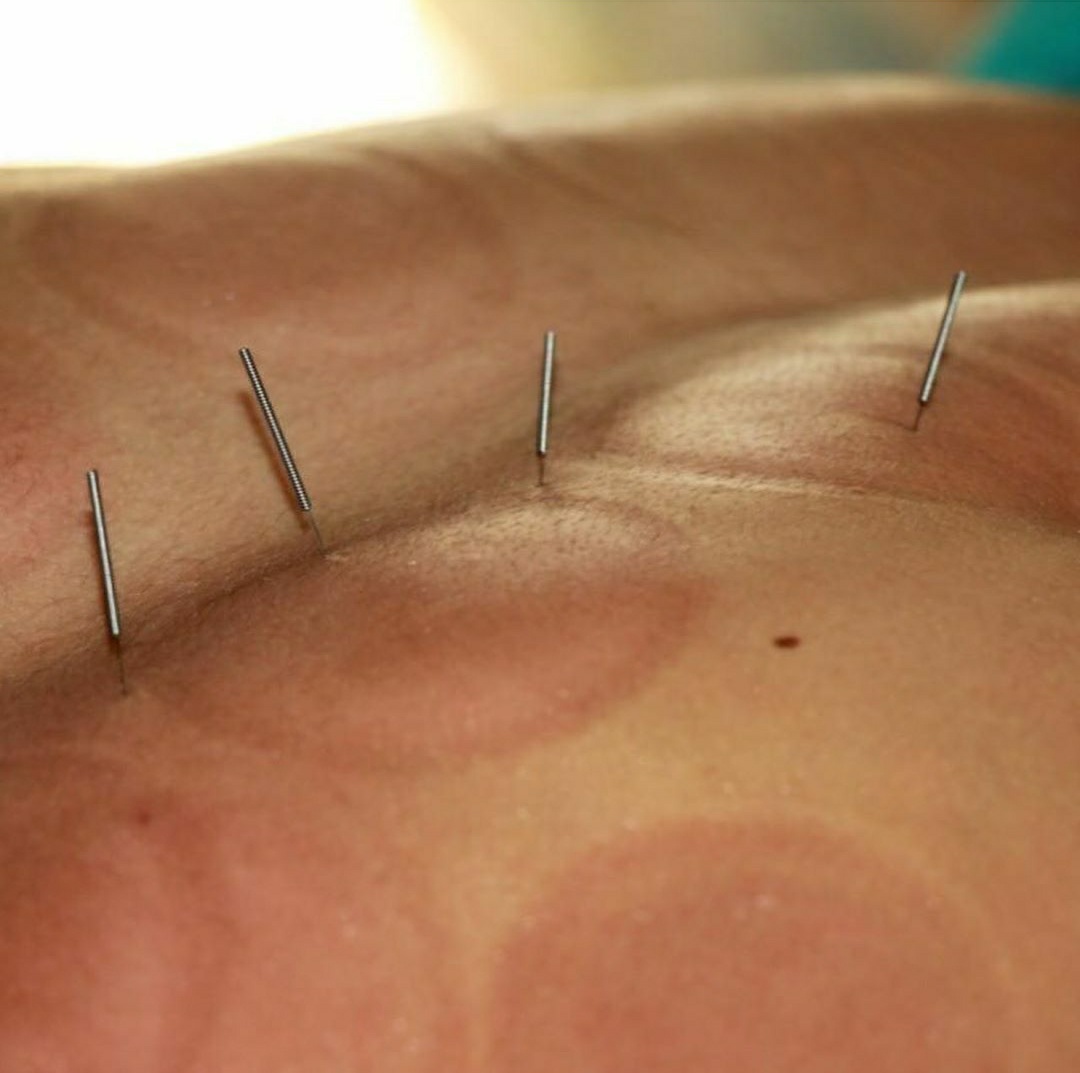
Taylor Findlay is no stranger to the top of tri-level podiums, having earned herself gold at many competitions for her commitment and success in both jiu-jitsu and weightlifting. As with many professional athletes, her dedication to the sport has not come without its fair share of aches and injuries. In this entry, Taylor shares her experience with body healing modalities such as acupuncture, cupping, electrotherapy, and various types of massages, which have, when used in combinations, have helped her to achieve and notice considerable improvements to her body and overall healing process. Acupuncture has been shown to have many healing benefits such as for pain, gut issues and even supporting cancer treatments.

Thank you, Taylor, for sharing your personal experience!

Acupuncture

I’ve had 2 types of acupuncture. One was for injury and the other was for detoxing/pressure points.

Taylor receiving acupuncture treatment while training in Brazil.

I’ve had acupuncture where a sports doctor puts needles in the injured area which I’ve had done for my lower back. In these treatments, I was told I needed a few visits. With my lower back, I had 3 treatments where the therapist placed around 15 or more needles in my lower back/hip area and left them in for about 5 minutes. Then she’d come back to twist them and put them a bit deeper and let them sit. She said when she first put a few of them in, the muscles were tight and that the needles would help release the tension in those areas so she could deepen them to hit the deeper muscles. I found this method didn’t do much for me so I stopped going after 3 treatments.

Acupuncture with Deep Tissue Massage

When I had acupuncture done in my shoulder blade area, it consisted of a combination of treatments. The sports masseuse used acupuncture and a deep tissue massage together. He said the acupuncture could help release tense spots and he could further massage to relax and “reset” the muscles. This treatment I found way more helpful in releasing the tightness and pain experienced with this injury. After the first treatment I felt major differences. He gave me some rehab exercises as homework, and I returned the following week. My injury was way better, but I still went back to make sure I kept it that way.

Electroacupuncture

I also had acupuncture with my chiropractor who believes acupuncture is the baseline to treating any injury. He uses acupuncture in different ways. The first way is where he puts the needles in the injured areas and clips on an electrode which sends currents to the needle. This helps to get to the deeper muscles and gives them a pulsing treatment to help release them. The next way he does acupuncture is by placing a needle in the area as a machine gives concentrated vibration to the needle. When he puts the machine onto the needle, it makes the muscle flex until he takes the machine off the needle. Then he places the needle in other areas around it and repeats. He used these methods in conjunction with a deep tissue massage, Graston Technique, PNF stretching, and a massage gun. I found his treatments to be extremely helpful and consisted of the right combination of different methods. The main injury I saw him for was my ACL which I found made huge improvements. He also explained that using needles would help get the flow of fluid build up in the knee to be able to release. This made a noticeable difference. Then he used the needles to help release tight muscles that support the knee since they were compensating to keep stability in my knee (since my ACL wasn’t fully functioning). This was the best treatment of acupuncture that I have ever received.

Acupuncture for Detoxing/Pressure Points

The time I had acupuncture for detoxing was an unreal experience. I saw an osteopath who used acupuncture to release the pressure points that he said would release the toxins that were stuck in certain areas of the body. He did an assessment to see which areas seemed blocked up and placed the needles in their pressure points to release the blockage. I had smaller needles in my hand, wrist, ankle and in areas I thought were so random to detox such as my liver, kidneys, etc. When he put the needles in, maybe a minute after I felt the detox process. I started really sweating out that my clothes were all wet from the sweat. For me at that time it took A LOT for me to start sweating. I started feeling cold (it was summer so it was warm and I was wearing a t-shirt and shorts), and started to get tunnel vision and was seeing stars. I was freaking out a bit because I felt like I was going to pass out… I had never done a detox kinda treatment like that before. For the fact that I also hated needles, this all had me in a bit of a panic. I told him I didn’t feel well and what I was feeling. He said I looked a bit pale but that was good because the treatment was working. Afterwards, he took the needles out and gave me juice to drink while I sat there to make sure all was good. After leaving, I felt lighter and less bloated and dense.

Overall, I love acupuncture and find that the way my chiropractor used it on me was most effective. Using acupuncture with other methods is what was key to making progress with my injuries. Just having the needles be inserted into the area and left alone didn’t make any real difference for me.

Cupping

With cupping, I’ve had it done with different methods of other treatments. It was always used with other modalities. Overall, I think that cupping on its own would not be an effective treatment for me. They say that it helps bring the blood to the surface and pulls out toxins, so in really bad areas cupping leaves a bruised looking mark. For me, I’ve never had the deep red marks after treatments. In response to that I was told that those areas treated weren’t that bad in terms of it having toxins.

Cupping with Thai Massage

Taylor receiving cupping treatment.

I’ve had cupping done with a Thai massage. I find a Thai massage to be very helpful if I feel overall tightness and my body feels wrecked. So on top of how I normally feel after a treatment, I didn’t feel any different with cupping. I only tried it once and my Thai masseuse didn’t continue to use it afterwards for me since we discussed that there was no real difference.

Cupping with Deep Tissue Massage

I’ve had cupping with a deep tissue massage which again showed me no real difference aside from the deep tissue release with that same treatment. During these treatments, he would use cupping and explained that it pulls the fascia off the muscle to help let it untangle and “breathe”. He has also done cupping where massage oil is placed on the area he wants to treat, then he slides the cup along the area to help pull the fascia apart. He used this on my TFL/IT band area since that’s more so a long tendon attached to the muscle and it would always get very tight. I felt this had more of an impact for me since I felt a bit sore afterwards, like it really did target that area.

Cupping with Acupuncture

I’ve also had cupping done with acupuncture that had stimulants on the needle. This was with my chiropractor who believes acupuncture is the foundation and key to an effective treatment. He would do his acupuncture treatment first, massage a bit to release tense areas, then use cupping to further help with the tighter areas. Again, I found each of these treatments very helpful for the injuries or overall tightness I was going in for. The cupping in junction with other modalities of treatment is what made the session effective. If I were to just have cupping on its own, I don’t believe it would give me great results in resolving my issue.

Electrotherapy

When I’d see my sports therapist, he’d use gel pads to send electrical currents to the area. Depending on the injury, he had different types and sizes of pads that he would apply to the area and program the pattern sequence of the currents to treat the area. He would also adjust the strength of the currents and intensify the level as the treatment went on. When the muscles are tight and locked up, they are more sensitive and can’t handle a high current. But as they start to release, I was able to handle a higher current. After this was done, he used a machine that lasers any inflammation to help reduce it. After this, he would do an ice massage to the area and then put a cooling cream on to help keep the muscle relax so that the healing could continue. I found his treatments to be helpful.

I feel that I know my body very well. So when I’m injured, it depends what the injury is that determines who I will go see to get treatment. If my body just overall feels wrecked from a hard training, I will go see my Thai masseuse. That type of massage is what helps to relax and loosen the tightness. If I am injured like when I did my ACL, my chiropractor who uses different methods is what helps me best. If my muscle is kind of spazzing, then I go to my sports therapist to help on that. I’ve noticed and realized that what’s best for me is a combination of methods that really help and have shown me major improvements.

Taylor achieving blue belt for her hard work, knowledge and skill in jiu-jitsu.

Congratulations on all your achievements, Taylor!


Have you had an experience with acupuncture or any other forms of healing modalities?

Share in the comments below!


WEBSITE DISCLAIMER

This website is provided only for informational purposes and not intended to be used to replace professional advice, treatment or professional care. Always speak to your physician, healthcare provider or pediatrician if you have concerns about your own health or the health of a child.

5 Ways to Boost Your Immune System

Health & Lifestyle

Here are 5 simple things you can start today to boost your immune system!

  1. Reduce Stress

Stress and our immune system do not get along. When we are under stress, our immune system is weakened, making us more vulnerable and likely of getting sick. For example, it is common to get sick around the time of travel. Whether it’s the stress of preparing or the climate change, our immune system might take a hit. Reduce stress by finding time to take care of yourself, such as any of the following ways below.

Photo by Pexels
  1. Socialize (while practicing social distancing)

Humans are social beings. Plus, strong emotions such as fear and loneliness are stressful, especially during these times. As mentioned above, stress weakens the immune system. So, find joy in talking and connecting with your loved ones – your family, friends and even pets! Check in on colleagues and see how they’re doing.

  1. Sleep

Sleep is the time when our body repairs itself. We spend so many hours of the day awake and moving about that we need to give our brain and body the time it requires for rest. Not clocking in enough hours leaves us at a greater risk of getting sick because our vital organs are not recovering. According to the Chinese Body Clock, there are certain hours of the day that our vital organs are at peak functionality. For example, our liver cleanses and recovers between 1 a.m. and 3 a.m. However, this can vary by person.

  1. Exercise

When we exercise, we release a “feel good” chemical in the brain called endorphins. Endorphins boost our mood and in return reduces stress. In addition, it increases alertness, focus and concentration. Working out or going for a short walk is all it takes!

  1. Eat Healthy

Our body responds to everything we eat. When we eat well, we feel good, and when we don’t, we tend to feel sluggish and tired. It’s important to ensure you’re getting the vitamins, nutrients and even antioxidants that help to build and sustain a well-functioning immune system. Consuming foods high in Vitamin A, Bs, C, E & Zinc such as fruits, vegetables, eggs and seeds contribute to strengthening the immune system.


WEBSITE DISCLAIMER

This website is provided only for informational purposes and not intended to be used to replace professional advice, treatment or professional care. Always speak to your physician, healthcare provider or pediatrician if you have concerns about your own health or the health of a child.
Mindfulness & Meditation. What’s the Difference?

Health & Lifestyle

Mindfulness and meditation go hand in hand. Here’s how!

Mindfulness is an awareness and attention to the present moment. It can be practiced formally, such as through a meditation practice or informally, throughout everyday life. Meditation is the formal practice of pausing and turning awareness and attention to a target, usually the breath. Meditation is a formal mindfulness practice because it requires awareness and attention to the present moment.

How can mindfulness be practiced informally throughout the day?

Mindfulness can be practiced informally throughout the day by focussing awareness and attention to experiences as they happen in each moment. This can include attending to the things we register through our 5 senses. For example, you can practice mindfulness while eating, by attending to the colour, smell, texture, sound and taste of foods. You can even draw awareness to simple daily tasks such as washing the dishes, driving and brushing your teeth.

How can mindfulness be practiced formally through meditation?

Photo by Andrea Piacquadio

While meditation might preferably be done in a quiet space, it can in fact be practiced anywhere. Once in a comfortable seat, you can begin by bringing a focussed attention to a target, which is usually the breath because it helps to anchor you to the present. As you focus your attention to your breath, you may begin to notice your attention shift to thoughts and emotions. That’s OK. Without judgement, allow them to naturally come and go. Judgement takes you out of the present moment of mindfulness so allow them to pass. With regular and consistent practice, meditation improves overall mindfulness.

What are the benefits of mindfulness?

Some of the researched benefits of mindfulness include1:

  • Decreased stress, anxiety and reactivity
  • Greater cognitive flexibility
  • Increased immune functioning
  • Improved attention and sensory processing
  • Increased ability to manage emotions and distractions
  • Greater well-being and compassion towards self and others

What is happening in the brain during mindfulness practices?

There are two areas of the brain important in mindfulness practices. There is the amygdala which is responsible for our emotions such as happiness, sadness, fear and anxiety. Emotions are likely to come up during mindfulness practices. When they do, allow them to naturally come and go as you return your attention back to your target, the breath, or in the example above, food. Overtime, the amygdala may become less activated as you steady your mind, awareness and attention. The prefrontal cortex is responsible for our focus, attention and decision making. Since mindfulness is awareness and attention to the present moment, this part of the brain is most activated and sharpened.

So, what does this all mean?

Through practicing mindfulness regularly and consistently, both formally and informally, you begin to attend to each of the moments of your life as you experience them. You will learn to see your thoughts and emotions simply for what they are and from a gentle and non-judgmental place. You will start to slow down and attend to an awareness of yourself and others, allowing for greater compassion to build. Through mindfulness, you focus only on what you have control over which is the present moment. Allowing for stress and anxiety to reduce, leading to greater overall health and well-being. Ready to get started? 😊


The Foundation of Mindfulness Practice

Establishing a Daily Mindfulness Practice

Meditation Tips & Tools


“The real meditation practice is how we live our lives from moment to moment to moment.” – Jon Kabat-Zinn


References

1Davis, D. M. & Hayes, J. A. (2011). What are the Benefits of Mindfulness? A Practice Review of Psychotherapy-Related Research. American Psychology Association. 48, 198-208. doi: 10.1037/a0022062


WEBSITE DISCLAIMER

This website is provided only for informational purposes and not intended to be used to replace professional advice, treatment or professional care. Always speak to your physician, healthcare provider or pediatrician if you have concerns about your own health or the health of a child.

Kid-friendly Superfoods for that Sweet Tooth (SMOOV Superfood Blends)

Early Childhood, Health & Lifestyle

Contemplating SMOOV Superfood Blends Healthy Kids Bundle? Well look no further – here’s everything you need to know about why they’ve selected these blends for this bundle and the health benefits for kids behind their ingredients!

Let’s face it – just like us, kids have a sweet tooth, too! I’ll admit I have one.

Made with 6 powerful superfoods that are loaded with nutrients, the Euphoric Blend is a feel–good way to satisfy those cravings and boost your little one’s mood, the healthy way! 

SMOOV euphoric blend

This blend contains the following Certified Organic ingredients:

Cacao – a natural mood elevator and a healthy way to satisfy sweet cravings. Loaded with antioxidants, calcium, iron and magnesium.
Carob – tastes similar to cacao, but much sweeter. Is rich in calcium, fiber and antioxidants that help protect your body from the toxic effects of free radicals (which can include smoke, pesticides and pollution that can damage parts of cells in the body).
Mesquite – a natural energizer and helps in the restoration of the intestinal flora. Is high in protein, magnesium, iron, zinc, potassium and soluble fiber.
Maca – a powerful adaptogen (which helps the body adapt to stress) that can improve energy levels, stamina, emotional health and focus.
Lucuma – a natural, low–glycemic sweetener that also helps regulate blood sugar levels, containing vitamin B3, beta–carotene, calcium, iron and zinc.
Coconut – contains healthy saturated fats, lots of fiber, and promotes healthy blood sugar levels. 

Did you know? Kids have stress too, and their little bodies are learning each day how to manage it, thanks to the love and support of the people in their life – like you!

Made with 8 powerful superfoods loaded with antioxidants, the Berry Exotic Blend helps to fight against stress to the body from free radicals, from the inside out.  

SMOOV berry exotic blend

This blend contains the following Certified Organic ingredients:

Acai Berry – loaded with antioxidants which help neutralize the damaging effects of free radicals throughout the body.
Maqui Berry – loaded with antioxidants that can help protect the body from the toxic effects of free radicals.
Camu Camu Berry – rich in vitamin C among other nutrients. Serves as a powerful antioxidant in your body and improves the health of your skin and immune system.
Goji Berry – helps to maintain good immune function, boost energy and improve mood. A great source of vitamins A, C, fiber, iron, zinc and contain all the essential amino acids.
Black Goji Berry – exceptionally high in antioxidants. Helps to boost the immune system and improve circulation.
Blackberry – beneficial for skin healing and improving brain function. Is high in fiber and packed with vitamins and minerals such as C, K and manganese.
Blueberry – a great source of fiber, vitamins C and K, manganese and antioxidants– known to boost heart health, repair and maintain skin, and improve brain function.
Lucuma– a natural, low–glycemic sweetener that also helps regulate blood sugar levels, containing vitamin B3, beta–carotene, calcium, iron and zinc.

What better way to healthily and heartily satisfy that little one’s sweet tooth than chocolate and berries!


This article was written for SMOOV Superfood Blends.

Are you looking for an easy way to get your greens in, boost your immunity, energy or mood? SMOOV Superfood Blends is a Canadian-based company that carries a variety of healthy, organic and all-natural superfood blends powder. Visit SMOOV today!


WEBSITE DISCLAIMER

This website is provided only for informational purposes and not intended to be used to replace professional advice, treatment or professional care. Always speak to your physician, healthcare provider or pediatrician if you have concerns about your own health or the health of a child.

Kid-friendly Superfoods for Health and Immunity (SMOOV Superfood Blends)

Early Childhood, Health & Lifestyle

Contemplating SMOOV Superfood Blends Immunity Bundle? Well look no further – here’s everything you need to know about why they’ve selected these blends for this bundle and the health benefits for kids behind their ingredients!

SMOOV green blend

Have you already attempted the first 6 of the 7 Ways to try to Get Kids to Eat Veggies and you’re still having trouble getting your kids to eat them?

Then grab hold of the Green Blend in this bundle. Made with 9 powerful superfoods, this blend is packed with ALL your essential nutrients and is the easiest and most delicious way to get those greens in and help your kids stay clear of toxins building up in their body and slowing them down!

This blend contains the following certified organic ingredients:

Alfalfa Grass – supports blood, bone, eye and immune system health.
Barley Grass – helps to improve blood volume, prevents anemia and fatigue.
Oat Grass – known to help regulate blood sugar levels and protect against heart disease.
Wheat Grass – contains lots of vitamins, is rich in amino acids (which helps build protein) and aids the body in detoxification.
Spirulina – loaded with B vitamins, iron, copper and is a complete protein source. Possibly one of the most nutritious foods on the planet.
Chlorella – rich in protein, vitamins B & C, iron, and omega–3 which supports brain, eye and heart health.
Moringa – supports eye health, boosts energy, improves immunity, and aids with detoxification.
Kale – an absolute powerhouse of vitamin A which supports eye, skin health and fights infections, vitamin C which supports the immune system, gums and teeth, and vitamin K which supports blood and bones.
Lucuma – a natural, low–glycemic sweetener that also helps regulate blood sugar levels, containing vitamin B3, beta–carotene, calcium, iron and zinc. 

The cold and flu season can be hard on us all, especially the little ones. Boost their immune system, beat those symptoms and add the Golden Blend to some water or juice.

Made with 5 powerful superfoods that are packed with nutrients, this blend is the best way to boost overall health and support the immune system.

SMOOV golden blend

This blend contains the following Certified Organic ingredients:

Camu Camu Berry – rich in vitamin C among other nutrients that benefits the immune system.
Goji Berry – helps to maintain good immune function, boost energy and improve mood.
Maca – a powerful adaptogen which helps the body adapt to stress.
Lucuma – see benefits listed above.
Carrot – a great source of vitamins A, B, K and potassium. Most commonly associated with improved vision, they also boost heart health, improve digestion. 


This article was written for SMOOV Superfood Blends.

Are you looking for an easy way to get your greens in, boost your immunity, energy or mood? SMOOV Superfood Blends is a Canadian-based company that carries a variety of healthy, organic and all-natural superfood blends powder. Visit SMOOV today!


WEBSITE DISCLAIMER

This website is provided only for informational purposes and not intended to be used to replace professional advice, treatment or professional care. Always speak to your physician, healthcare provider or pediatrician if you have concerns about your own health or the health of a child.